

Monitoring Outpatient Care
Each year, health care costs for managing chronically ill patients increase as the life expectancy of Americans continues to grow. To handle this situation, many hospitals, doctors' practices, andcare providers are turning to disease management, a system of coordinated health care interventions and communications, to improve outpatient care. By participating in daily monitoring programs, patients with congestive heart failure, chronic obstructive pulmonary disease, diabetes, and other chronic conditions requiring significant self-care are facing fewer emergency situations and hospitalizations.
Cybernet Medical, a division of Ann Arbor, Michigan-based Cybernet Systems Corporation, is using the latest communications technology to augment the ways health care professionals monitor and assess patients with chronic diseases, while at the same time simplifying the patients' interaction with technology. Cybernet's newest commercial product for this purpose evolved from research funded by NASA, the National Institute of Mental Health, and the Advanced Research Projects Agency. The research focused on the physiological assessment of astronauts and soldiers, human performance evaluation, and human-computer interaction.
NASA's Johnson Space Center granted Cybernet Systems Phase I and Phase II Small Business Innovation Research (SBIR) contracts, building upon the company's previous SBIR work on multiple military and Federal Government development projects. The purpose of the NASA project was to enable remote physiological monitoring of space crews. To accomplish this, Cybernet Systems built a miniature portable physiological monitoring device capable of collecting and analyzing a multitude of signals, including electrical brain signals, in real time to monitor astronauts on the International Space Station. Cybernet's device benefits NASA by immediately correlating the complex interactions between cardiopulmonary, musculoskeletal, and neurovestibular systems in a reduced-gravity environment, leading to a better understanding of the body as a system. In addition, it provides valuable insight into physiological mechanisms, adaptation techniques, and individual responses that occur with exposure to altered gravity environments. This may lead to optimal countermeasure strategies for astronauts to effectively readapt to Earth's environment.
With statistics showing significant improvements in patient outcomes through closer in-home monitoring, Cybernet saw an opportunity to commercialize the physiological measurement and analysis technology. After completing its SBIR work with Johnson in 1998, Cybernet adapted the technology for its MedStar™ Disease Management Data Collection System, an affordable, widely deployable solution for improving in-home-patient chronic disease management. In July 2001, Cybernet Medical announced the general availability of the MedStar interface device and accompanying data collection server, together called the MedStar System.
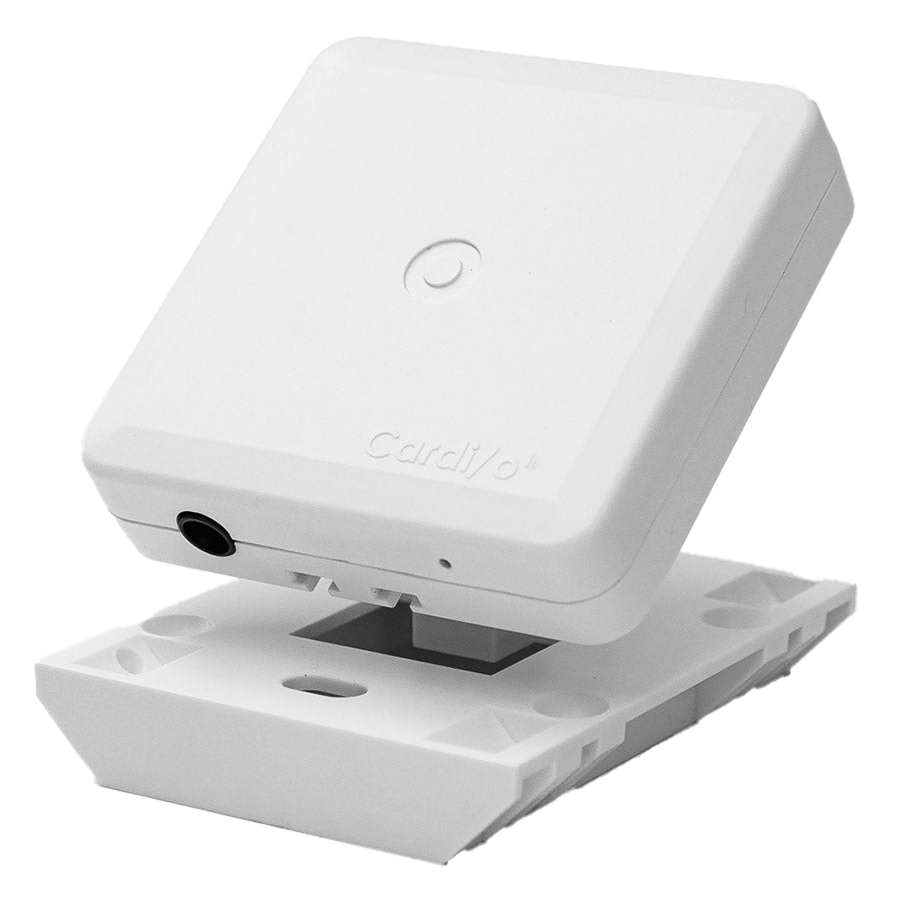
The battery-powered and portable MedStar interface device collects physiological data from off-the-shelf instruments regularly used at home by chronic-disease patients with high blood pressure, diabetes, congestive heart failure, or respiratory conditions. These devices include weight scales, blood pressure cuffs, and glucose monitors. The MedStar device then securely transmits the data over a standard telephone line to the Cybernet Medical collection server, located at a hospital or a disease management company's facility, for retrieval and analysis. The process enables a health care team to immediately note changes in a patient's condition and make appropriate action recommendations—resulting in fewer patient interventions and emergency hospitalizations.
Measuring 10 square inches and weighing less than a pound, the patient-friendly MedStar device is small and light and operates on standard AA batteries. Since a patient does not need a personal computer or Internet access to transmit MedStar's collected data, the device can be immediately deployed by disease management organizations regardless of patient demographics. MedStar's built-in memory can save several hundred readings, enabling patients on vacation or away from a phone line to continue to take their readings and upload the data when convenient.
Using a database management system, health care professionals can access the data through the Internet in order to remotely manage their patients. Cybernet markets its own data management system, the MedStar Web Server, to retrieve digitized physiological data from a data collection device, such as Cybernet's MedStar Data Collection Server, and uses it to populate a database. It then formats this information for display via a secure Web site, enabling physicians and disease management professionals to analyze changes in a patient's condition. The result is improved patient outcomes and dramatically reduced costs associated with the care of the chronically ill. The MedStar Web Server is available as an addition to the MedStar System, which is also compatible with other commercial database management systems.
MedStar™ is a trademark of Cybernet Systems Corporation.

Cybernet Medical’s MedStar™ Disease Management Data Collection System is an affordable, widely deployable solution for improving in-home-patient chronic disease management. The system’s battery-powered and portable interface device collects physiological data from off-the-shelf instruments.

The MedStar™ System consists of an interface device and accompanying data collection server.