

Greens Grow in Circles
Subheadline
NASA-funded research inspires home indoor farming tech
Keeping an edible garden at home is a common hobby, but it can be a tough one. Between pulling weeds and keeping pests from eating your crops, not to mention the need for a lawn or plot of land, it’s a lot of work for a piece of fruit or a leafy vegetable. But what if you could grow greens, herbs, and some fruits indoors?
NASA has been a pioneer in the field of indoor farming for decades and collaborates often with outside institutions. For more than 40 years, Purdue University in Indiana has received funding from and collaborated with NASA’s Ames Research Center in Silicon Valley, California, as part of the agency’s Specialized Center of Research and Training program to explore methods of growing plants under electric light.
One of the NASA-funded projects at Purdue is a system called Minitron. Active since the 1980s, Minitron is the university’s indoor agriculture test bench, consisting of several small plant-growth chambers to optimize resources and energy usage to produce highly nutritious crops.
“We’ve learned a lot from that research, and they’ve learned a lot from NASA research,” said Gioia Massa, who currently leads NASA’s space crop investigations at the space agency’s Kennedy Space Center in Florida and was involved in the development of Minitron while a postdoctoral researcher at Purdue. “Minitron is essentially a scaled-down version of the Biomass Production Chamber that was at Kennedy.”
Scott Massey also became fascinated with the capabilities of indoor farming while an undergraduate student at Purdue. Coming from a background in petroleum production, he had experience in hydraulic engineering. A fellow student, Ivan Ball, brought expertise in electronics and automated systems. Using what they learned from working on experiments with Minitron, they began exploring ways to further scale indoor horticulture down to the point where a growth chamber could be a home appliance.
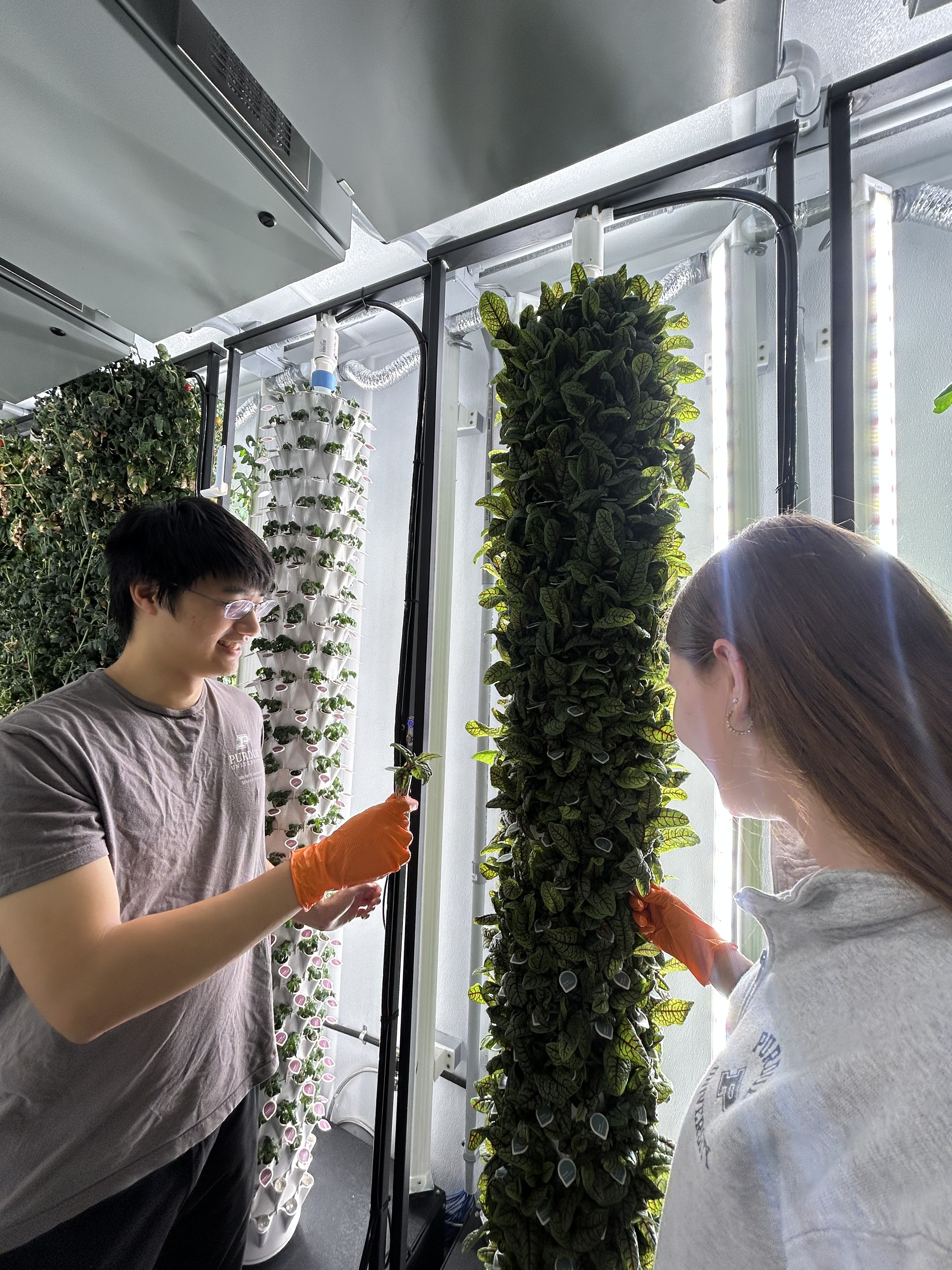
The team’s primary development was “rotary aeroponics.” Their system uses pre-measured containers of seeds and nutrients resembling single-serving coffee pods, which are inserted into ports on a rotating column, inside an enclosed environment optimizing hydration, air flow, and humidity for plant growth. Plants emerging from the compostable seed pods rotate past an LED light source, optimizing space within the chamber and saving energy.
“This started as a hobby. I thought if I patented it, somebody down the line will have the wherewithal to commercialize it, and maybe I can play a small part in helping them,” said Massey. “But I learned very quickly that the excitement of entrepreneurship is wonderful.” Massey and Ball established Heliponix LLC in Evansville, Indiana, in 2016.
Originally marketing its product under the name Gropod, the company would soon do business under the name Anu. In its first two years, Anu sold 40 units to consumers. As of 2024, the company licenses its technology to major players within the hardware manufacturing industry. The Anu team has developed a modular container farm that is available for commercial growers with a focus on healthcare applications, education programs, and entrepreneurs seeking to eliminate local food deserts.
Massey credits his work with Minitron and the NASA-funded studies at Purdue for helping him grasp the intricacies of indoor agriculture. Massey is currently expanding Anu’s global reach, including into Saudi Arabia, which has expressed interest in the technology for its agricultural goals.
“The best design for a vertical farm was optimized millions of years ago when trees began to grow,” said Massey. “We think we’re catching up to nature.”
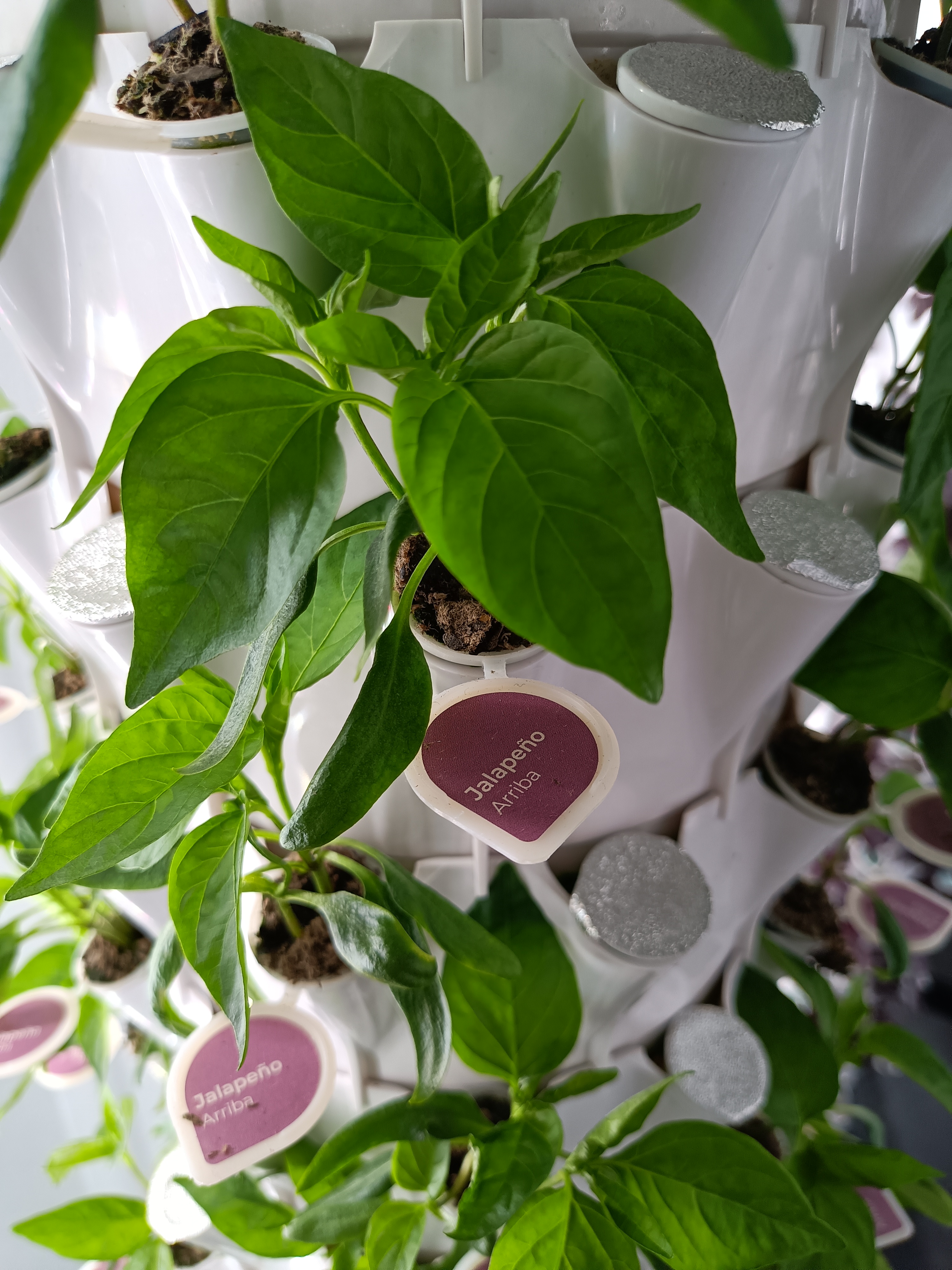
Anu’s rotary aeroponics system uses small containers full of seeds and nutrients, much like single-serving coffee pods, to make growing plants easy. Credit: Heliponix LLC
Purdue University students remove plants from an Anu growth column. The company’s technology forms a platform for agricultural education, as well as industry. Credit: Heliponix LLC