

Handbag Made from NASA Research
Subheadline
Space agency interest in organisms and protein result in a fungi faux leather
NASA-funded research on extremophiles — organisms that thrive in harsh conditions — led to the discovery of a microbe that has for several years been available in grocery stores as an ingredient in Nature’s Fynd meatless breakfast patties and dairy-free cream cheese and yogurt (Spinoff 2023).
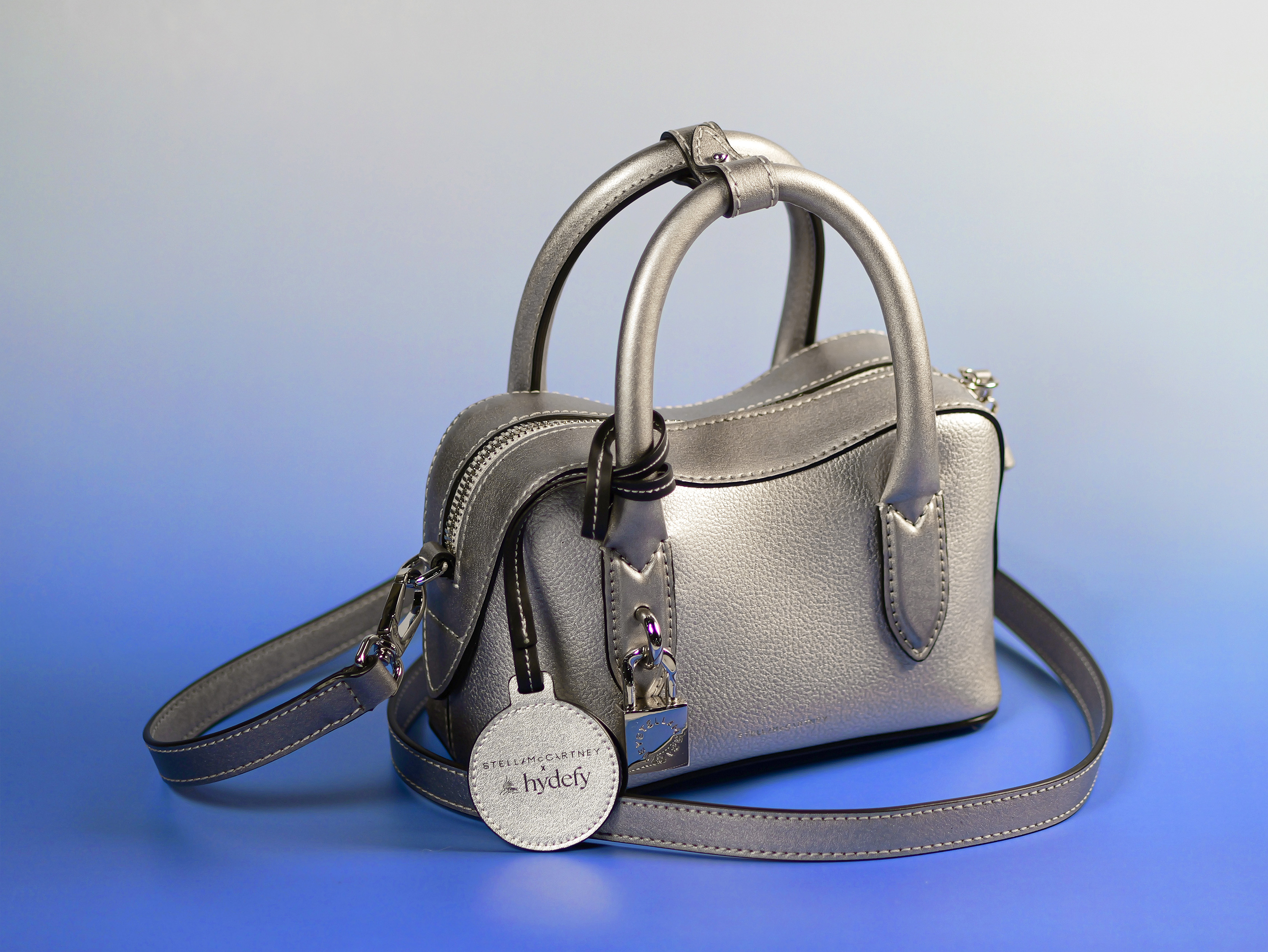
Now The Fynder Group Inc., the company doing business as Chicago-based Nature’s Fynd, is producing textiles under the brand name Hydefy, which debuted its first material this spring in a $1,650 Stella McCartney handbag called the Stella Ryder Hydefy Crossbody Bag.
Hydefy and Nature’s Fynd’s food products both use the fungi protein they call Fy, which the company grows from the organism Fusarium strain flavolapis, originally identified in acidic hot springs in Yellowstone National Park by one of the company’s cofounders during graduate research funded by NASA’s astrobiology program. The space agency is interested in life that thrives in hostile environments like those on other planets or in Yellowstone’s volcanic caldera.
Nature’s Fynd received Small Business Innovation Research funding from the National Science Foundation, the Agriculture Department, and the Environmental Protection Agency before winning NASA Phase I and II Small Business Technology Transfer, or STTR, contracts.
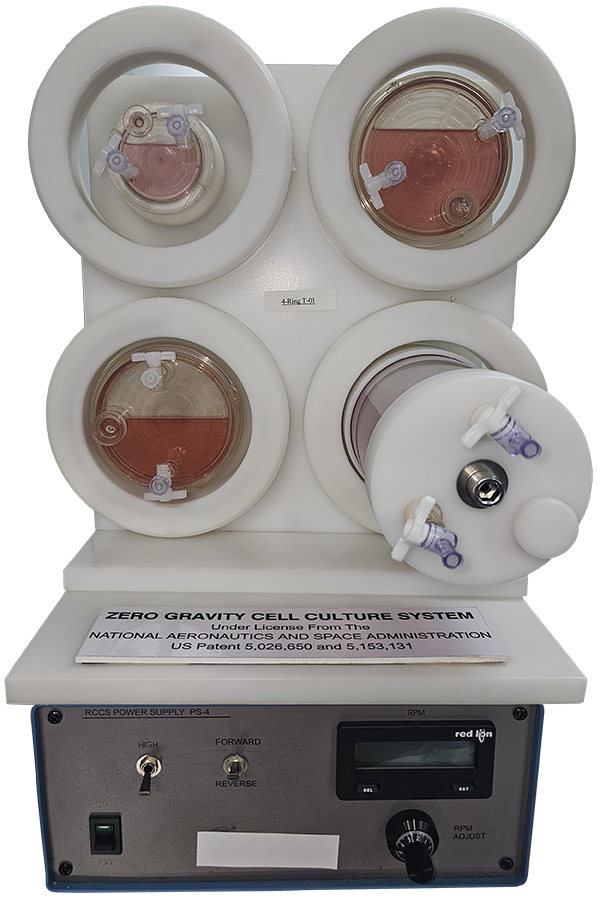
NASA was interested in the company’s fungi protein biomats, which were produced in trays with minimal input requirements and almost no water waste. Nature’s Fynd developed bioreactors for space and eventually grew Fy on the International Space Station. The resulting biomass was a high-fiber complete protein, like the Fy the company had developed for Earth.
“It can be really hard to make a good protein in space,” said John Hogan, who worked with Nature’s Fynd on the STTR projects as head of the Bioengineering Branch at NASA’s Ames Research Center in Silicon Valley, California, before he retired in 2023.
“This was a basis for a healthy, high-protein meat and dairy substitute,” he said. Although the project came to an end and the company is not currently working on any space-related projects, Hogan said this or something similar could still one day fill protein production gaps in future space missions.
Debbie Yaver, The Fynder Group’s chief science officer emeritus, said the NASA STTR work informed how the company currently produces Fy. Under the space agency contracts, company scientists researched optimal acidity, carbon sources, and salt concentrations to grow the Fy protein as quickly as possible.
“We learned an awful lot about how the inputs and conditions affect growth,” she said. Ultimately, based on that knowledge and further research, the company transitioned to cultivating Fy in broth vats for its terrestrial offerings.
Meanwhile, the company’s “small but mighty” team of biochemists, material scientists, and biomaterial experts have been working on using Fy in textiles, Yaver said. They combine the fungi’s strong, flexible fibers with sugarcane-derived inputs and shape it into sheets.
The Stella handbag has a leathery look with a metallic finish, but Yaver said a variety of materials are possible.
Stella McCartney is known for her commitment to sustainability and vegan fashion. “I am constantly exploring plant and fungi-based, regenerative alternatives that do not harm animals and heal Mother Earth,” she said when the handbag was first introduced.
The company said it is ushering in a new era of fungi-based textiles. “We’re actively working with a range of brands across fashion, footwear, furnishings, and automotive,” said Thomas Jonas, CEO of The Fynder Group.
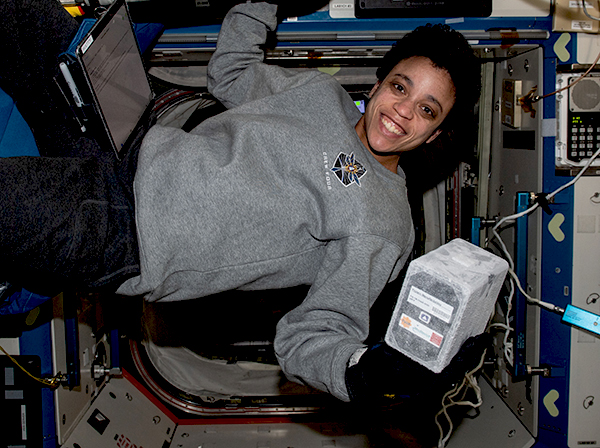
Astronaut Jessica Watkins holds a Nature’s Fynd bioreactor on the International Space Station. The company received Small Business Innovation Research funding to research protein biomats in space. Then it sent its signature Fy protein to the space station with support from the NASA Established Program to Stimulate Competitive Research. Credit: NASA
A fungi-based leather alternative made by Hydefy, a Nature’s Fynd brand, debuted in a handbag from environment-focused designer Stella McCartney. The Stella Ryder Hydefy Crossbody Bag was introduced on the spring/summer 2025 Paris runway and retailed for $1,650. Credit: Stella McCartney