

Making Future Satellite Fuel Today
Subheadline
A non-toxic propellant is fueling safer propulsion systems thanks to NASA’s efforts
More than eight miles up, the air is too thin for most planes to fly. But even in low Earth orbit 300 miles from Earth’s surface, there are enough air molecules to cause a slight drag on satellites. In time, this friction will pull them from orbit, and they’ll burn up in the atmosphere. To guarantee a stable, long-term orbit, a satellite needs a thruster.
Most satellite propulsion systems rely on propellants like hydrazine, which are highly toxic and require an onboard heater to keep them from freezing. So NASA and the Air Force Research Lab collaborated with industry to create a state-of-the-art propulsion system for satellites that uses a fuel called Advanced Spacecraft Energetic Non-Toxic (ASCENT) propellant. Originally developed by the Air Force, the fuel is both safe and more efficient than traditional satellite propellants.
Increased demand for cost-effective, reliable satellites makes this new propulsion technology a game changer with benefits that are attracting commercial and government customers alike.
Rubicon Space Systems, a division of Plasma Processes LLC, leveraged multiple Small Business Innovation Research awards from NASA to build a new propulsion system using ASCENT for a lunar mission. Now the Huntsville, Alabama-based company offers the alternative-fuel thrusters and propulsion systems for existing commercial satellite designs.
“Satellite manufacturers are learning they have reached the maximum capability of what they can do with hydrazine propellant without making the spacecraft larger, which limits what they can do,” said Daniel Cavender, director of propulsion with Rubicon Space. Redesigning, testing, and qualifying a new satellite is costly and time-consuming, but replacing the propulsion technology with a more efficient system makes it possible to continue to use the flight-qualified models.
“This lower-toxicity propellant actually has higher performance than the existing technologies,” said Cavender, noting that it gets about 50% better “mileage” than fuels like hydrazine.
A Better Way to Boost
ASCENT is frequently described as a green fuel. Nehemiah Williams, who has managed ASCENT-powered projects at NASA’s Marshall Space Flight Center in Huntsville, Alabama, frequently has to explain what that means.
“Some people might think that the fuel is green in color, but it’s more about the attempt to make a propulsion fuel safe for humans and safer for the environment,” said Williams. The new fuel is easier to handle on the ground and easier to store in space for a long-duration mission.
Long-standing satellite propellants like hydrazine are corrosive to storage tanks, posing leak risks and requiring specialized containers, and they create toxic fumes when exposed to the air. By contrast, ASCENT is less corrosive and doesn’t create toxic fumes, eliminating those hazards to people fueling the spacecraft. And it doesn’t freeze, which frees up the power and space used by a heater on a satellite.
Before NASA got involved, a green propulsion system wasn’t available. Cavender said there also wasn’t a commercially produced non-toxic propellant in 2015, when NASA announced its Green Propellant Infusion Mission (GPIM). At the time, Cavender was the assistant chief engineer on GPIM at Marshall.
“We went to industry to look at what was available,” he said. “As it turned out, industry wasn’t ready to provide a green chemical propulsion system that had the capability NASA needed.” To change that, he helped set up the Green Propellant Working Group. The coalition of small businesses, academia, and federal agencies helped build a non-toxic propulsion system for spacecraft, and NASA is still working to make it widely available.
Satellite Snowflakes
GPIM proved the first ASCENT-powered satellite thrusters after its launch in 2019. At that point, NASA decided to use a similar system for a lunar satellite, dubbed Lunar Flashlight, intended to seek evidence of frozen water in the permanently shadowed craters of the Moon’s South Pole. The agency selected Plasma Processes to manufacture parts for the propulsion system.
After launch, the 2022 flight demonstration failed to reach lunar orbit because it encountered a problem. Debris from the 3D printed parts was likely the cause of clogged fuel lines that ultimately shut down the thrusters. However, the flight data NASA obtained before that happened demonstrated the system did work as designed. Plasma Processes created Rubicon Space, with Cavender at the helm, to commercialize ASCENT propulsion systems, and the Lunar Flashlight flight provided important lessons that went into improving the technology. These included new standards for filtration and stricter contamination control for 3D printed parts.
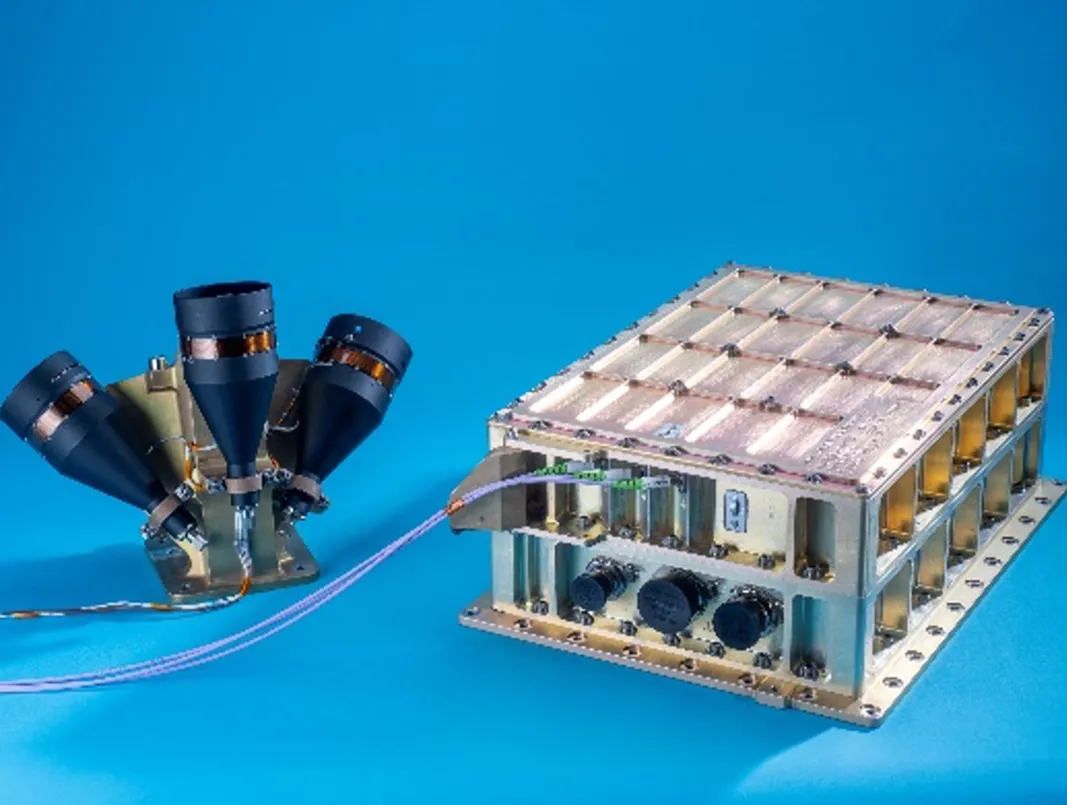
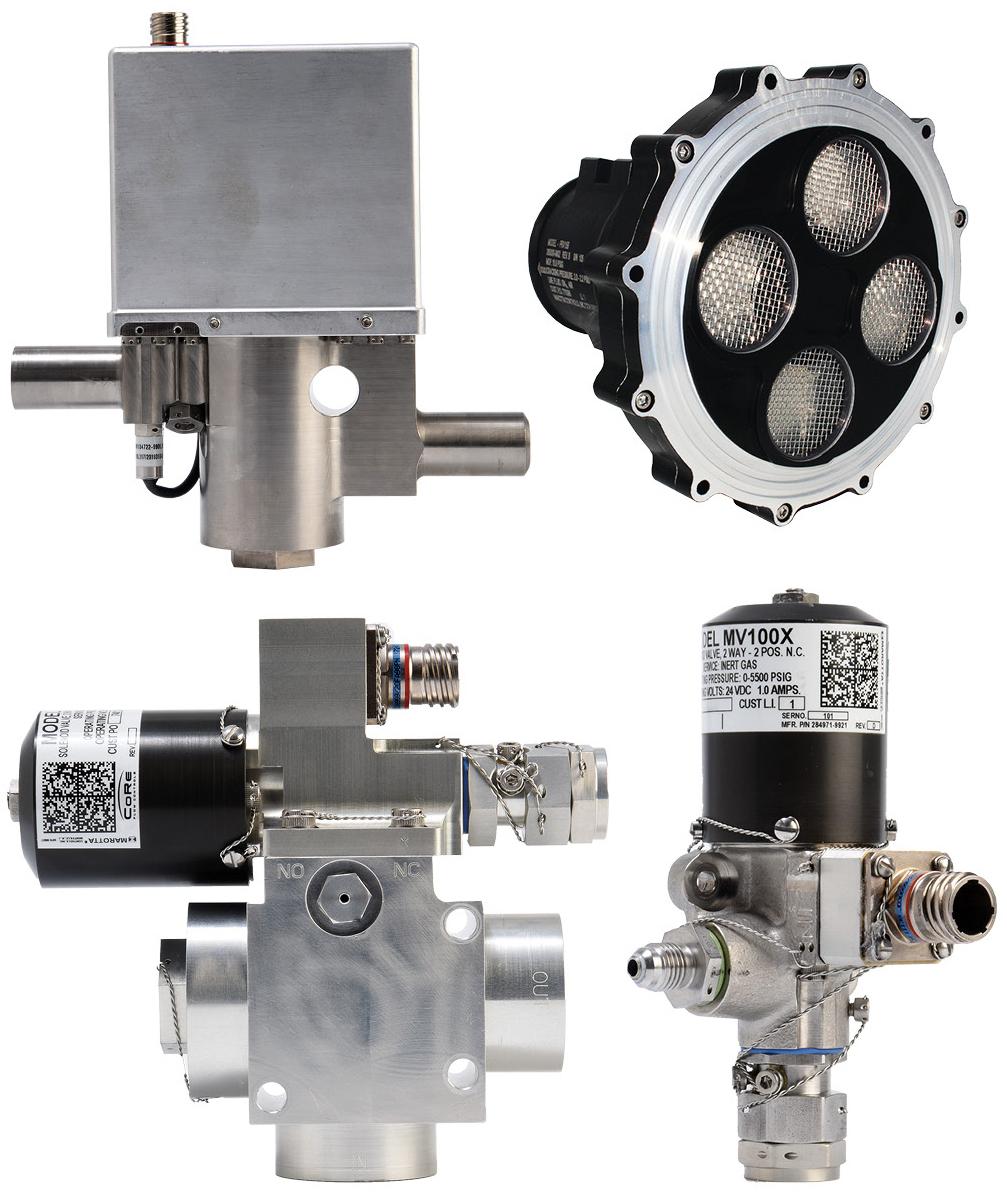
The Sprite propulsion system built by Rubicon Space uses valves that were developed and tested by NASA for the green propulsion demonstration. Work done under a Space Act Agreement at Marshall made it possible to incorporate the technology in Sprite’s 1N HT thruster. This new propulsion system is now being incorporated into existing satellites originally designed to use traditional toxic fuels. The company can also customize the systems to meet individual mission requirements, offering system design testing its customers can’t do in-house.
“Everybody wants to move around in a special way to enable whatever the mission is, whether it’s science or national security. So every propulsion system risks ending up being its own little special snowflake,” said Cavender. But Rubicon Space is taking an approach that allows some customization to a standard template without returning to the drawing board for each customer.
Learning New Tricks
Chemical thrusters generally have high thrust but aren’t usually as efficient as electric thrusters. While electric thrusters are highly efficient for long-duration propulsion, they produce little thrust. ASCENT can power both types of thrusters, so Rubicon Space is developing a new chemical-electric hybrid propulsion system.
The company has had multiple Space Act Agreements with Marshall supporting its latest efforts, including one that led to the new valve that was incorporated into the Rubicon Space propulsion system. Describing the NASA staff as “the best in the world,” Cavender said he believes the collaboration will help the company achieve “the Holy Grail of propulsion,” a universal off-the-shelf, dual-mode propulsion system.
NASA continues to develop non-toxic propulsion technologies, sharing its data and experience in an effort to spur more commercial space activity. The ongoing collaboration between NASA and Rubicon Space in particular is benefiting numerous customers as well as the space agency.
“Rubicon has been a really good technical partner for us,” said Williams. “They’ve included NASA standards for hardware and systems and are applying them to the development of their new unit to show that they meet our standards and requirements overall.” Now that the hardware necessary for using ASCENT and other green fuels is available, a new generation of propulsion can begin.
“If we keep doing things the same way, we’re going to miss opportunities to develop technologies in ways that we didn’t think that we could do. I would love to see green propulsion expand with an emphasis on design around this technology, because you just don’t know what you’ll learn until you try something different,” said Williams.
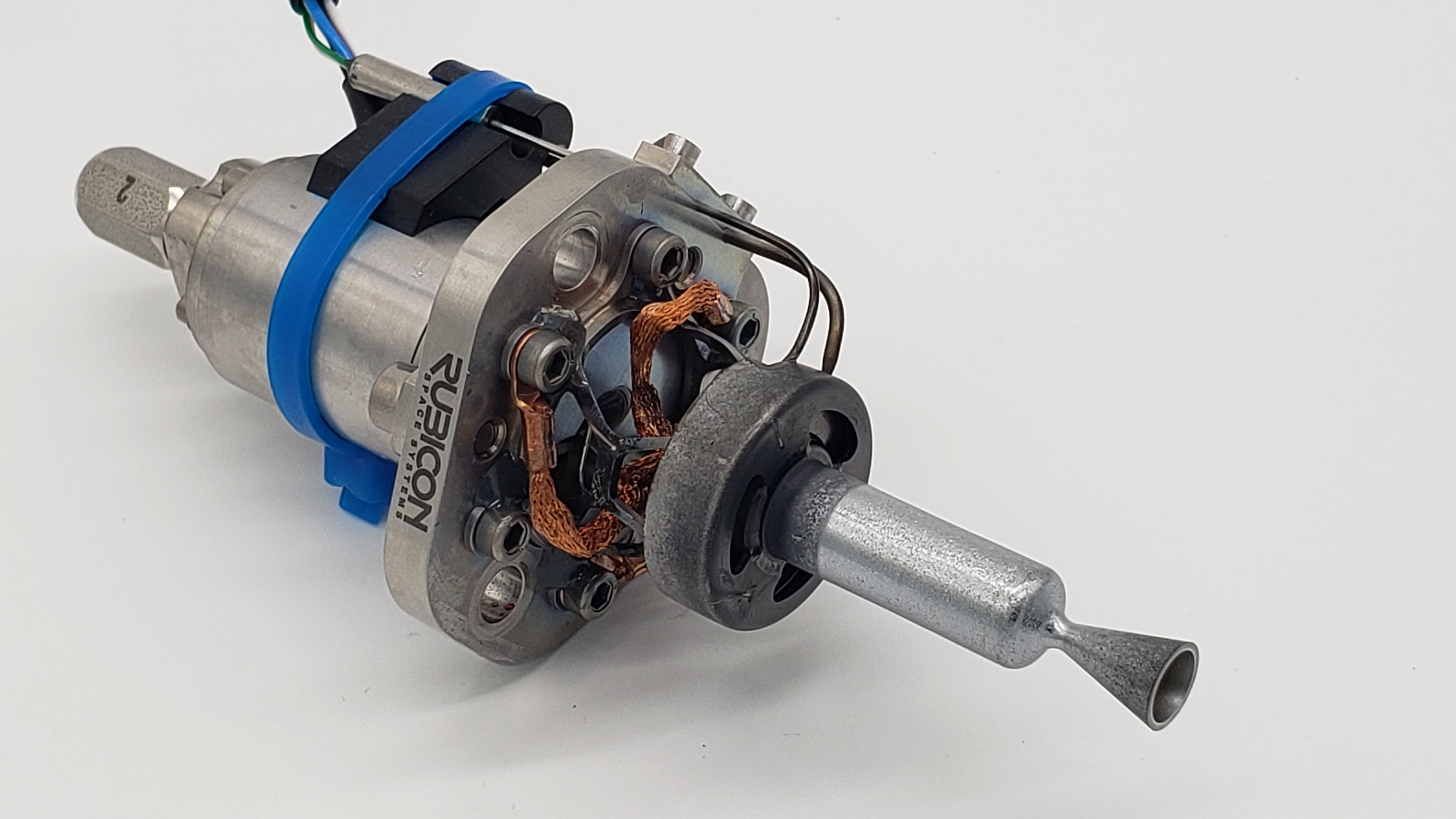
The 1 Newton nanothruster developed by Rubicon Space Systems provides in-space propulsion for small satellites like CubeSats. It can also be used in satellites already flight tested for traditional fuels. Credit: Plasma Processes LLC
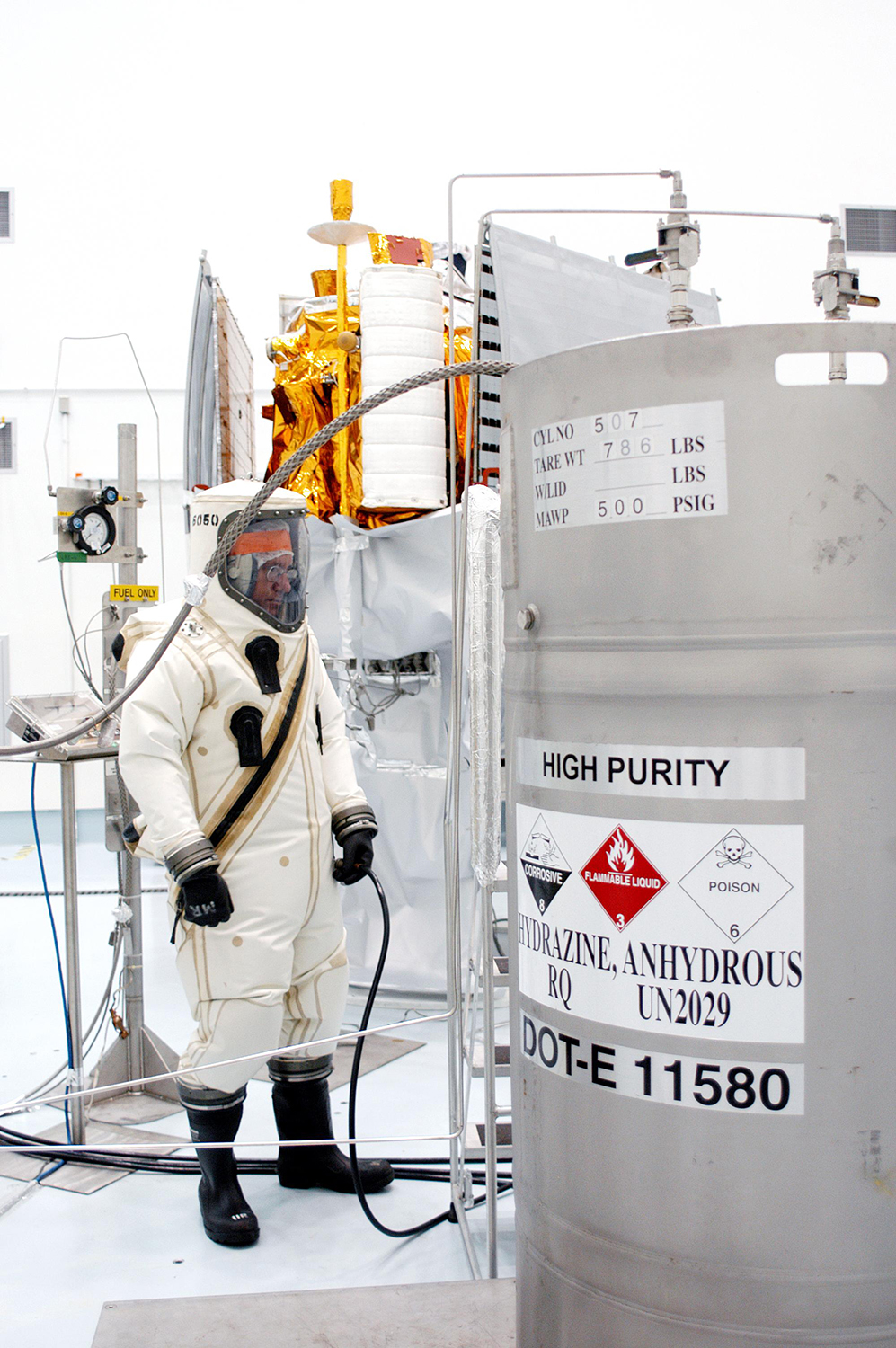
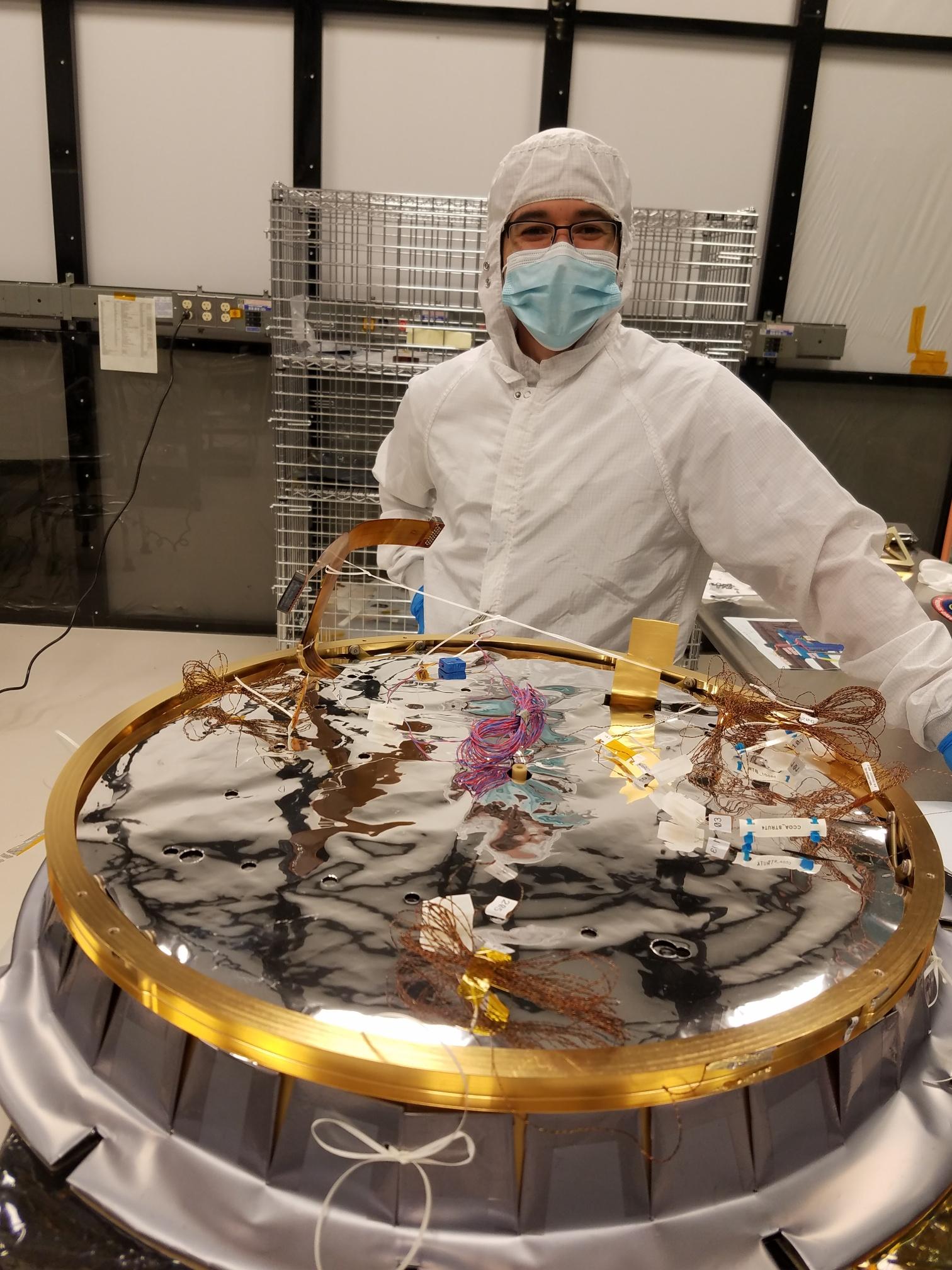
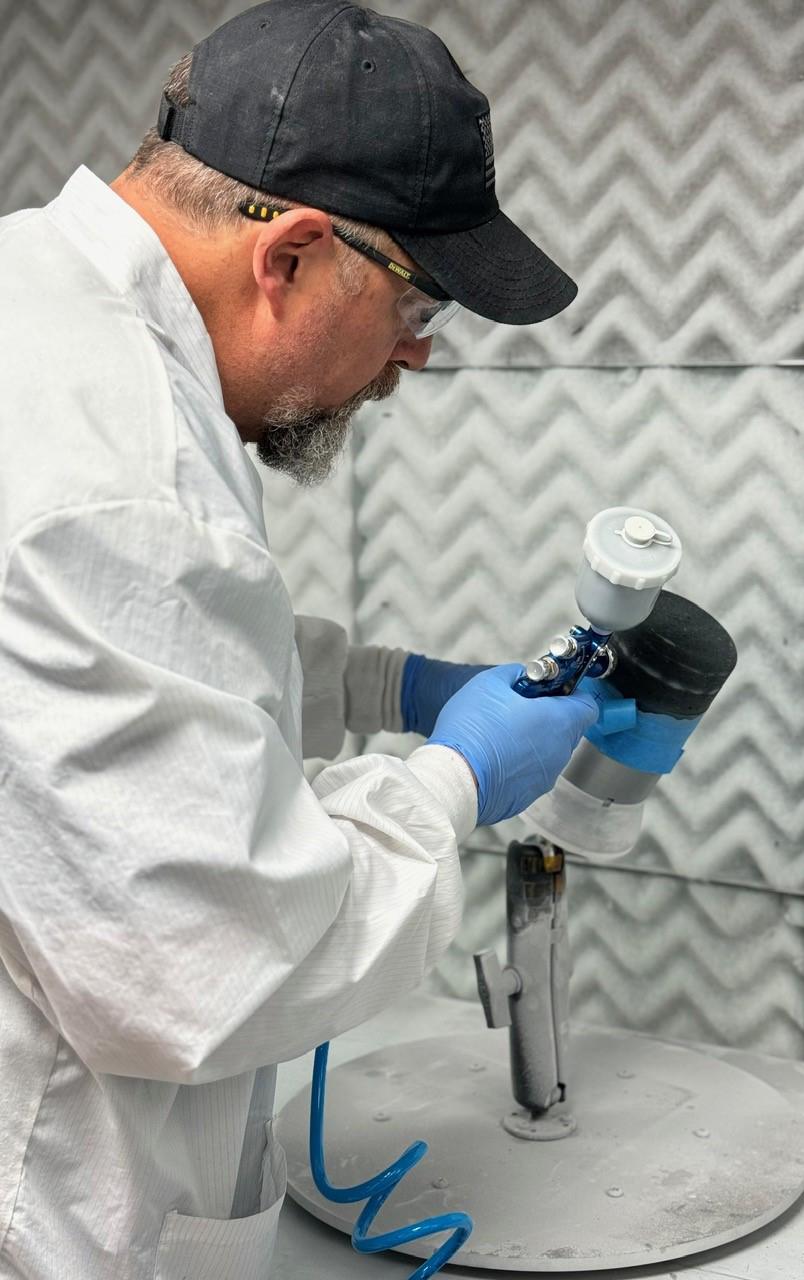
Long-standing satellite propellants like hydrazine are so toxic to humans that workers handling them require a protective suit like this one worn by crew preparing the Mercury Surface, Space Environment, Geochemistry, and Ranging spacecraft. Credit: NASA
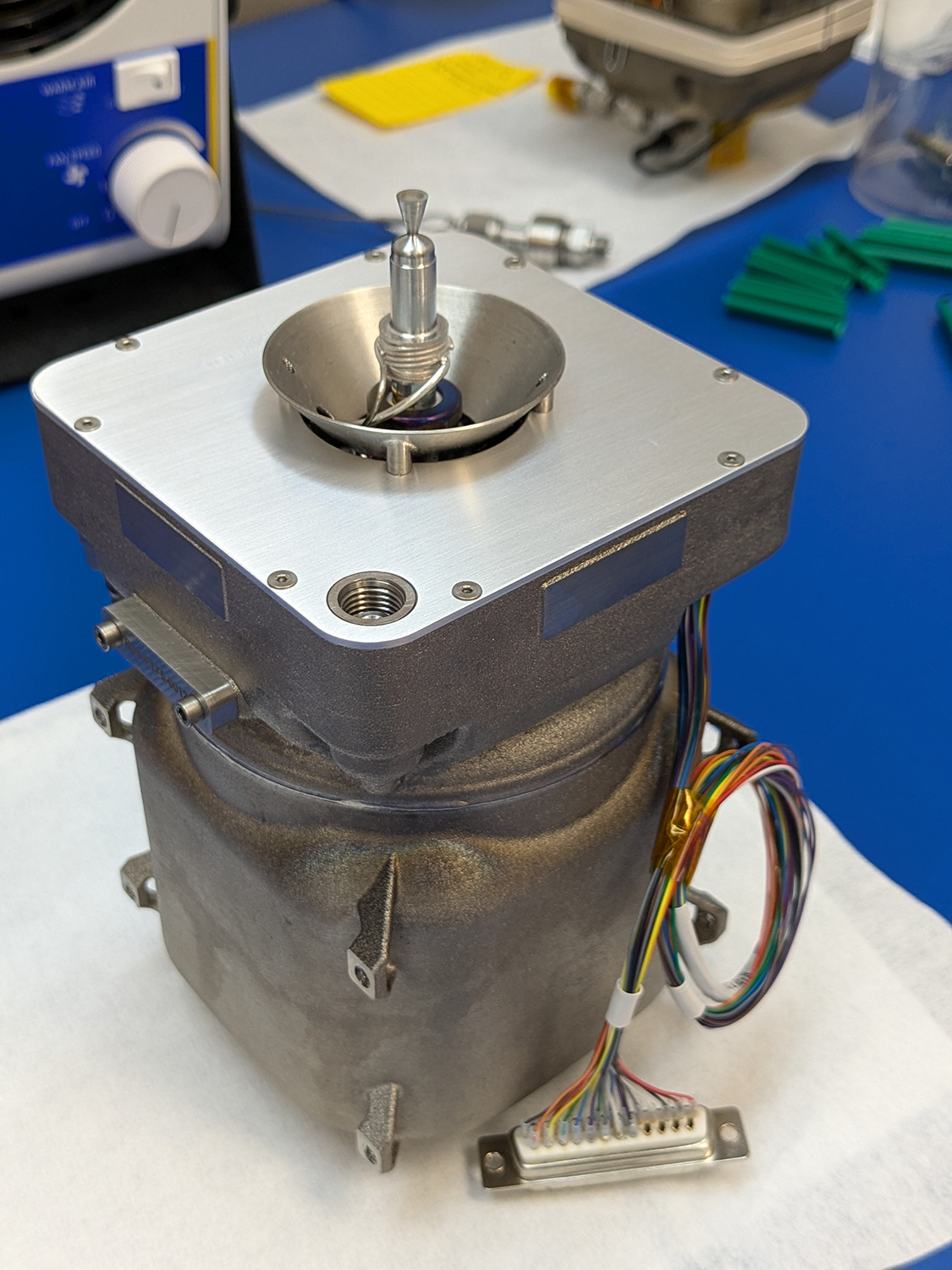
The Sprite propulsion system built by Rubicon Space was developed with NASA to use Advanced Spacecraft Energetic Non-Toxic (ASCENT) fuel. It’s both safer and more efficient than conventional fuel like hydrazine. Credit: Plasma Processes LLC
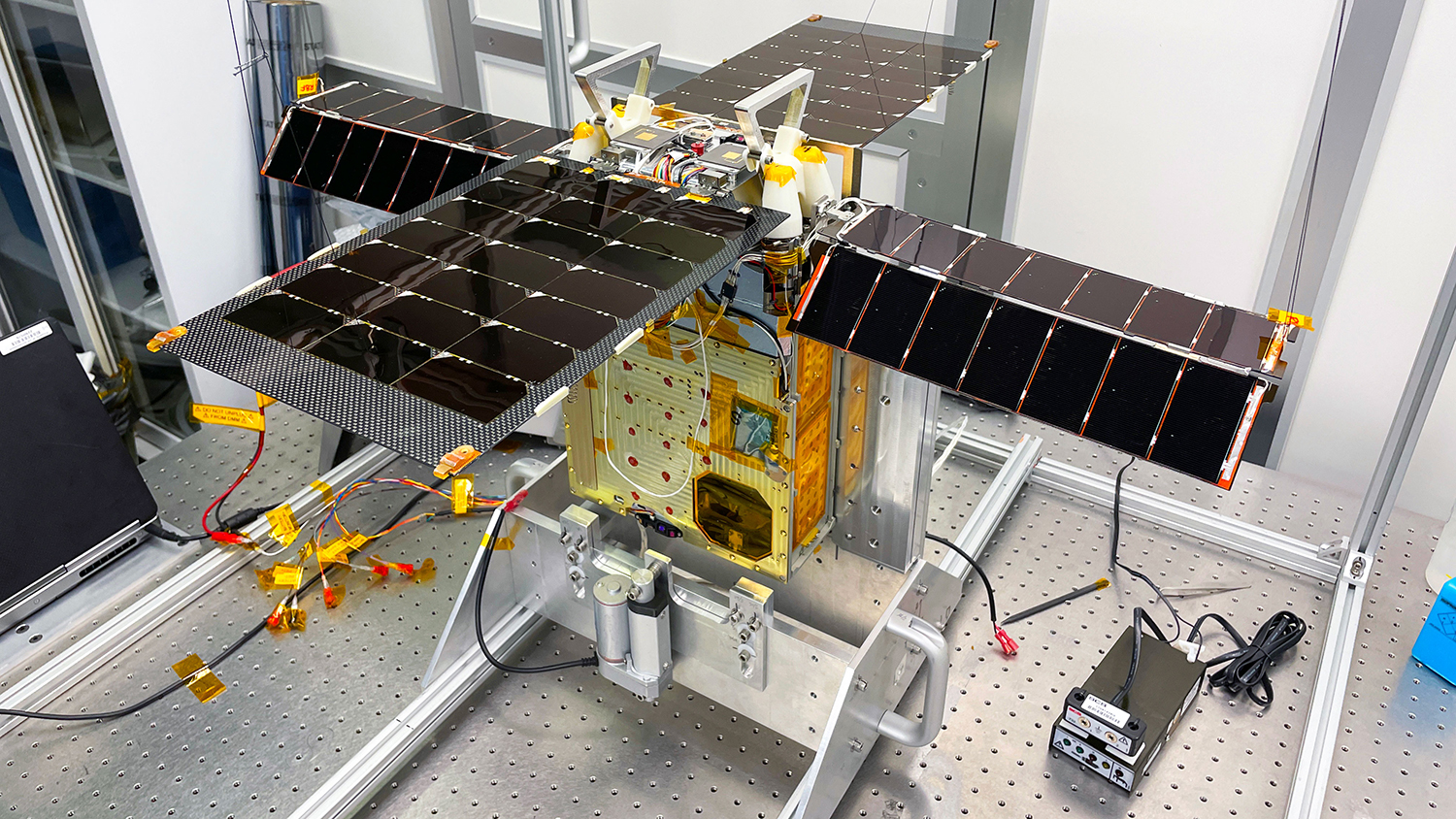
Lunar Flashlight was a low-cost CubeSat designed to investigate the shadowy surface of the Moon’s South Pole. It used a new green propulsion system that ran on ASCENT fuel. Credit: NASA