

New Insulation to Benefit Many Industries
Subheadline
Enhancements to a classic spinoff can benefit hydrogen energy, refrigeration, more
One of NASA’s most significant, widespread technologies in space and on Earth is finally getting an upgrade, more than 60 years after its invention.
Traditional multi-layer insulation (MLI), also known as radiant barrier insulation, comprises layered sheets of Mylar coated with reflective metal and separated by netting. Nothing can beat it for thin, lightweight protection against radiated heat, a primary concern in the vacuum of space.
On Earth, MLI has found applications in winter gear, buildings, MRI machines, and cryogenic tanks, among others (Spinoff 2022, 2020, 2018, and more).
But Dave Plachta thought it could be better. “Traditional MLI can slip and slide together. It’s not strong nor structural,” said the retired NASA researcher, noting that its performance depends heavily on the quality of assembly and seam joining, adding uncertainty to missions.
Around 2006, as a senior researcher at NASA’s Glenn Research Center in Cleveland, Plachta led the “zero boil-off” initiative, aiming to store liquid hydrogen indefinitely with no evaporation. Future crewed Mars missions may require hydrogen tanks to orbit Earth and Mars for hundreds of days, and the technology to enable this didn’t exist.
With that in mind, NASA sought proposals for Small Business Innovation Research (SBIR) contracts focused on cryogenic technologies, including improved radiant barrier insulation. Among the companies selected was Quest Product Development Corp., which proposed novel improvements to MLI. This sparked a long, fruitful collaboration.
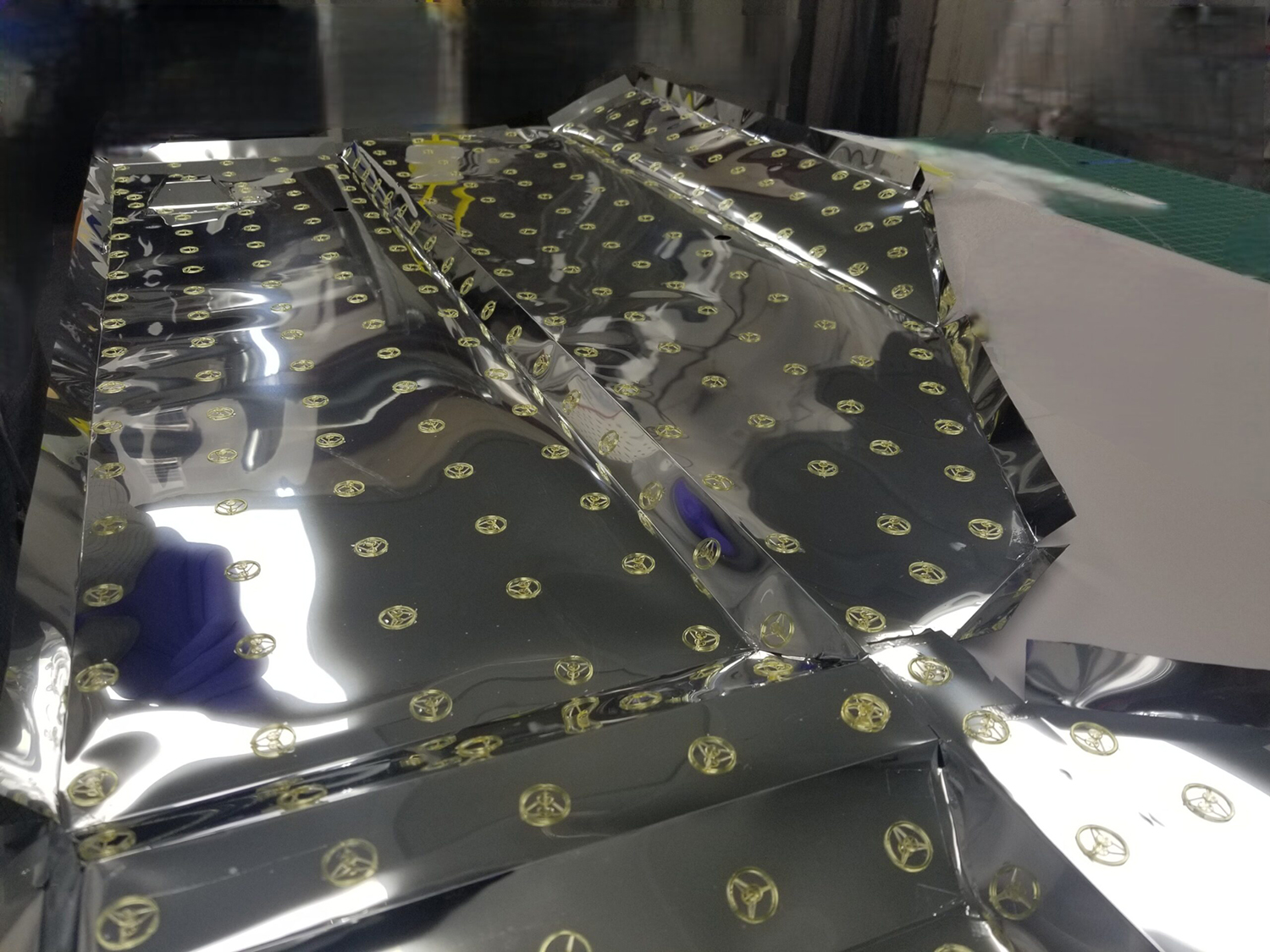
Quest’s key innovation involved replacing the netting between Mylar layers with tiny polymer spacers shaped like tripods, preventing the layers from touching. Alan Kopelove explained, “Heat has to conduct through a long, thin part to get from one layer to the next.” And these tripod arms are made of a particularly poor heat conductor.
Kopelove is CEO of Quest Thermal Group LLC of Arvada, Colorado, which spun off from the original company.
“The performance is better and much more consistent,” Plachta said.
The company named its invention Integrated MLI, or IMLI. Subsequent NASA SBIR contracts supported the development of versions that could wrap around pipes, survive micrometeoroid strikes, or support a thermal shield for active cooling by a cryocooler.
It wasn’t until 2019 that any of these flew on a NASA mission. Since its successful demonstration on the Green Propellant Infusion Mission and others, IMLI has been incorporated into NASA landers, rovers, satellites, space telescopes, and more. Artemis mission planners, aiming to land astronauts on the Moon, are considering IMLI for long-duration hydrogen propellant storage.
With governments around the world investing in technology to support hydrogen energy infrastructure, Quest’s innovations are also poised to benefit that entire industry. The insulation will also decrease losses of other cryogenic fuels, such as liquid natural gas.
But Quest is just finding its way to commercialization. IMLI is slated to fly on Blue Origin’s Mark 1 and other private lunar landers NASA is supporting through the Commercial Lunar Payload Services program. The company has also been contracted for preliminary design work on an aircraft hydrogen tank, insulation for superconducting power lines, insulating telecommunications satellites, and micrometeoroid protection for new satellite platforms.
“What we’re developing for NASA will find use in other places,” Kopelove said. “We’ve only started exploring the many potential commercial applications.”
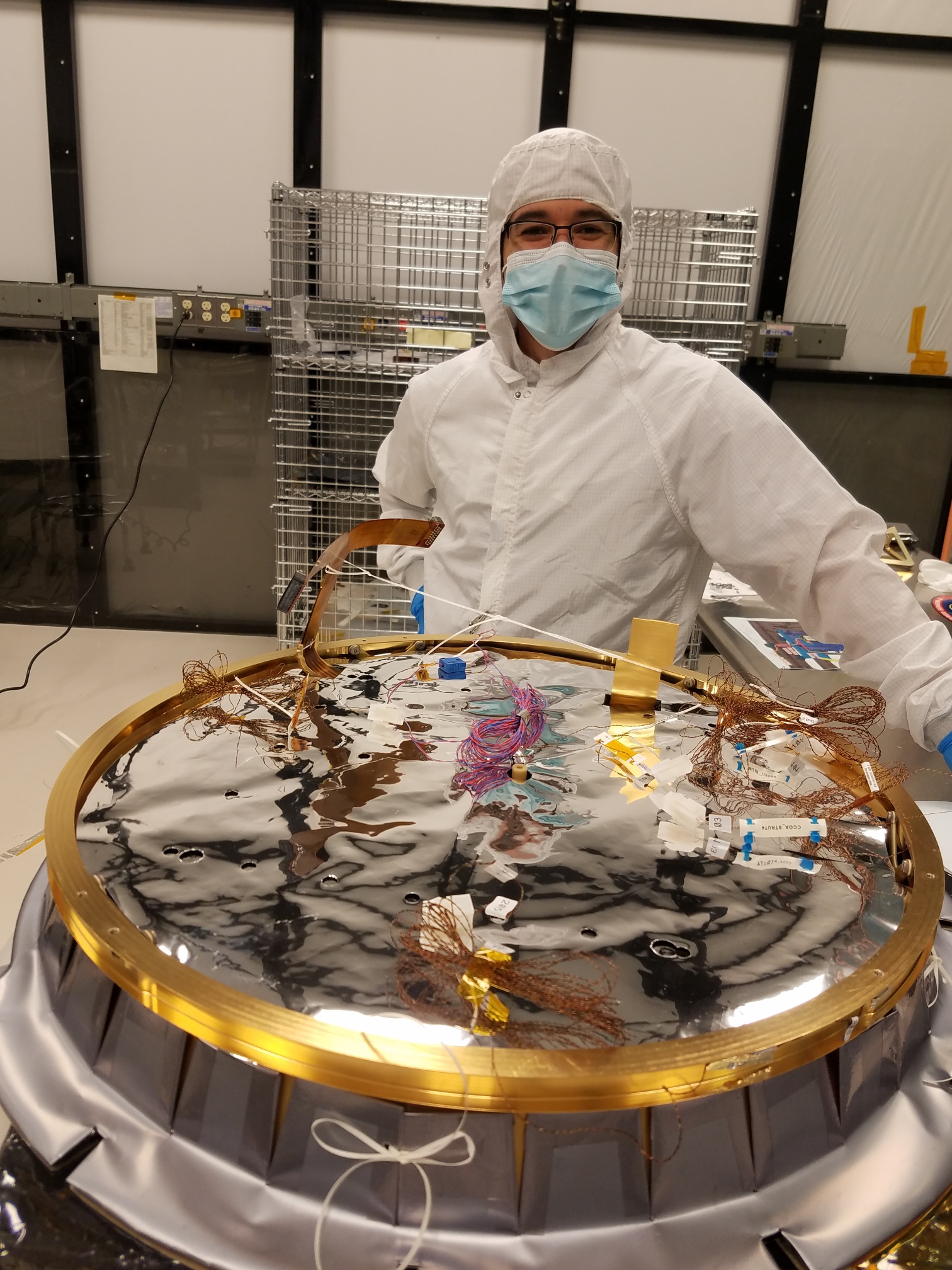
Here, Integrated Multilayer Insulation protects a radiator on the Lucy spacecraft, which is now exploring asteroids around Jupiter and in the solar system’s main asteroid belt. Credit: NASA
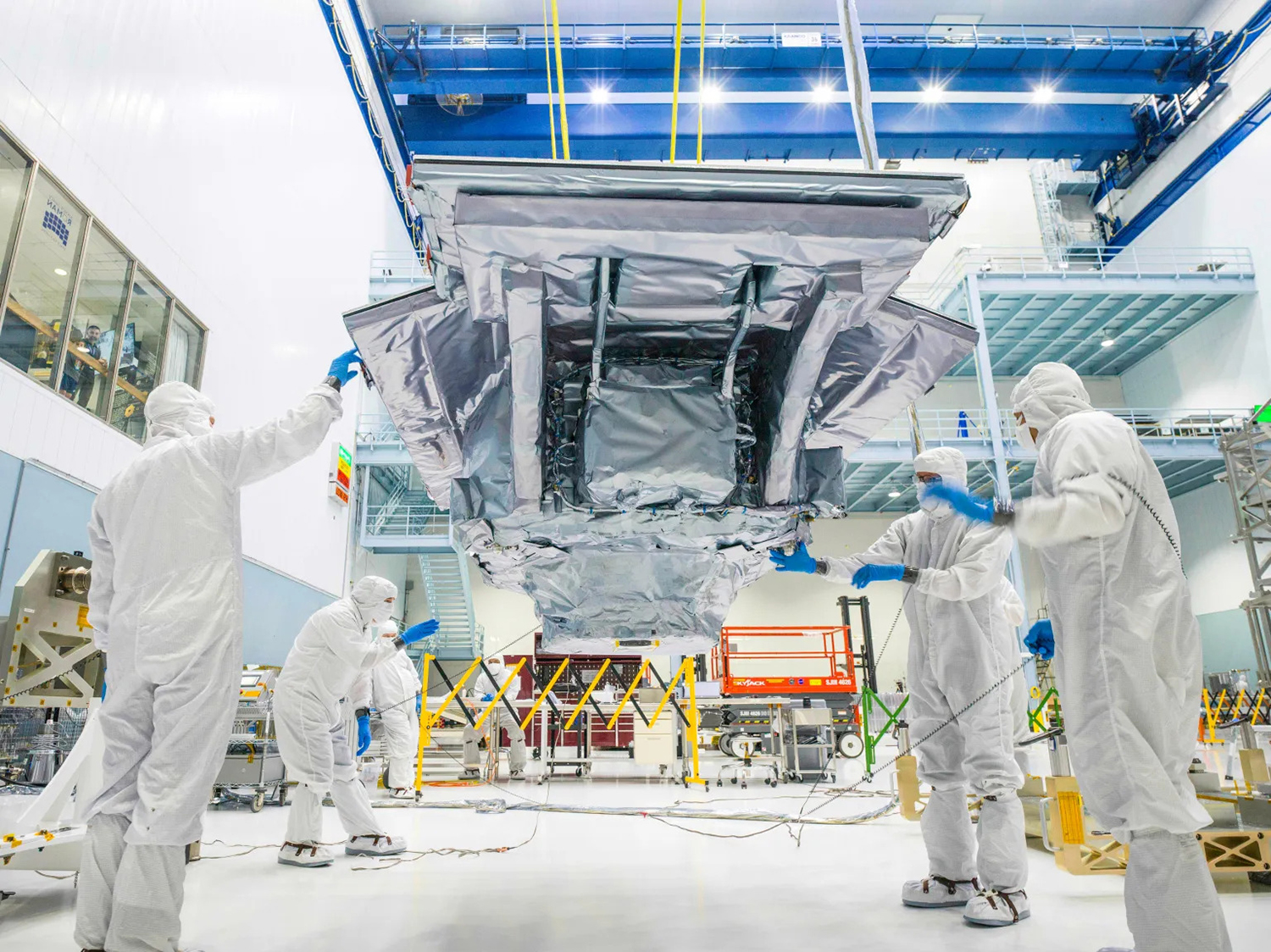
Large parts of the Nancy Grace Roman Space Telescope’s Wide Field Instrument are insulated with Integrated Multilayer Insulation. The observatory, which has a field of view at least 100 times larger than that of the Hubble Space Telescope, is expected to launch in 2027. Credit: NASA
The secret to Integrated Multilayer Insulation is that it replaces the netting that has traditionally separated reflective layers in multilayer insulation with a series of fixed plastic spacers designed to hold everything in place while allowing as little heat conduction as possible. Credit: Quest Thermal Group LLC