

For Battery Safety, KULR Heads Prevail
Subheadline
Company’s work with NASA improves lithium-ion battery manufacturing, testing, packaging
About 15 minutes after takeoff on a January morning in 2013, a smoke alarm and an unusual smell caused a Japanese All Nippon Airways flight bound for Tokyo to divert for an emergency landing. The cause was traced to a short circuit in one of the eight lithium-ion cells in the Boeing 787 Dreamliner’s main battery, which had triggered a “thermal runaway” incident. Heat from the cell had apparently melted insulation and let it contact a brace bar, unleashing currents through the battery box that overheated and short-circuited other cells.
Just days earlier, the lithium-ion auxiliary battery on another 787 parked at a gate at Boston Logan International Airport had spontaneously combusted shortly after passengers and crew had disembarked.
The Dreamliner was the first commercial aircraft to make extensive use of lithium-ion batteries. Following the two incidents early in its second year of service, the entire fleet — then 50 planes — was grounded pending investigation.
Since their first commercialization in the early 1990s, lithium-ion batteries have become increasingly important, first for powering consumer devices, then hybrid and electric vehicles, as well as aeronautic and defense applications. Now they’re being eyed for powering flight in small passenger aircraft.
Affordable, packing a lot of energy into low mass and volume, and able to survive countless recharge cycles, lithium-ion batteries offer distinct advantages. But with flammable electrolytes that can ignite when things go wrong, they present a safety challenge that becomes even more dangerous in flight.
One company rising to that challenge is KULR Technology Group, headquartered in Webster, Texas. KULR is using several NASA technologies licensed through the agency’s Technology Transfer program to consolidate its position at the forefront of lithium-ion battery safety.
Starting Thermal Runaway to Stop Thermal Runaway
By the time of the Dreamliner battery malfunctions, NASA too was using lithium-ion batteries. The agency was invited to join an investigation into the incidents and came away with its own concerns. The NASA Engineering and Safety Center (NESC) began looking for ways to stop thermal runaway from propagating from cell to cell within a battery. But it found there was no way to reliably model the phenomenon, which could be unpredictable.
“The thermal models kept indicating that if you trigger this cell into thermal runaway, all the other cells are going to propagate,” said Will Walker. “But then they would run an experiment, and propagation wouldn’t happen.”
A video of a thermal runaway event exposed the reason: “A lot of the energy gets spewed out,” Walker said. “So you’ve got to understand not just the total energy but the fraction — how much stays put, and how much gets ejected away?”
With funding from NESC, Walker, then a battery thermal engineer at NASA’s Johnson Space Center in Houston, became one of the inventors of fractional thermal runaway calorimetry (FTRC). KULR, where Walker is now chief technology officer, has now licensed that technology from Johnson.
KULR also has an exclusive license for another technology developed at Johnson — the internal short circuit (ISC) device, which triggers thermal runaway for testing purposes.
When a company wants to prove a battery pack’s safety, Walker said, the ISC can put it to the test. “You intentionally put a cell in there with an ISC device inserted so you can trigger thermal runaway quickly.” Other methods to trigger a cell, like puncturing or heating it, bias it toward or against propagating to other cells, he said, whereas an ISC device mimics thermal runaway in the field.
KULR works with battery manufacturers around the world to get its ISC devices inserted into their cells to create trigger cells. The company then sells these to other companies or uses them in-house for testing as a service.
For in-house testing, the FTRC technology has become popular. KULR shares a NASA license for FTRC testing on small batteries and holds an exclusive license from the space agency for a large-format version of the testing. In both cases, the technique is used to determine the total energy released from a given lithium-ion cell during thermal runaway, the fraction of that energy that’s transferred through the cell casing, and how much is ejected from the cell. That information is used to design and test battery assemblies that will stop thermal runaway from spreading.
Safety Standards Sell Cells
FTRC testing can also help inform and improve some of KULR’s own products, such as the Thermal Runaway Shield (TRS), which wraps cells in lightweight carbon fiber and phase-change materials to draw heat from batteries and contain it. By 2017, the company was using this concept, developed with NASA and the Defense Department, in assemblies for lithium-ion battery packs (Spinoff 2020). It has now incorporated TRS into its SafeCASE product line — soft containers for safe transportation and storage of lithium-ion battery packs. Hybrid and electric car manufacturers, battery recyclers, and others are using the SafeCASE line to store battery packs.
One of KULR’s newest product lines is the KULR ONE Space battery family. Previously, the market for space-worthy lithium-ion batteries was dominated by very high-end, multi-million-dollar custom units and lower-end, off-the-shelf varieties that may not meet rigorous standards. “With the emerging space economy, all of these startups with new satellites and probes going into space every year, there’s a need for a new mid-tier battery,” Walker said. “So the KULR ONE Space was meant to take all of NASA’s best practices, principles, and strategies for designing a safe battery and to package it up into commercially viable options.”
These range from a 100-watt-hour CubeSat battery to the 1- and 2-kilowatt-hour packs the company is making for one company’s asteroid-mining probe.
KULR ONE batteries for electric aircraft and defense are also in development. These draw less on the company’s space heritage, but one thing all KULR batteries have in common is that their cells are screened in accordance with NASA standards, which require every cell to be inspected for defects or inconsistencies.
The company recently set up an automated screening line to meet this standard, known as NASA Work Instruction 37A, at high volume, and the screening is applied to all cells used in KULR batteries. And the company also sells screened cells to other companies or screens other companies’ batteries as a service.
And almost all the cells KULR sells or uses in its products come from a shipment that underwent initial spot-check screening by NASA. “That was a strategic procurement we made a few years ago, and then those are the cells we use in 90% of our batteries,” Walker said.
All this work on safety and reliability has made KULR’s products popular across the aerospace, defense, and automotive industries. CEO Michael Mo noted that the SafeCASE line has been quick to take off. “We’re serving General Motors with that product, we’re serving battery recyclers for storage, we’ve got a Department of Transportation special permit, and we’re working with UPS,” Mo said.
“In terms of the internal short circuit device, it’s used by over 80 customers now,” he added. “We’ve got SpaceX, Tesla, Toyota, Volkswagen, all those companies, they’re all using this product. All those are also customers for the FTRC test.”
And Mo noted that FTRC testing to characterize thermal runaway behavior didn’t even exist until NASA invented it. “This is a really good example of a NASA invention benefiting the entire battery industry,” he said. “Something to test a battery going to space is now going to test for automotive batteries, defense batteries, electric aviation, you name it.”
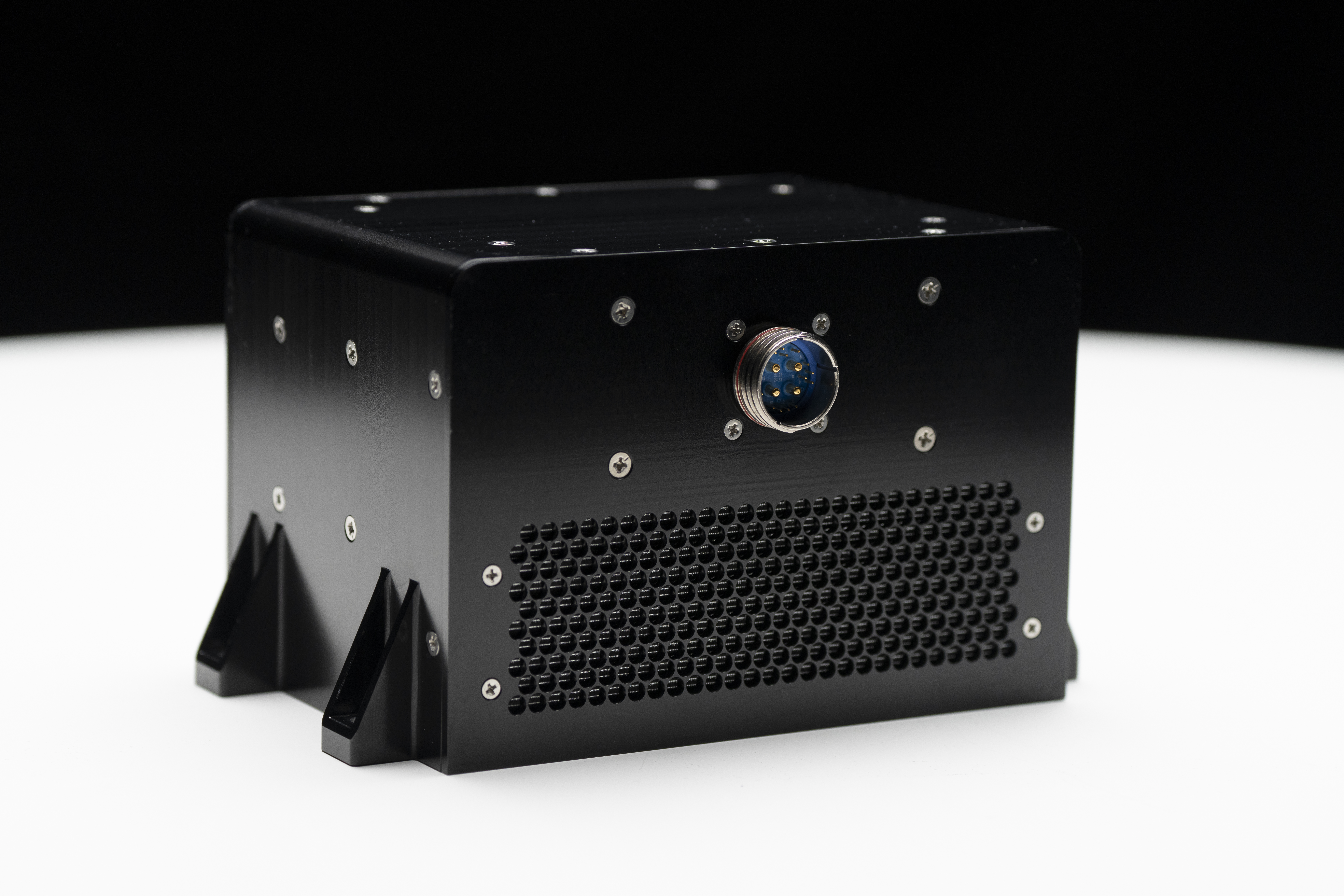
The KULR ONE Space 400 series is the largest in a line of batteries KULR offers for space applications, based on NASA best practices and principles, as well as technology the company developed with the space agency. Credit: KULR Technology Group
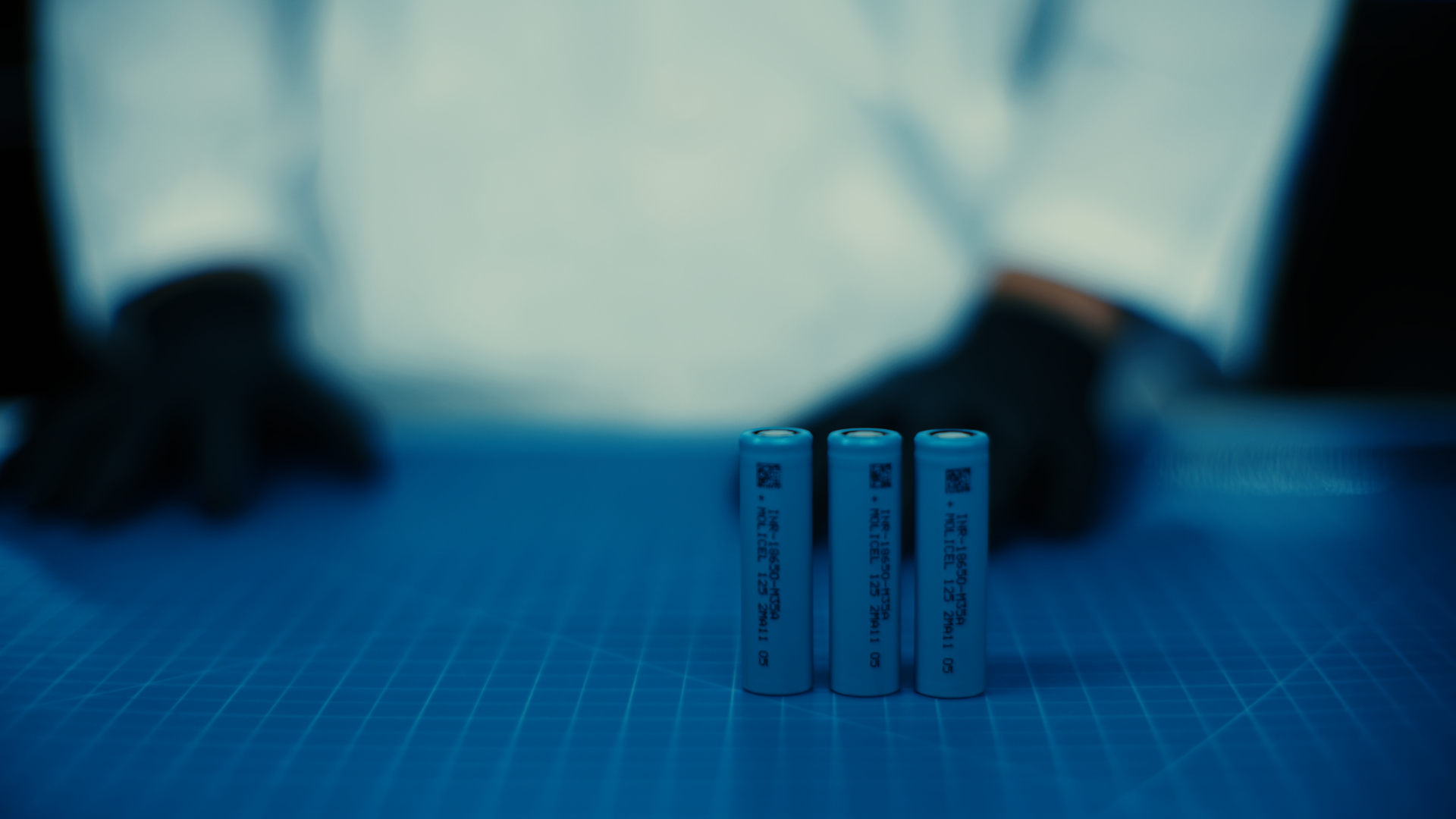
Among the products KULR offers are lithium-ion cells screened in accordance with NASA Work Instruction 37A, which is in place to ensure reliability and safety for space missions. Credit: KULR Technology Group
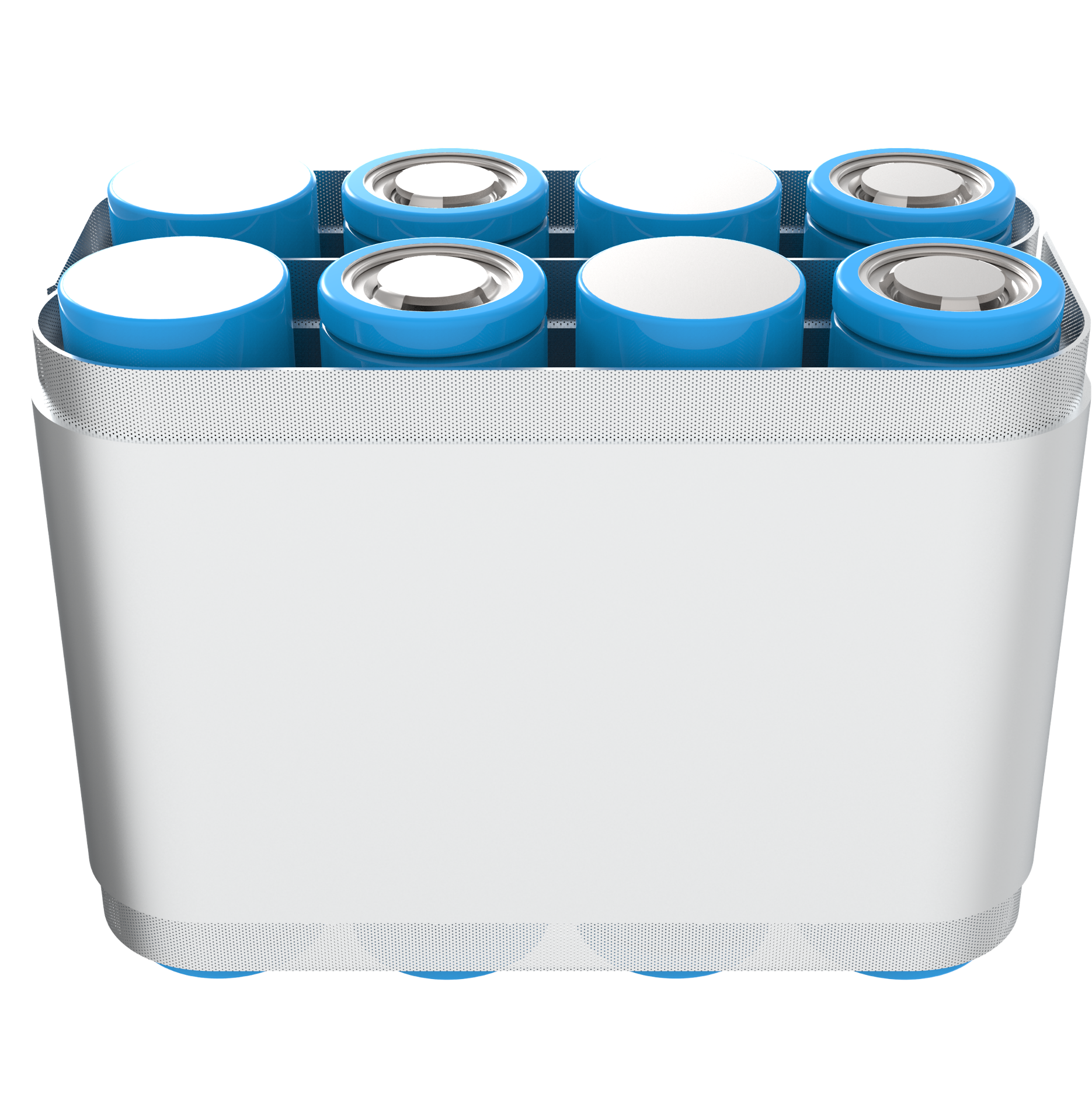
KULR’s Thermal Runaway Shield technology, developed during work with NASA, uses lightweight carbon fiber and phase-change materials to contain the heat if a lithium-ion cell goes into thermal runaway. Credit: KULR Technology Group
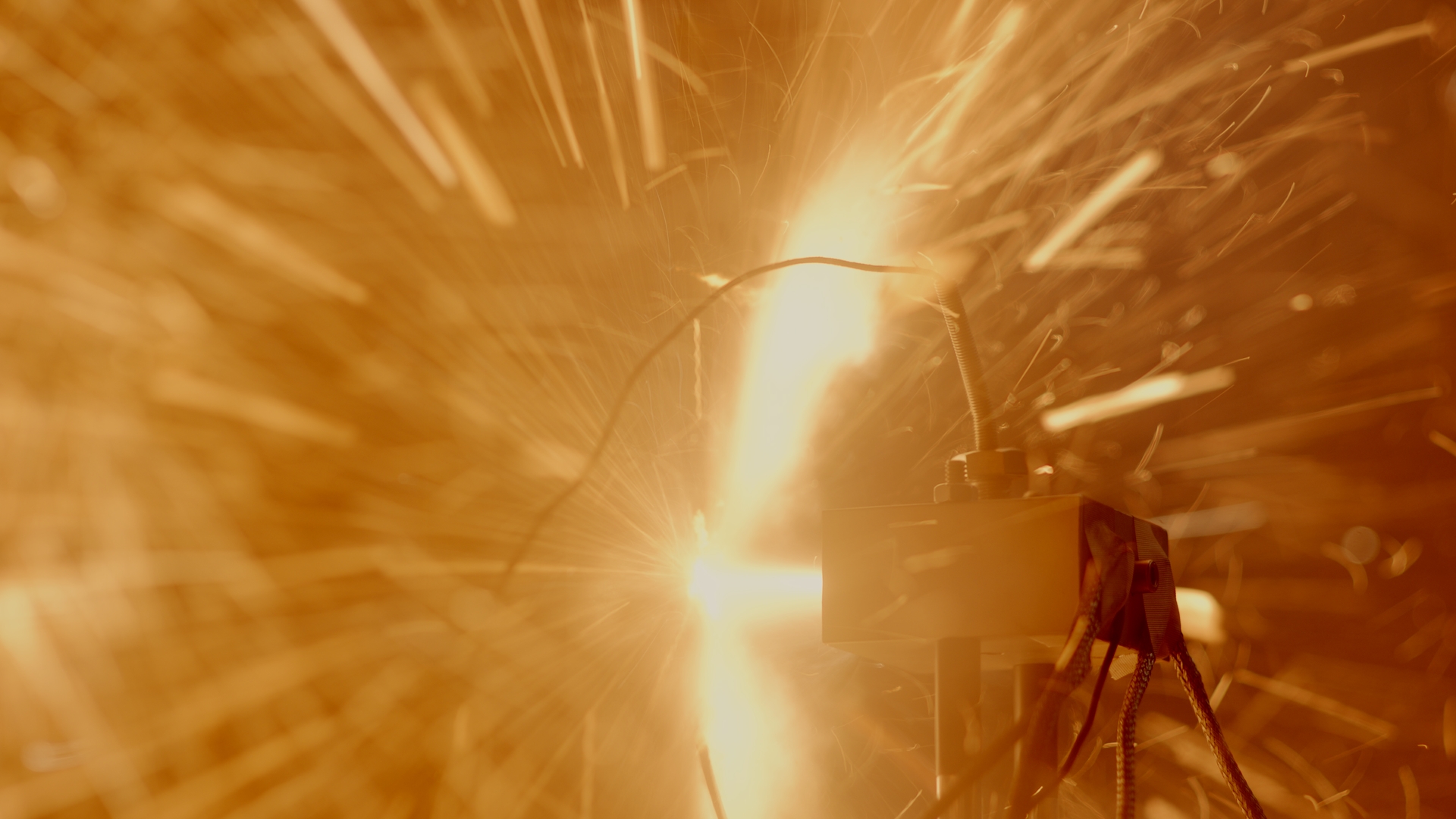
Sparks fly after KULR technicians short-circuit a lithium-ion battery for testing. From NASA, the company licenses both internal short circuit devices to trigger thermal runaway and fractional thermal runaway calorimetry technology to measure and characterize the ensuing energy release. Credit: KULR Technology Group
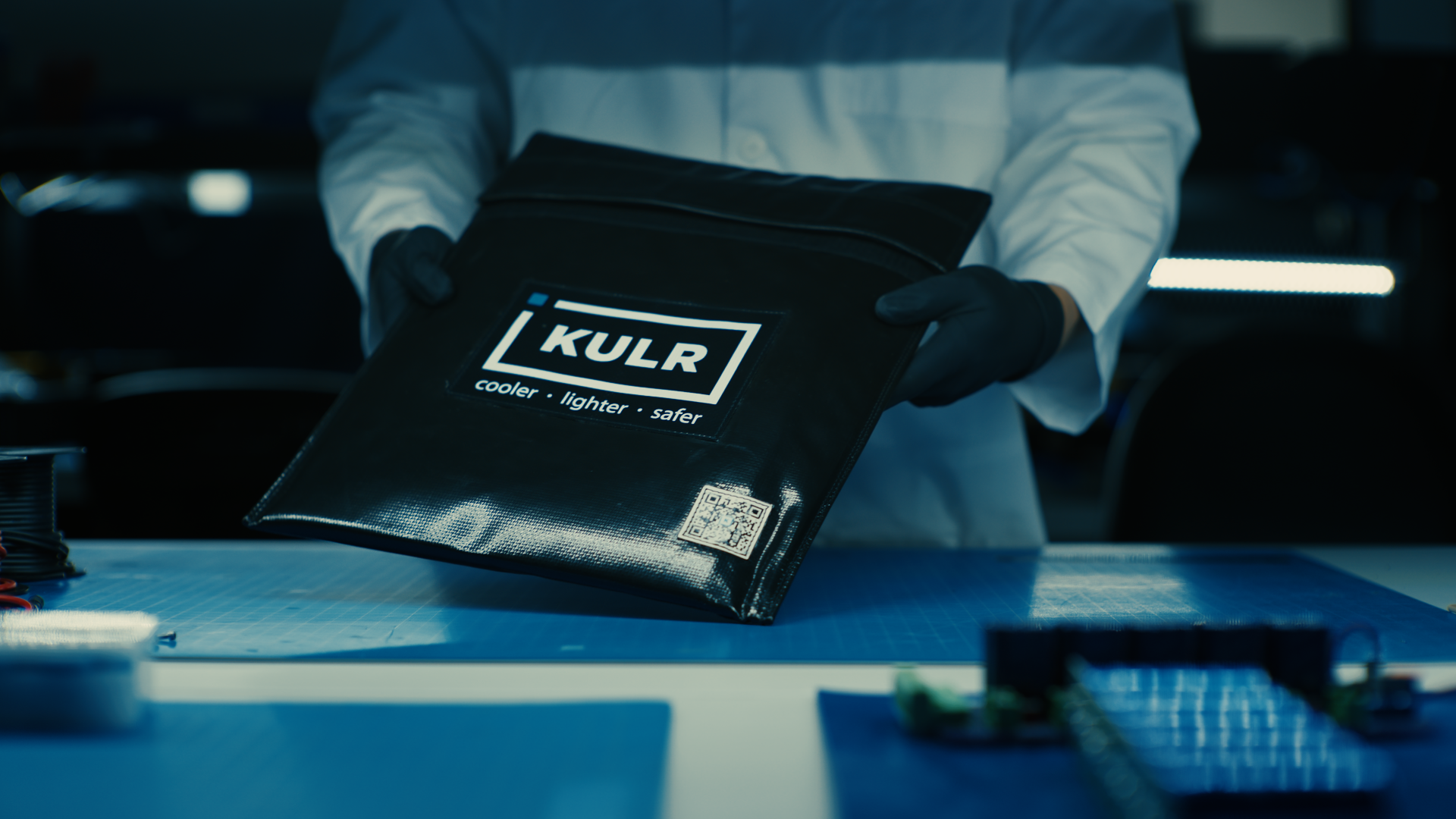
The SafeCASE Sleeve, which incorporates Thermal Runaway Shield technology that KULR developed while working with NASA, is one of several products the company offers for safe storage and transportation of lithium-ion battery packs. Credit: KULR Technology Group