

Humanoid Robots Assist Assembly Lines
Subheadline
Apollo robots work in environments designed for people — on Earth and in space
While autonomous robots are playing larger roles in factories and warehouses, certain tasks still require the arms, legs, and eyes of a human. A self-driving tugger train that pulls boxes through a warehouse can’t load or unload itself, for example. That’s where Apollo comes in. The robot can pull boxes from shelves and walk them to a pallet as easily as anyone, without ever getting tired. With its general-purpose, humanoid form, it can switch between myriad tasks, as people do.
These robots from Austin, Texas-based Apptronik Inc. are currently helping humans in factories build Mercedes-Benz cars and even more Apollo robots. Equipped with AI, or artificial intelligence, Apollo was developed with NASA support and as a continuation of the space agency’s own work on humanoid robots for space.
“Apollo is really the culmination of all of the lessons learned from over a decade working in humanoids,” said Nick Paine, Apptronik’s cofounder and chief technology officer. “NASA has been a partner throughout.”
Humanoids as Avatars
Humanoid robots can do many of the same jobs and move around the same spaces as humans, making them intriguing as possible coworkers on Earth and in space.
NASA began building a humanoid robot for space in the late 1990s, and in 2011 the second version of that effort, Robonaut 2, flew to the International Space Station, where it remained in residence until 2018.
R2 was initially just a head and torso with dexterous hands that made it capable of the types of maneuvers typically assigned to humans. In 2014, it received legs, allowing it to more easily move around the space station.
“The goal was to get it outside of the space station and have one of the astronauts inside operate it like an avatar,” said Kimberly Hambuchen, deputy chief for the Software, Robotics, and Simulation Division within the Engineering Directorate at Johnson Space Center in Houston.
“We never met that goal,” Hambuchen said, “but we found the humanoid form was a good generic robotic archetype that could fit into whatever we built for humans.”
Valkyrie
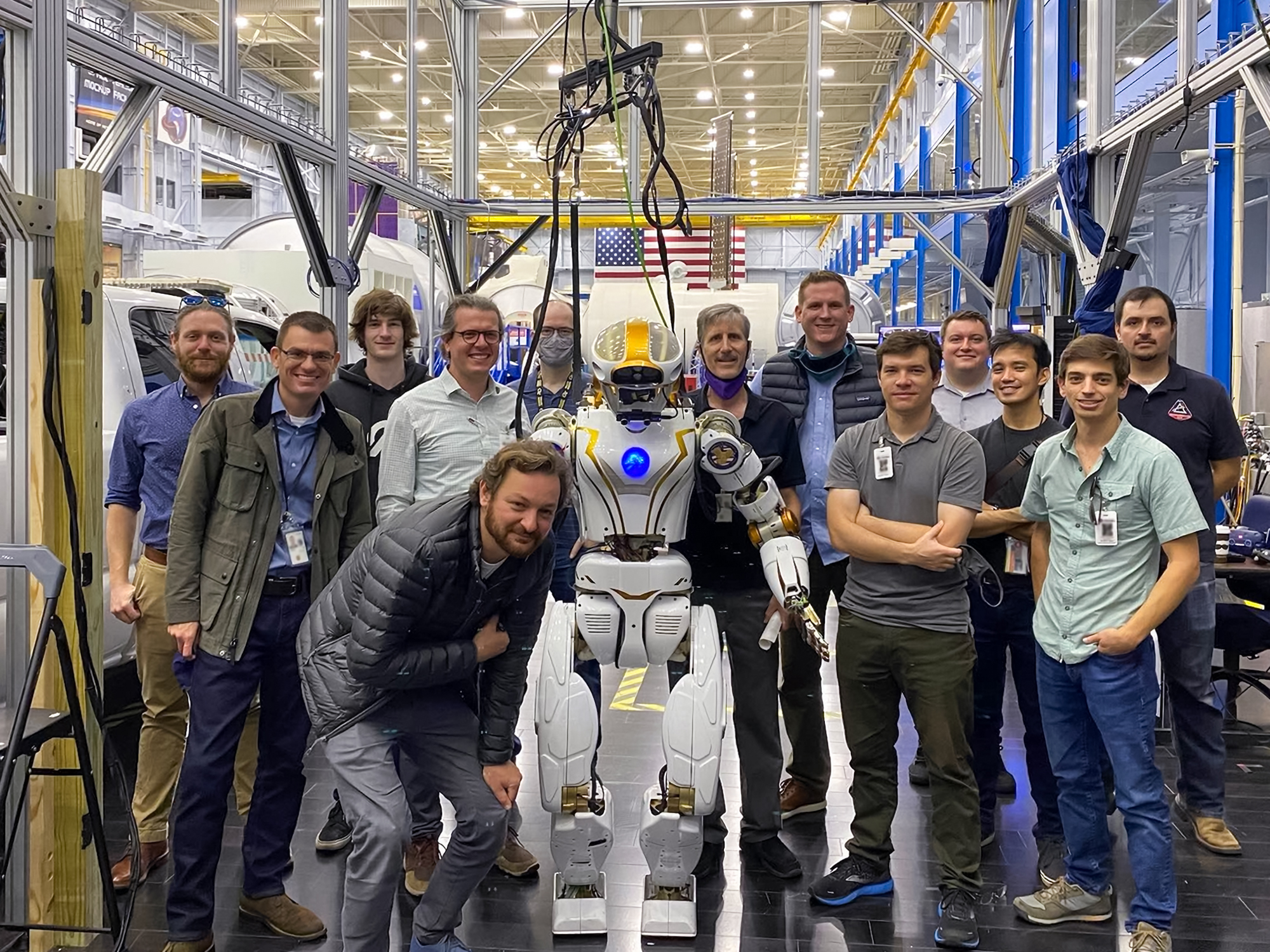
In 2011, Apptronik’s Paine was researching robotic actuation for his Ph.D. at the University of Texas when he and his advisor, Luis Sentis, joined a team of engineers at Johnson to build a humanoid robot, this one called Valkyrie, for a challenge hosted by the Defense Advanced Research Projects Agency, or DARPA.
For Paine, who was already familiar with the space agency’s work with humanoids, having read and been influenced by several NASA papers on Robonaut 2, working on Valkyrie was a treat.
“It was a great opportunity for me and my professor to go and work with such a high-caliber and skilled engineering team,” he said, referring to Sentis, who also cofounded Apptronik several years later.
Although Valkyrie didn’t win the DARPA competition, the robot was built with NASA needs in mind and continues to serve as a testbed platform to demonstrate robotic capabilities.
“You see all of the excitement and energy around humanoids today,” Paine said. “I think the DARPA Robotics Challenge and NASA’s role in it has a lot to do with that.”
Shared Heritage
Following the competition, Paine and Sentis continued working on Valkyrie. When they founded Apptronik in 2016 with CEO Jeff Cardenas, the company’s first job was a Small Business Innovation Research contract from NASA to develop their liquid-cooled robotic actuator technology. Actuators translate commands into movements.
The company continued working on NASA projects with funding for small businesses and through the Game Changing Development Program, and kept up with the robotics engineers at Johnson.
“We had a contract to work on some more commercialization-focused developments, partnering with NASA on something we could take to market,” Paine recalled. “There has always been a sort of shared heritage.”
Samuel Alex Sowell, a robotics engineer at Johnson, worked on several of these projects. “We helped with their first design and then were more hands-off with the second design,” he said.
Maturing on Earth
Apptronik is launching an updated version of Apollo, its 5-foot, 8-inch robot weighing 160 pounds and capable of carrying up to 55 pounds. Apollo can be equipped with legs and feet or work as a mounted torso.
The next generation of Apollo is already under development, and the company hopes to ramp up production quickly.
In March 2024, Apptronik began working with Mercedes-Benz, bringing Apollo into the auto company’s factories and plants. Nine months later, Apptronik announced a strategic partnership agreement with the Google DeepMind robotics team to grow Apollo’s AI capabilities.
For the moment, Apptronik is working to improve Apollo’s physical capabilities and ability to do useful work — often the monotonous or tedious tasks humans don’t prefer — in factories and other environments. “It will take more time to see these systems graduate into environments with less trained individuals, like in the home,” Paine said.
In 2025, Apptronik announced it had raised more than $400 million in its first major round of funding. Top investors included Google, Mercedes-Benz, B Capital, and Capital Factory.
NASA, meanwhile, isn’t currently developing new humanoid robots, but the agency has a strong interest in the Earth-based humanoid robot industry, where the technology continues to mature.
Commercially produced humanoid robots could one day serve as extra crewmembers that don’t need food, water, or air. “They could stay with whatever systems we put on the Moon or on Mars and continue to do maintenance work when there are no humans there,” said NASA’s Hambuchen.
“That’s really why we continued to fund Apptronik,” she said. “Because there was always that potential that eventually this technology could come back to space.”
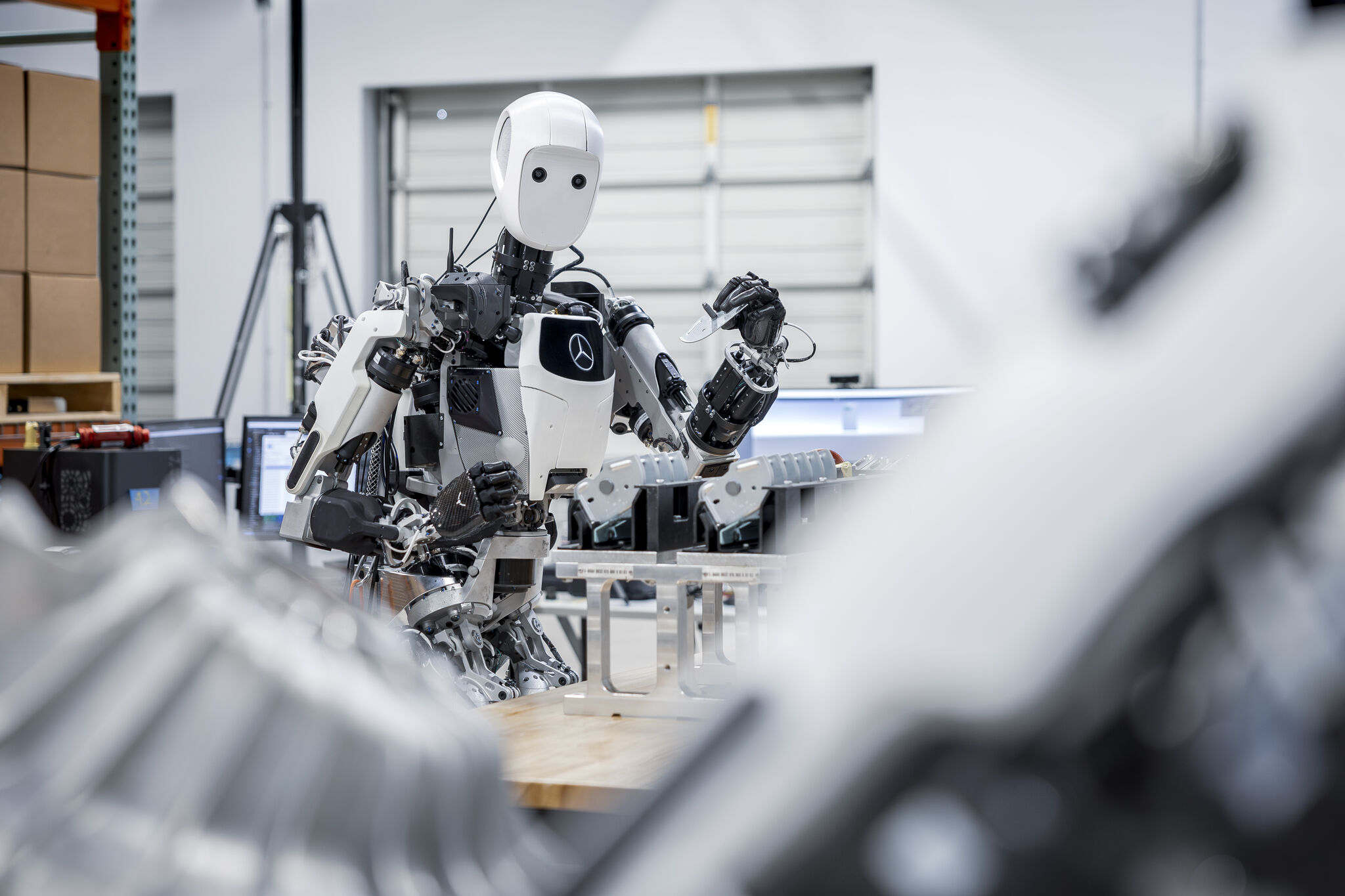
At 5 feet and 8 inches and 160 pounds, the Apollo humanoid robot has been designed to do useful work in factories and other environments. Credit: Apptronik Inc.
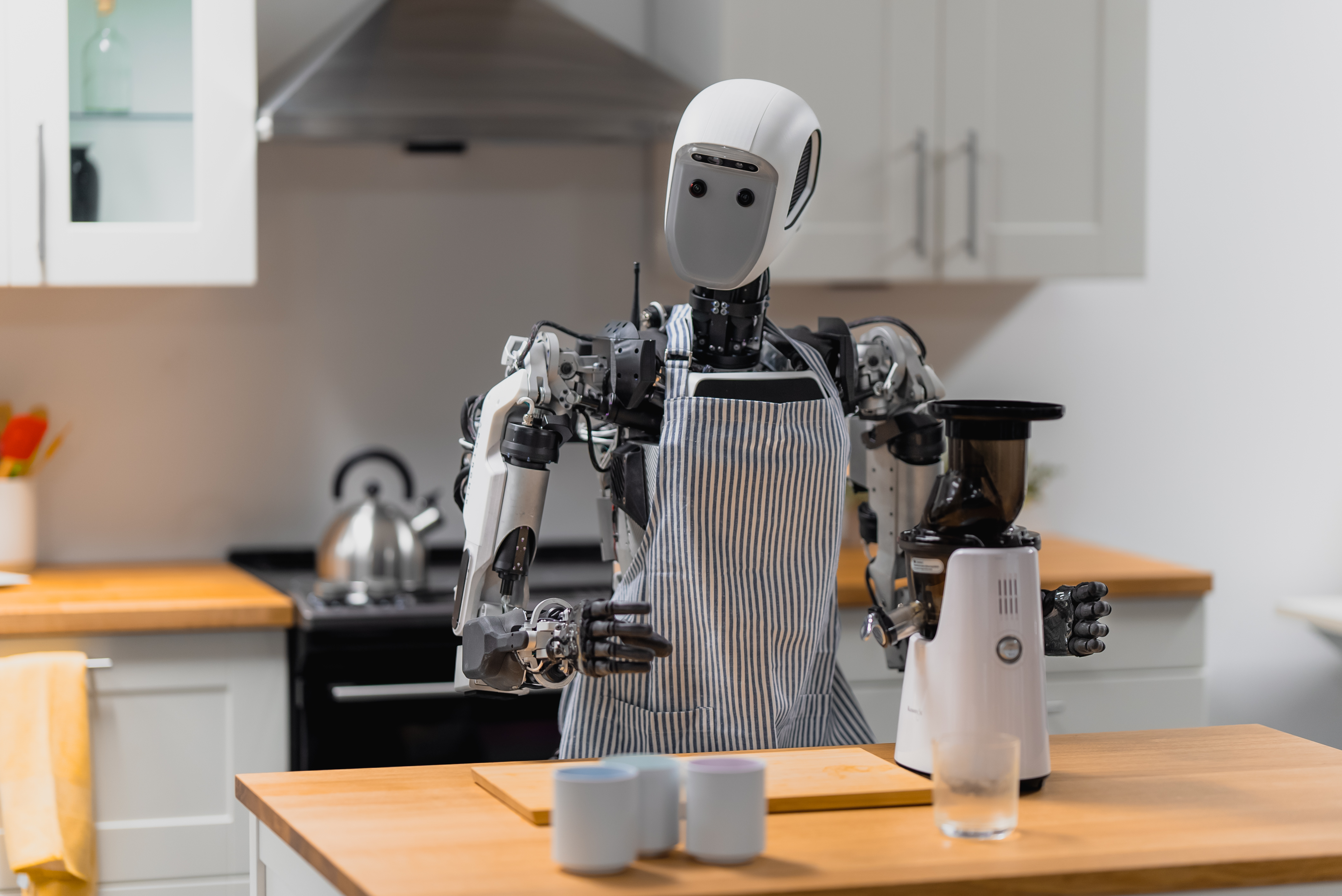
While Apollo is designed to work in factories and industrial settings, it could one day graduate to more domestic environments. Credit: Apptronik Inc.
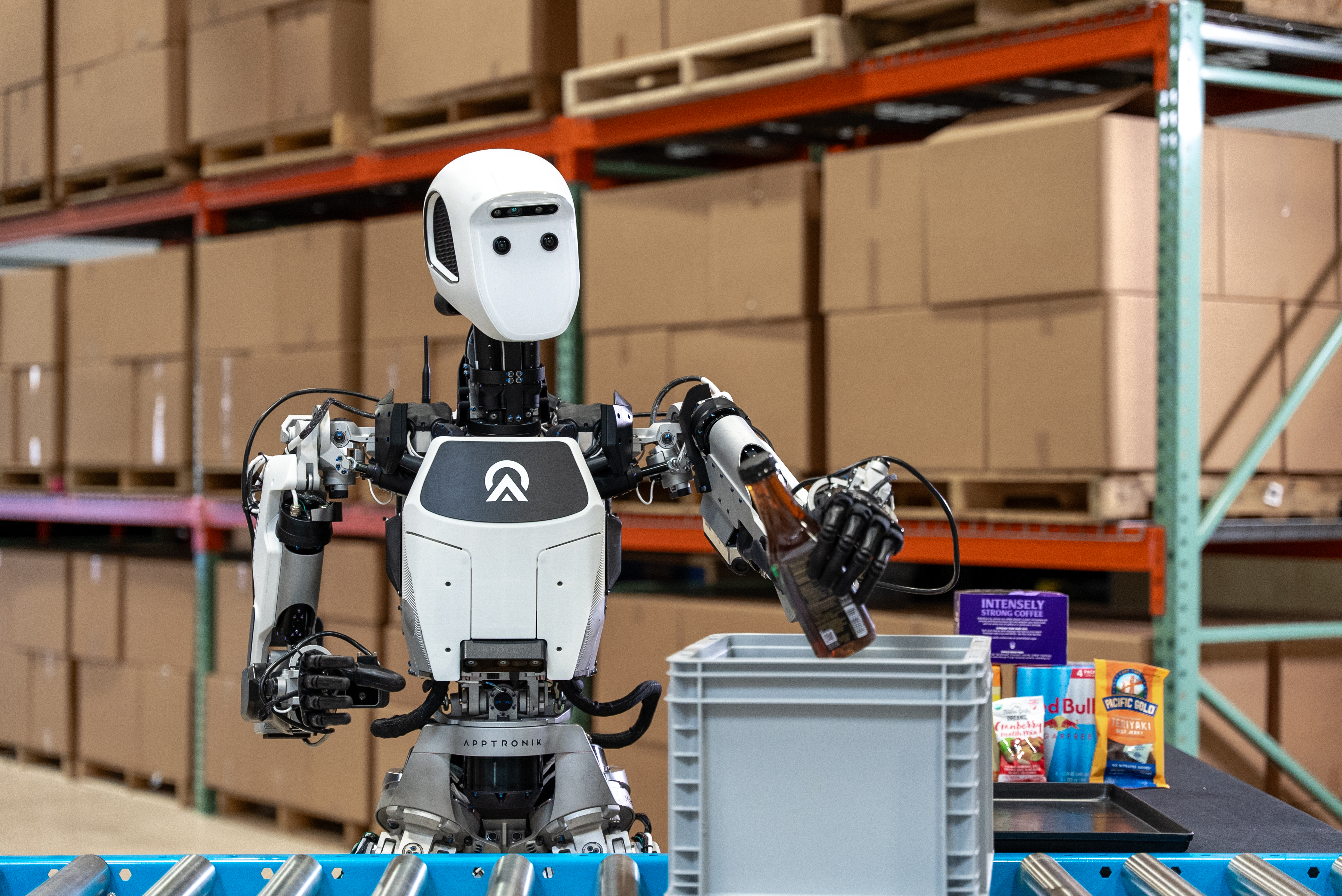
Apollo can perform the monotonous or tedious tasks humans don’t prefer. Credit: Apptronik Inc
Apptronik and NASA employees stand with Valkyrie, a NASAdeveloped humanoid robot, during a 2021 meeting about one of the company’s Small Business Innovation Research contracts. Apptronik’s founders helped build Valkyrie. Credit: NASA