

Mission: Home
Subheadline
Texas community is 3D printed like a Martian habitat
A Texas neighborhood of 100 brand-new curvy-walled homes was constructed with a 3D printer that also built a model Martian habitat for NASA. The technology may now be headed for the Moon.
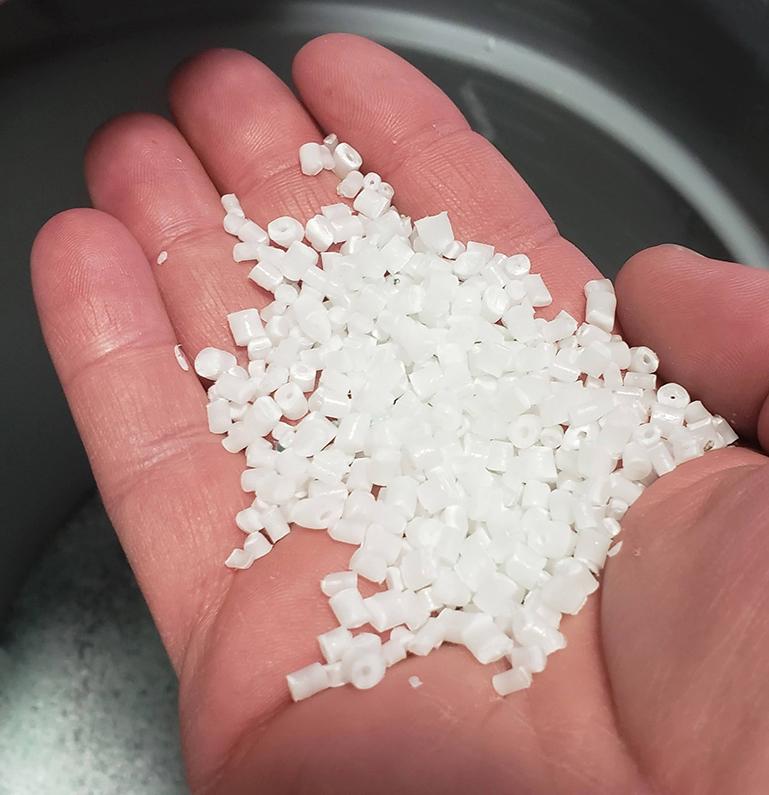
Austin, Texas-based ICON Technology Inc.’s enormous Vulcan 3D printer extrudes a proprietary concrete mix print material to build up the walls of the home, layer by layer, for dwellings on Earth and, eventually, beyond.
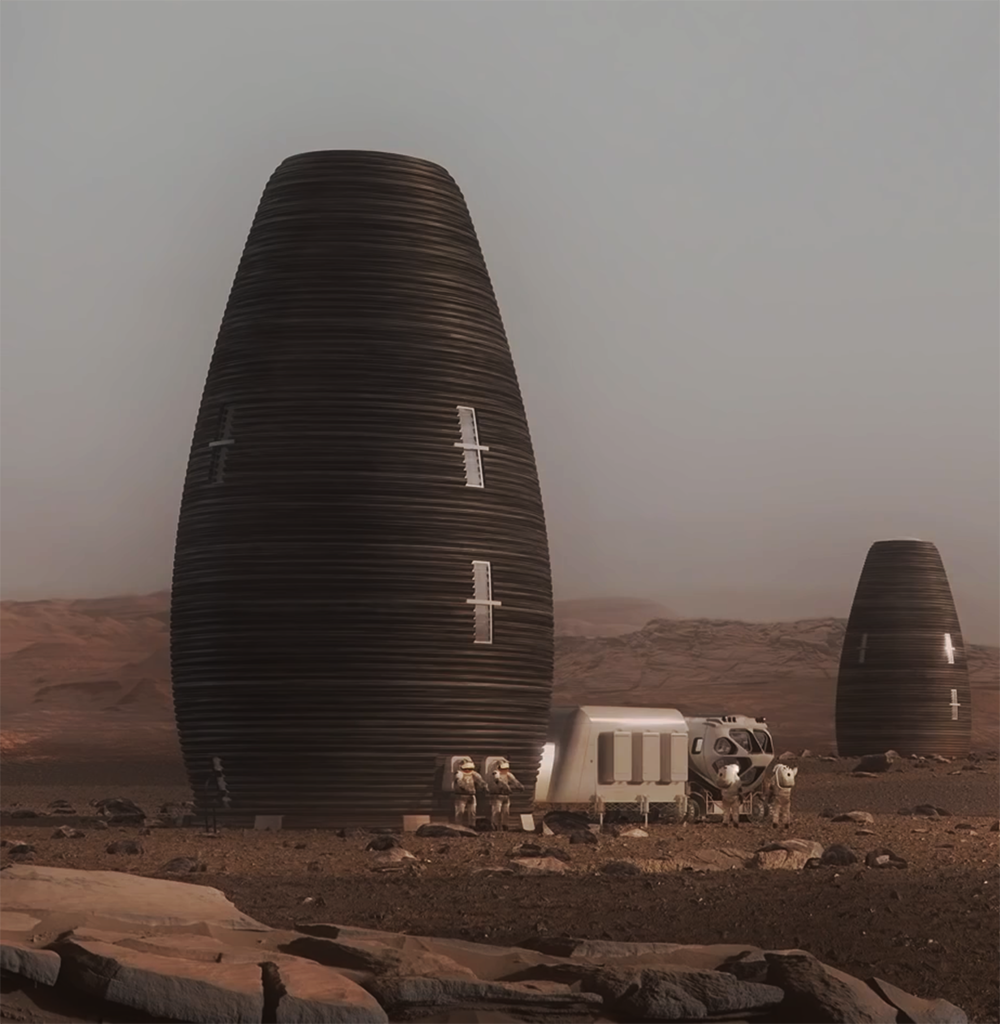
ICON’s collaborations with NASA began with the 3D Printed Habitat Challenge in 2019 to create shelters for Mars and other deep space destinations. A few years later, ICON won a NASA subcontract to 3D print a Mars habitat analog, a dwelling that crew inhabit on Earth for a year at a time as NASA studies the psychological effects on astronauts of a long stay on a distant planet.
Since then, the company has built more than 200 homes and other structures on Earth and won major NASA contracts.
“Every project we complete introduces a new opportunity to think about how technology can improve the way we build, making it faster, more sustainable, and more beautiful in design.” said Evan Jensen, ICON’s senior vice president of engineering. Each project informs the next.
A Competition That Spurred an Industry
When NASA began designing its Mars Habitat Challenge over a decade ago, most 3D printers were boxes that might print out a trinket or ideally a useful part for something, recalled Monsi Roman, the competition’s program manager at the time.
“We went from those boxes to the vision of 3D printed dwellings,” she said. “But practically speaking, we still had to get to that level.”
The NASA program spurred the entire industry of structural 3D printing, from wall systems to encouraging innovative print materials that could incorporate resources on the ground. Ideally, missions to the Moon or Mars will be able to build with lunar or Martian regolith, the finely crushed surface rock dust, instead of transporting building material through space.
ICON was a finalist in the seal test stage of the habitat competition, which tested airtightness, qualifying it for the final round of the challenge later in 2019, but the growing company was not able to compete in the next level. ICON’s signature Vulcan 3D printing system was headed to Tabasco, Mexico, to print houses for the underserved, which have since withstood a major earthquake. That project was in partnership with New Story Homes, a nonprofit that helps inadequately housed people become homeowners.
Stepping Stone
ICON’s limited participation in the 3D Printed Habitat Challenge still bore fruit.
After the challenge had concluded in 2019, ICON CEO Jason Ballard met up with Roman at NASA’s Marshall Space Flight Center in Huntsville, Alabama, while dropping his kids off at camp.
“He started telling me what ICON was doing, and I asked him to stay sitting right there while I ran to get one of the executives from our group,” Roman recalled. “I said, ‘You need to listen to this,’ and after that, we started working with them.”
ICON was already working on a project to rapidly build living quarters for the U.S. Air Force, with Small Business Innovation Research (SBIR) funding. The work resulted in a 3,800-square-foot training barracks in Bastrop, Texas, that was, at the time, the largest 3D printed structure in North America, according to the company.
Since then, ICON has also printed barracks and other structures for the Army, the Marine Corps, and other military organizations, all of which appreciate the speed of ICON’s 3D printed construction as well as the ability to locally source raw materials for CarbonX, ICON’s low-carbon concrete blend.
NASA ended up joining that initial Air Force SBIR effort in 2022, with a six-year, $57 million Phase III contract for lunar surface construction technology.
‘Truthfully, It’s Beautiful’
“The Mars Habitat Competition introduced a number of opportunities,” ICON’s Jensen said, citing the major SBIR award as well as an earlier project, the Crew Health and Performance Exploration Analog, or CHAPEA.
Before the lunar construction project, Roman had suggested that ICON and other companies from the habitat challenge respond to the request for proposals for the CHAPEA, the project to print a life-size model Mars habitat in a hangar at NASA’s Johnson Space Center in Houston.
The CHAPEA dwelling is the one that houses crew members during a series of yearlong simulated Mars missions.
ICON ended up winning the subcontract in 2021 from Jacobs, the contractor that oversaw the construction of the 1,700-square-foot analog building called Mars Dune Alpha. The team that sorted through proposals and chose the winner had no ties to the Centennial Challenge.
“It was the first time that a structure like that had been 3D printed,” said NASA’s Roman, referring specifically to the printed dome roof. “And truthfully, it’s beautiful.”
Jensen said the project requirements forced ICON to incorporate new considerations into the design, like a wall system that would work for NASA’s needs — including airlocks and pass-throughs — but also remain stable.
“These are things which are really on the cutting edge that we were able to prototype for the first time within the analog itself,” Jensen said.
The analog’s first simulated Mars surface mission concluded in July 2024, when crew members emerged from the habitat after 378 days of “Marswalks,” habitat maintenance, and other activities.
“The CHAPEA missions are critical to developing the knowledge and tools needed for humans to one day live and work on the Red Planet,” then- NASA Administrator Bill Nelson said at the time.
Forever Homes
Jensen said the analog project “informed hardware, software, and architectural product development for many projects since — including completion of our 100-home subdivision of 3D printed homes.”
ICON built the Wolf Ranch neighborhood outside Austin in Georgetown, Texas, in partnership with Lennar, one of the country’s largest home builders, which handled the roofing and finishings. The community includes eight floor plans designed by the Danish Bjarke Ingels Group, which also collaborated on the Mars Habitat for NASA’s CHAPEA.
Wolf Ranch is the largest neighborhood of 3D printed houses ever built.
“It represents a first-of-its-kind venture, showing how we can introduce 3D printing at scale for residential housing in a way that hasn’t really been done before,” Jensen said of the community.
“With our construction technology, the printer is basically agnostic to what it’s printing,” he said, “so we can introduce curved forms and interesting and more eccentric geometries without additional time or added cost.”
ICON says its building technology comes close to zero waste. The company’s concrete blend is moist enough to extrude but dries quickly enough to support the next layer, without having to trim edges or generate the type of waste that typically ends up in a construction site dumpster.
The concrete homes are built for the long haul, the company says: they can withstand hurricanes and earthquakes and resist mold, and they should still be standing strong after many decades. The community is nearing completion, and over 70% of the homes have been sold. The Wolf Ranch homes have sold in the $400,000 to $600,000 range.
Eye on the Sky
ICON is mission-driven. The company’s stated aims include resolving the global housing shortage with millions of new homes that do not necessarily resemble houses that have been built in the past.
But ICON has also had an eye on the sky from the beginning, according to Jensen.
“We’ve always maintained an appreciation of how diversified this technology and its applications can be,” he said. “I would say ambitions for construction on the Moon and, eventually, Mars, and additive construction in space generally, really go back to the origins of ICON.”
NASA’s Roman said ICON’s expansive view of its technology’s potential was compelling from the start. Now it’s following through.
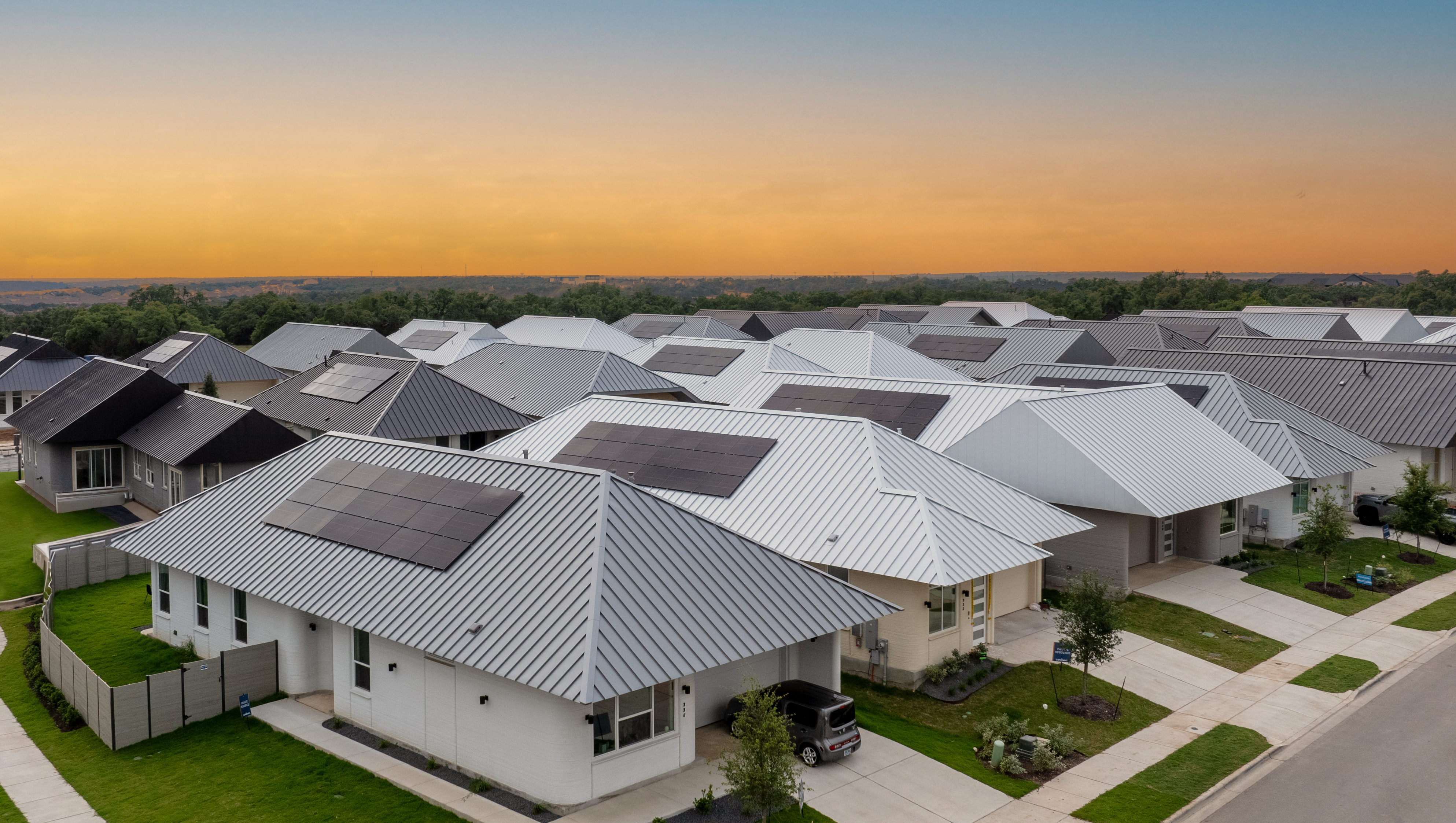
ICON built Wolf Ranch, the world’s largest neighborhood of 3D printed houses, in Georgetown, Texas. The company worked in collaboration with homebuilder Lennar, which handled the roofing and finishings. Credit: ICON Technology Inc.
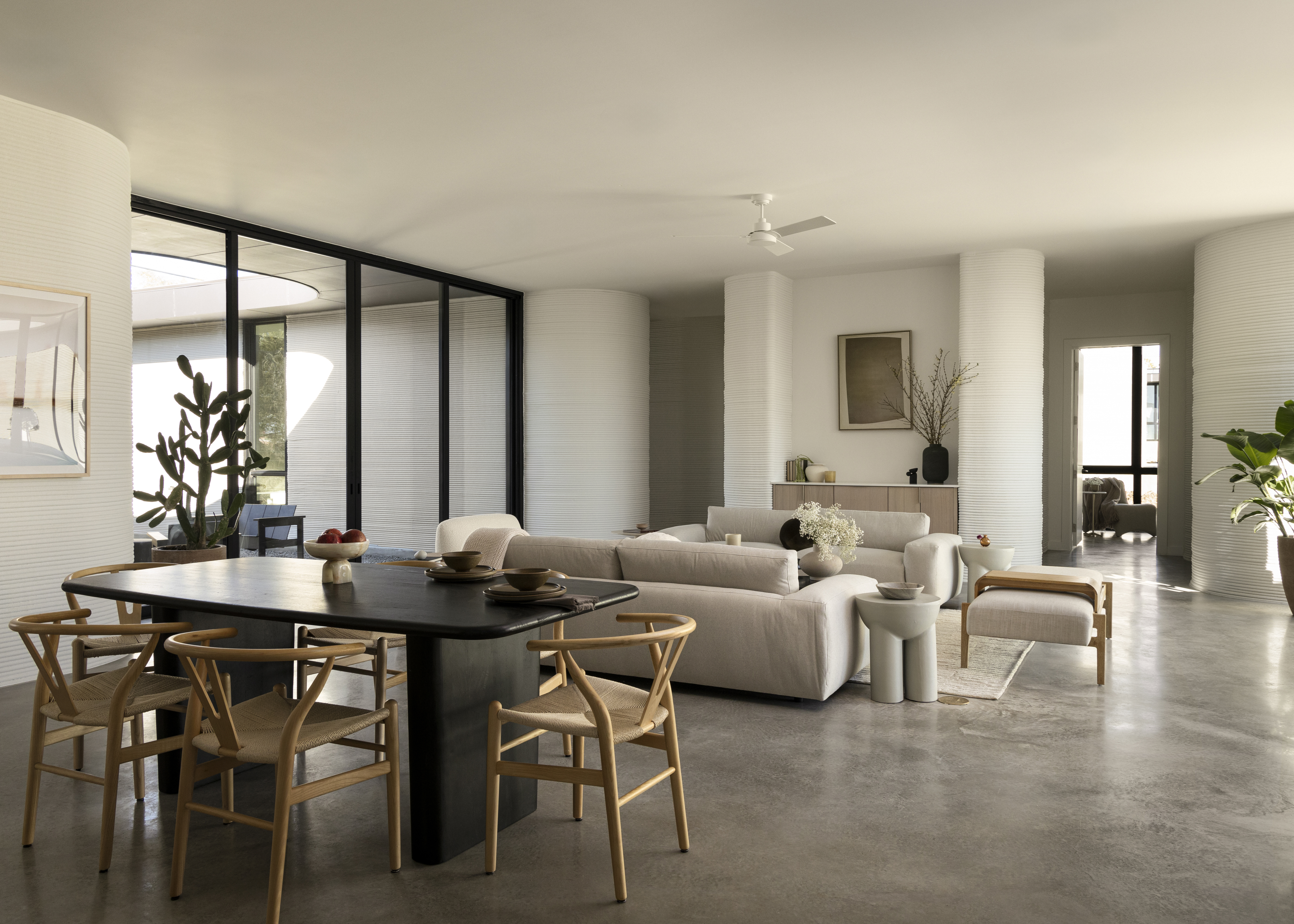
The Wolf Ranch neighborhood includes eight floor plans designed by the Danish Bjarke Ingels Group, which also collaborated on the Mars habitat ICON built for NASA. Credit: ICON Technology Inc.
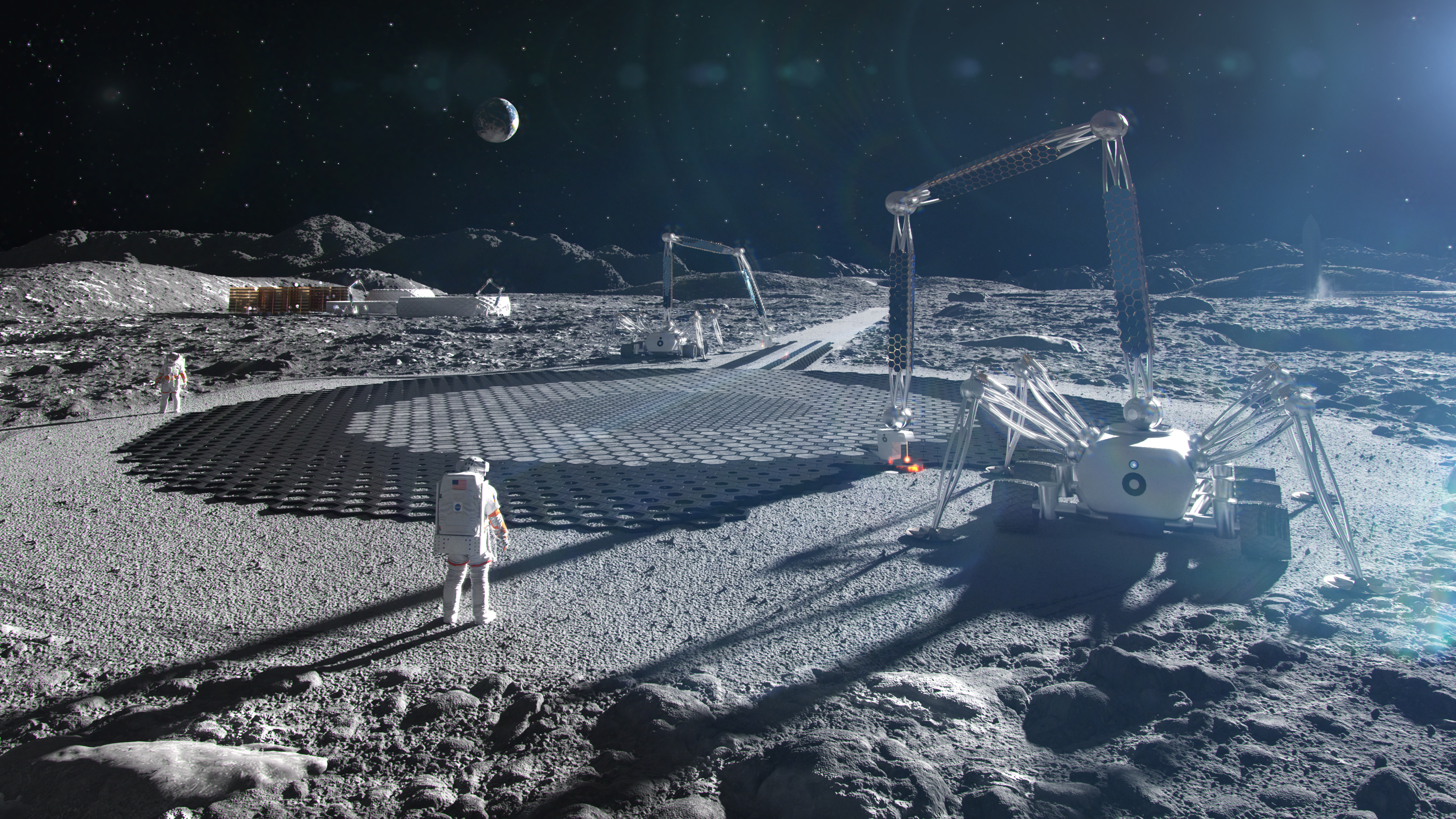
ICON won a $57 million NASA contract to develop lunar construction technology. Credit: ICON Technology Inc.
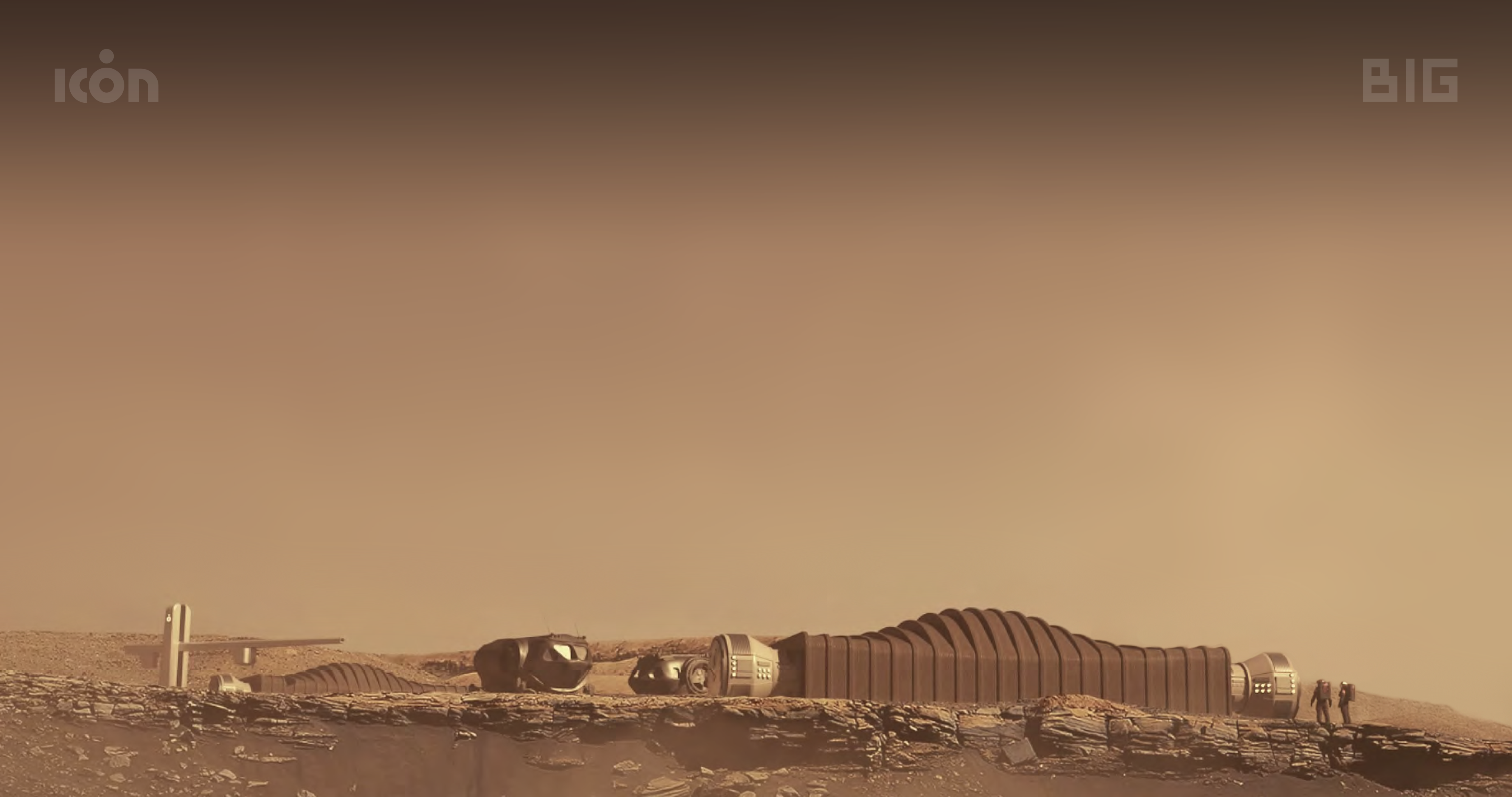
After 3D printing a model Mars habitat at Johnson Space Center, illustrated in this artist’s rendering, ICON printed a 100-home community outside of Austin, Texas. Credit: ICON Technology Inc.