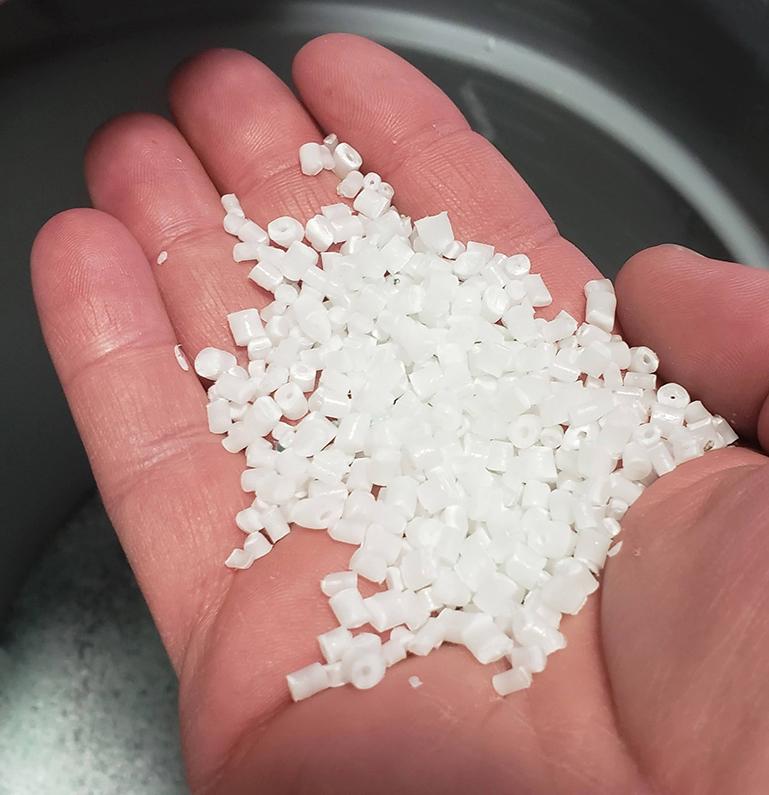



Keeping Cool, Containing Flame
Subheadline
A new non-toxic, fire-retardant insulation enhances battery safety and more
The batteries that power hybrid and electric cars today are more efficient and powerful than ever. But the most common type, lithium-ion batteries, can on rare occasions catch fire, posing a serious safety risk. Insulation can help manage that, but only if it’s fire-retardant and will fit into very narrow spaces. Solarcore Inc. introduced Sc_Foam_FR in 2024 to do just that. The thin, flexible, fire-retardant foam insulation that uses aerogel developed with NASA funding is making electric vehicles safer. And it’s finding new applications in a number of industries that need efficient performance in extreme temperatures and also have heightened safety requirements.
After launching the Oros clothing brand that employs a similar high-performance insulation (Spinoff 2018), Michael Markesbery, CEO of Solarcore, wanted to use what his teams learned about insulation to revolutionize the insulation industry as a whole.
“We started selling Solarcore Foam to other consumer clothing brands like Cabela’s, LL Bean, and others,” said Markesbery. “But we wanted to go broader, support more industrial applications — HVAC, batteries, automotive, and the like.”
He first learned about aerogel technology after winning a scholarship from the Astronaut Scholarship Foundation for his undergraduate research.
That was the start of Solarcore’s proprietary insulation, made using silica aerogel, a substance invented almost a century ago. The original aerogels were brittle and broke apart easily. So NASA’s Kennedy Space Center in Florida worked with a company called Aspen Systems under Small Business Innovation Research contracts to create a flexible material that would meet aerospace needs, including insulating cryogenic fuels stored on a launchpad. Aspen ended up spinning off a new company, Aspen Aerogels.
Aerogel is made by creating a gel and then removing all the liquid through a process called supercritical drying. What’s left is a solid so porous it’s 95% air or more. When made with silica or fused with quartz, aerogel contains pores less than one-ten-thousandth the diameter of a human hair, or just a few nanometers. That nanoporous structure means aerogel contains more air than any known solid, which makes it an excellent insulator and extremely lightweight. It’s also highly fire-resistant.
Solarcore infuses this version of aerogel into a polymer composite, fabricating insulation as thin as 2 millimeters.
Non-Toxic Insulation
Different industries have different fire-safety standards, so creating an off-the-shelf product that any company could use would mean meeting the most stringent requirements. While creating and testing formulas to accomplish that, Solarcore worked with a variety of ingredients and learned about their properties, including toxicity. If a fire does break out, what chemicals might be released when flames reach the insulation?
Previous experience in the clothing industry proved helpful for developing a formula that would not discharge toxins. “There’s a lot of concern around what people are putting on their bodies,” said Markesbery. “The most prevalent test methodology for safe clothing is called OEKO-TEX Standard 100. It tests for over 300 different chemicals and concerns. So we’ve made sure that we achieve that standard for Solarcore Foam used in consumer products.” The new fire-retardant insulation was independently tested, allowing the Solarcore brand to meet the European Union Restriction of Hazardous Substances Directive requirements to limit the amount of hazardous chemicals in electronics.
For lithium-ion batteries used in cars, this is an added safety feature employed by several automotive customers in commercial cars and trucks. A battery pack contains multiple cells. One of those cells can malfunction and catch fire, and that fire can easily spread due to the proximity of other cells. That’s called thermal runaway. A thin layer of this fire-retardant insulation packed between the cells can prevent that problem. If it ever becomes necessary to evacuate a vehicle when a battery cell fails, people have time to get out safely without the added risk of toxic fumes.
Fire and Ice
Whether containing heat or maintaining a cool interior temperature, insulation no longer must be dense or require a lot of space to be effective, thanks to aerogel and thanks to NASA, said Markesbery.
“NASA’s been able to create some pretty amazing technologies that have had some amazing commercial applications,” he said. “We’re one of many companies that had the benefit of being able to access that technology for the betterment of the commercial consumer markets.”
The unique combination of safety, flexibility, and effective insulation appeals to AIIR, a heating and cooling company that manufactures compact residential HVAC units for homes and hotels. Lining the interior of the cabinet housing increases performance as well as dampening mechanical sounds. The units more easily meet building safety requirements.
Commercial airline customers are also addressing multiple needs in their airplanes. The insulation and acoustic properties help make the passenger cabin more comfortable. The same material can be used to insulate and isolate onboard appliances packed into a compact galley kitchen. As a result, the heat generated by running a microwave, coffee maker, and refrigerator poses less of a fire risk, and the lightweight solution reduces weight and makes the plane more fuel-efficient.
Recreational vehicle manufacturer Remote Vans is also using Solarcore insulation in its vehicles for similar reasons.
“The less you have to run your battery for heating or cooling, the longer you can go off-grid,” said Markesbery. “Ultimately, that comes back to effective insulation throughout the cabin. The advantage of Solarcore foam is you’re going to get far more thermal insulation at a fraction of the thickness of fiberglass or mineral wool insulations.” Less weight also improves the vehicle fuel efficiency.
The company is happy to customize the insulation to meet specific customer requirements. To date, the standard rolls of 3-, 5-, and 12-millimeter material have met all customer needs, ranging from commercial space to cold chain packaging for temperature-sensitive items like pharmaceuticals.
The original formula for Solarcore Foam, now called Sc_Foam, is also non-toxic and can be adapted. Customers like Alfa, a Norwegian footwear brand that uses Solarcore in a cross-country ski boot, are benefiting from the increased thermal performance and slimmer profile of the standard Sc_Foam.
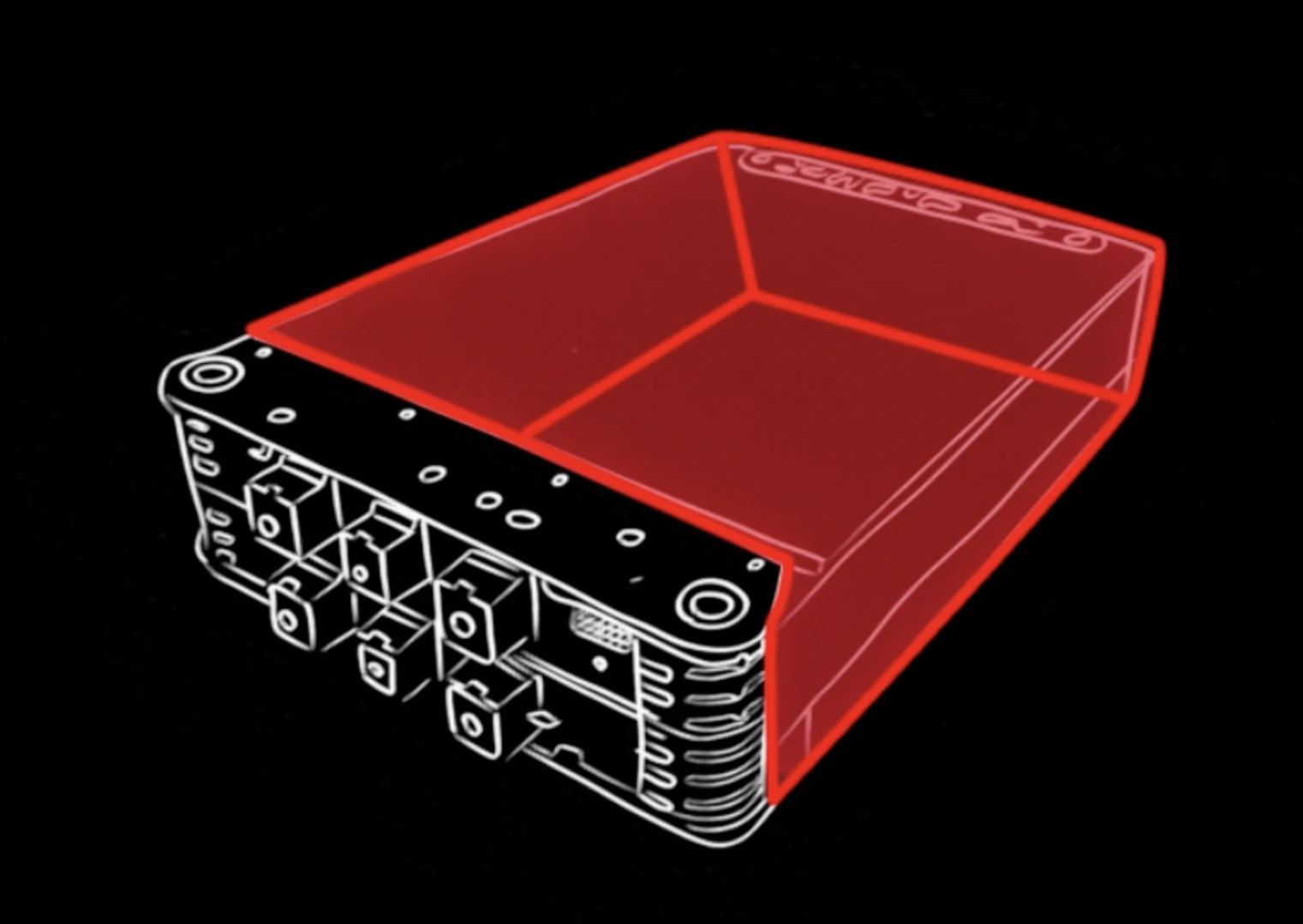
Solarcore aerogel in electric car batteries insulates against cold-weather impacts and adds a layer of safety by containing any thermal runaway event long enough for safe evacuation of the vehicle. Credit: Solarcore Inc.
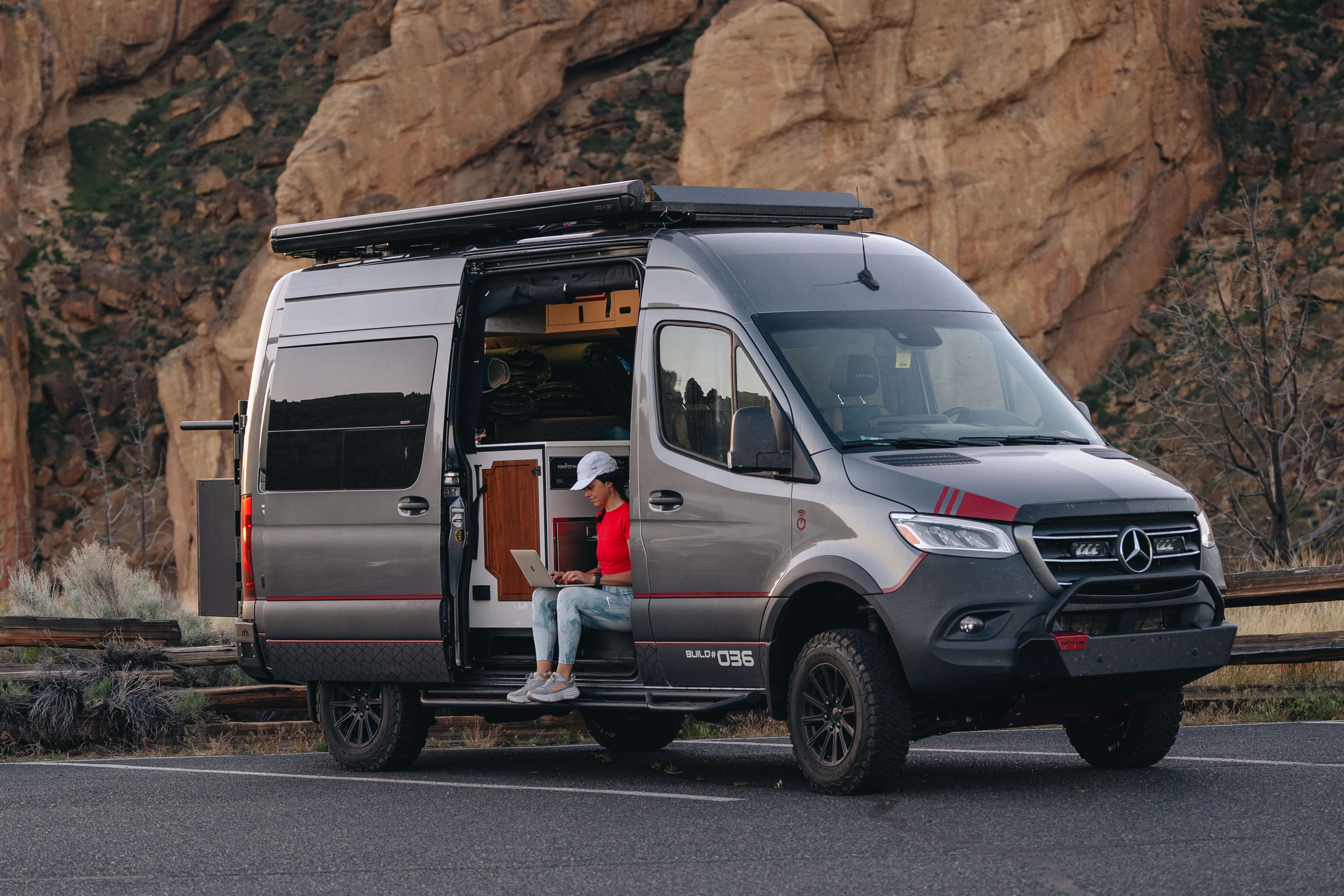
Insulation helps maintain the internal temperature of a recreational vehicle, making going off the grid more energy-efficient. That’s why Remote Vans uses Solarcore to insulate its Aegis Series models such as the one shown here. The insulation adds little overall weight and supports effective heating and cooling. Credit: Remote Vans LLC
Building codes include fire-retardant standards for insulation. A new aerogel insulation meets those requirements while providing sound-dampening. Solarcore created the new aerogel formula that insulates heating and cooling systems like the one made by AIIR, shown in this dorm room. Credit: AIIR Products Inc.