

Simulations That Are Positively Radiant
Subheadline
Radiation simulation software helps keep astronauts and patients safe
With the Artemis program sending astronauts beyond the relative protection of low Earth orbit, spaceflight requires assurances that the many forms of radiation out in space, whether cosmic rays or solar wind, won’t harm astronauts.
Tech-X Corp., based in Boulder, Colorado, produces simulation software to help projects with high-level engineering needs. Now a division of Silvaco, the company’s flagship software includes VSim, for simulating plasma and vacuum electronics, and RSim, which can trace its origins to NASA needs.
RSim is designed to simulate radiation. Built upon the open-source Geant4 system developed by the European Organization for Nuclear Research (CERN), and plugged into a configurable graphical user interface, RSim can accurately model how radiation moves through space in all dimensions.
NASA’s Johnson Space Center in Houston needed ways to test radiation sensors that would be aboard satellites or spacecraft designed to ferry humans to space — before the sensors were built. The only way to do that was through simulations, combined with standard computer-aided design software to allow quickly repeated design cycles.
“We have a lot of computational power, we have supercomputing capabilities at Johnson, so we want to be able to leverage that, but we don’t want to rely entirely on brute force,” said Diego Laramore, a research scientist with the Radiation Analysis Group at Johnson.
According to Laramore, there are two ways that radiation tends to behave. Some particles, such as protons or ions, are “deterministic” and can be calculated with relative ease if you know where they started from. Other types of radiation, like gamma rays, are “stochastic” and are much harder to predict over large spaces. Through Small Business Innovation Research (SBIR) funding from NASA, with additional funding from the Department of Energy, Tech-X developed a method of approximating how this stochastic radiation would behave in a vehicle the size of Orion, the capsule slated to take astronauts to the Moon. By focusing on a very small section of the vehicle being simulated, scientists could see how it would behave in the area around a crew member’s seat, as opposed to an area less important for the specific test.
Since the company’s initial NASA SBIR funding in 2018, RSim has been used in the development of commercial satellites and other vehicles sent to space. The user-friendly developments Tech-X made for NASA now benefit the company’s commercial customers.
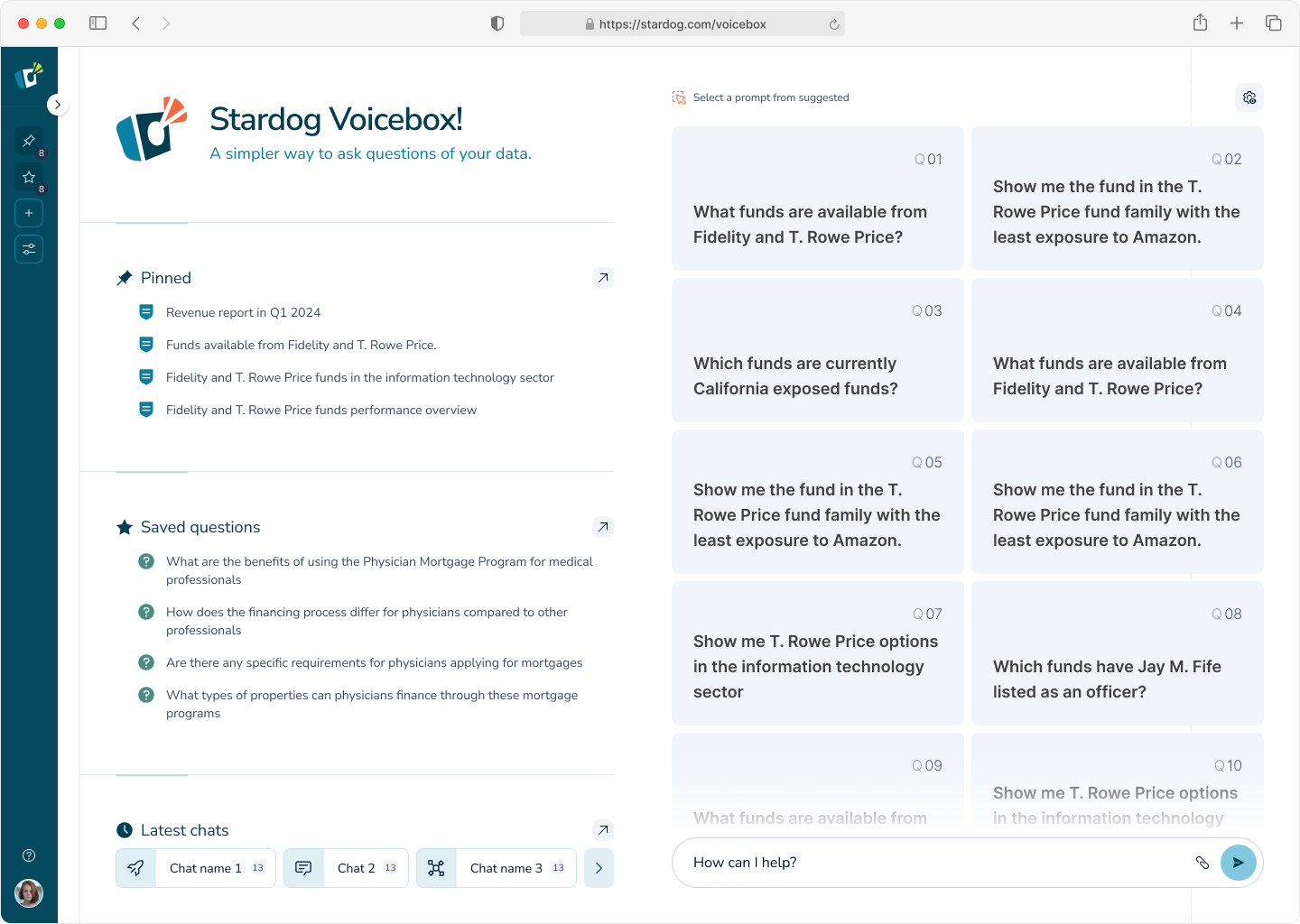
“Usually when people use Geant4, they have to write their own code,” said David Alexander, vice president of user experience at Tech-X. “But in our product, the RSim interface helps them get simulations right with buttons and menus that are easy to use.”
RSim is used not only in the realm of space but also in industrial and medical manufacturing. Because radio waves are a form of radiation, RSim can aid in designing a signal-shielded room for testing radio and cellphone equipment. Machines for treating cancer with particle beams use directed radiation to hit only tumors, so manufacturers can use RSim to see if any particles wind up places they shouldn’t. Ultimately, Tech-X credits NASA with being instrumental in the software’s development.
“A functional prototype came out of the initial NASA work, and we’ve improved it into a substantial product,” Alexander said. “There would not be an RSim without that original NASA project. It was foundational.”
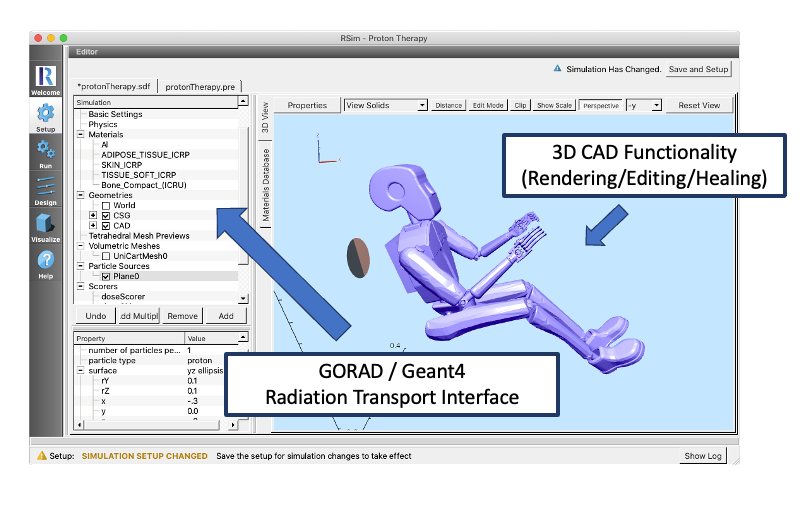
This screenshot of RSim shows a simulation of proton therapy, a form of cancer treatment that uses a beam of targeted radiation. Assisting the design of these medical devices is a key market for RSim. Credit: Tech-X Corp.
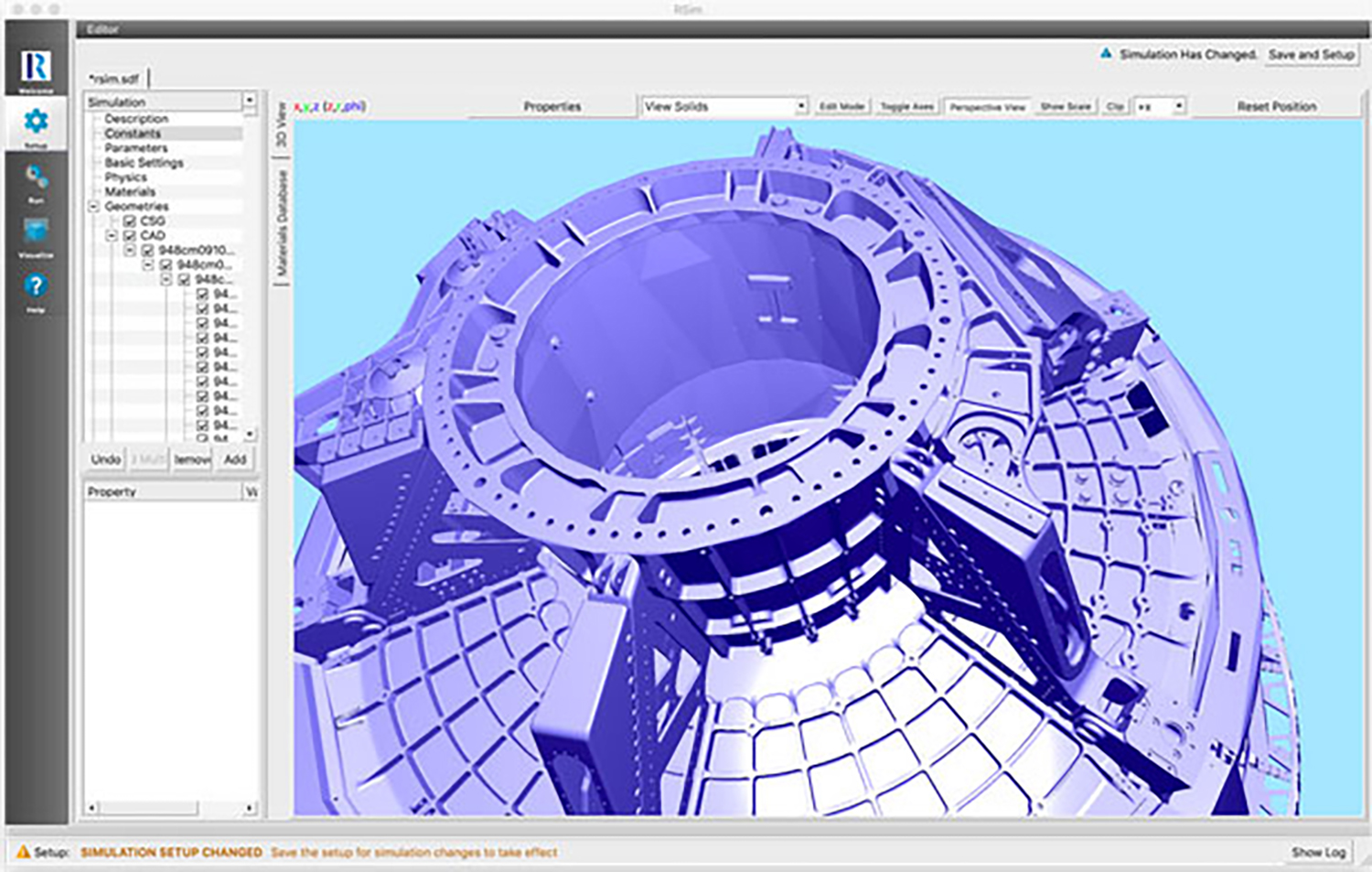
RSim integrates with standard computer-aided design software to enable changes to quickly determine how different designs affect how radiation moves around an environment. Credit: Tech-X Corp.
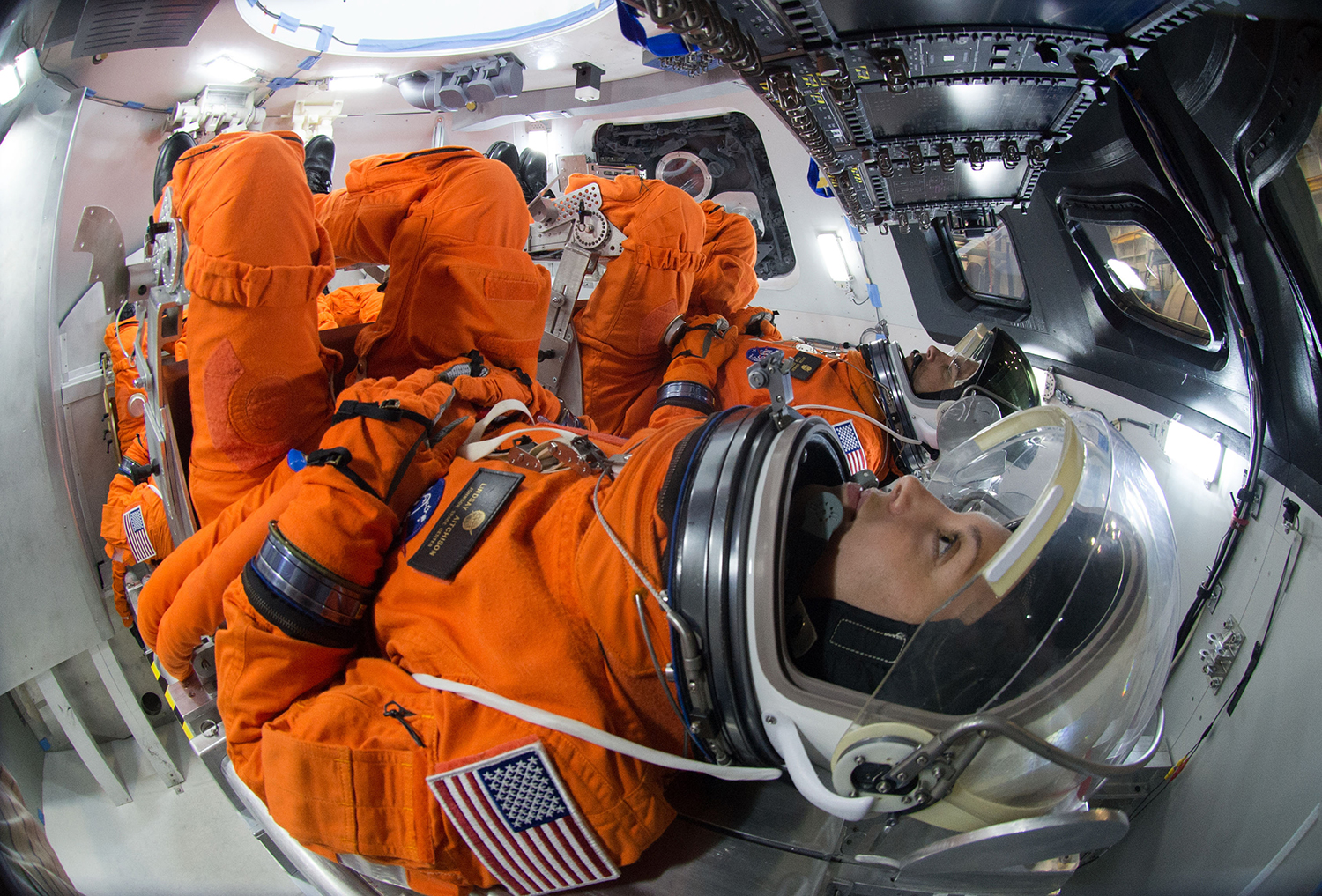
Astronauts aboard future trips to the Moon will need to wear special detectors to make sure they aren’t getting too high a dose of radiation, but NASA needs to make sure those detectors will work before they are built. These efforts resulted in the creation of RSim. Credit: NASA