

A Planetary Sensor’s Earthly Applications
Subheadline
NASA-funded technology detects fires, shale, and more
Technology NASA uses to study gases and rocks on other planets is helping companies identify and monitor conditions on Earth — like the location of shale for fracking and whether a fire has started on an airplane.
Used in spectrometers and other instrumentation, silicon carbide photodiodes from Greenbelt, Maryland-based CoolCAD Electronics Inc. detect ultraviolet, or UV, light in both space and terrestrial applications.
“Our diodes are very sensitive,” said Dr. Zeynep Dilli, CoolCAD’s director of engineering. “They don’t need filters to block out visible light as other off-the-shelf UV photodiodes do, so we can make detector systems smaller and more efficient.”
Photodiodes convert light energy into an electric signal — the opposite of an LED, or light-emitting diode, which converts electrical energy into light.
Traditional photodiodes detect both UV and visible light, so isolating UV ranges requires filtering out visible light with bulky filters, adding mass and losing transmission. But CoolCAD technology, made with the semiconducting material silicon carbide, doesn’t require filters because it is sensitive only to part of the UV range.
Dr. Shahid Aslam, a research space scientist at NASA’s Goddard Space Flight Center in Greenbelt, Maryland, who has worked with CoolCAD, said silicon carbide is an optimal material for the fabrication of UV-sensitive photodiodes that need to operate in harsh space environments with high radiation levels and extreme temperatures.
“These photodiodes are designed to be insensitive to visible light, making them ideal for applications where you want to detect only the UV light with high sensitivity,” he said.
For NASA, UV photodiode technology has many applications in both planetary and Earth sciences. It can be integrated into spectrometers that can distinguish different gases in planetary atmospheres, as well as aerosols and pollutants.
Because silicon carbide photodiodes can operate in harsh environments, they are ideal for detecting radiation on planetary surfaces, including cosmic rays, charged particles, and more, Aslam said.
Aslam also noted that UV observations are key to understanding how galaxies and stars evolve, as well as the composition and structure of exoplanet atmospheres, providing insights into their habitability potential by identifying biosignatures.
NASA has supported CoolCAD’s photodiode development with multiple contracts through its Small Business Innovation Research program. Additionally, the company is building NASA highly sensitive detectors for instrumentation small enough to fit into a 1U CubeSat — a cubic satellite with 4-inch sides.
On Earth, CoolCAD’s silicon carbide photodiodes are used in early fire warning systems on aircraft and ships because of their ability to detect flames regardless of ambient conditions, according to Dilli.
The silicon carbide photodiodes are also used in downhole applications for fracking. They can detect radiation levels, indicating the presence of frackable, gas-rich shale rock.
“To find the background radiation underground, people use optical sensors, and traditionally they use photomultiplier tubes, which are kind of big and fragile,” Dilli said. “Using a semiconductor like silicon carbide is more reliable and much smaller.”
NASA’s Aslam said CoolCAD, which was founded in 2009, has been a good partner for the space agency.
“They not only understand the physics of silicon carbide devices, but they also know how to fabricate them,” he said. “They also work with us to make sure the detectors they deliver integrate into our instrumentation.”
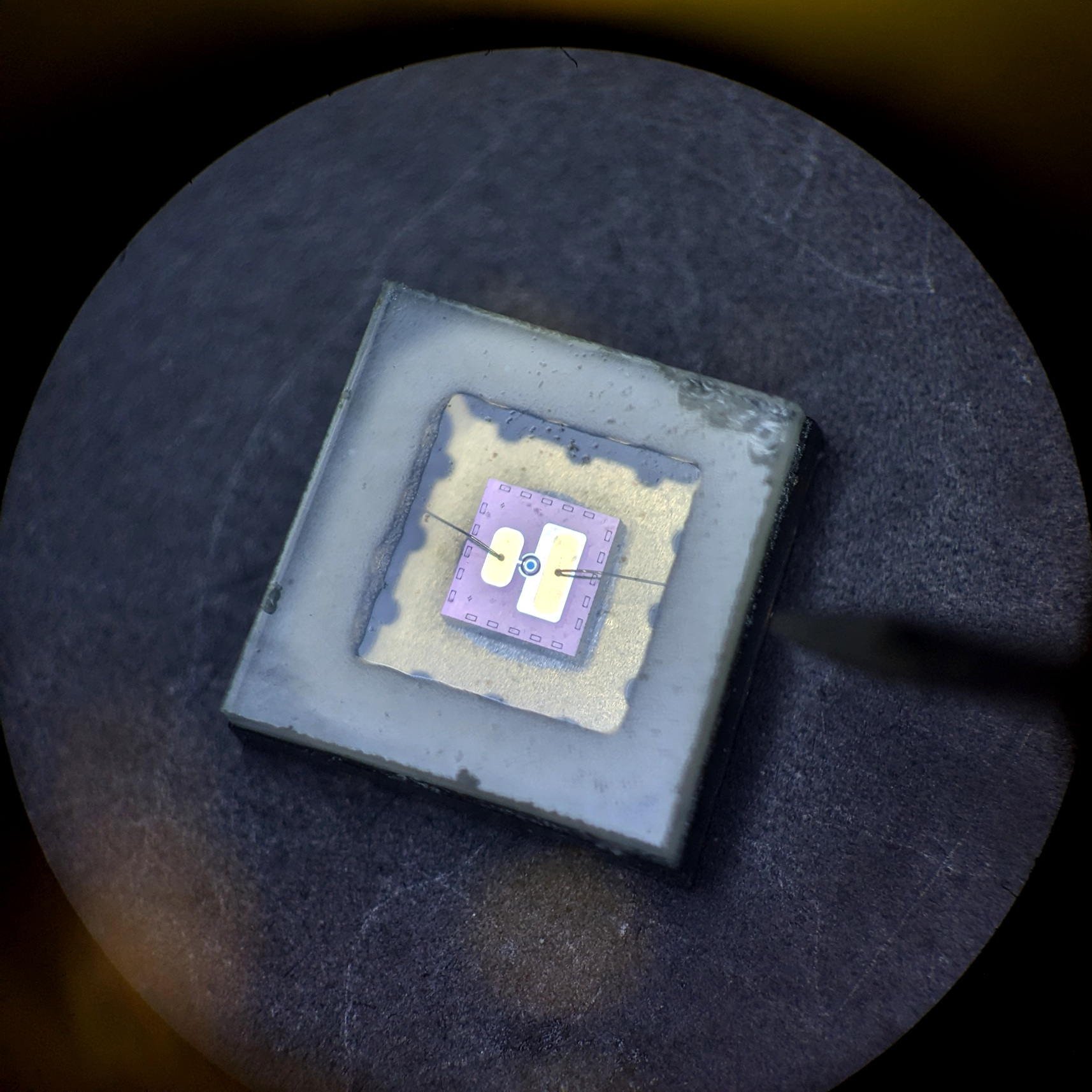
While CoolCAD engineers understand the physics of silicon carbide and how to build photodiodes with it, they also work with NASA to ensure the components fit with the agency’s spectrographs and other instruments. Credit: CoolCAD Electronics Inc.
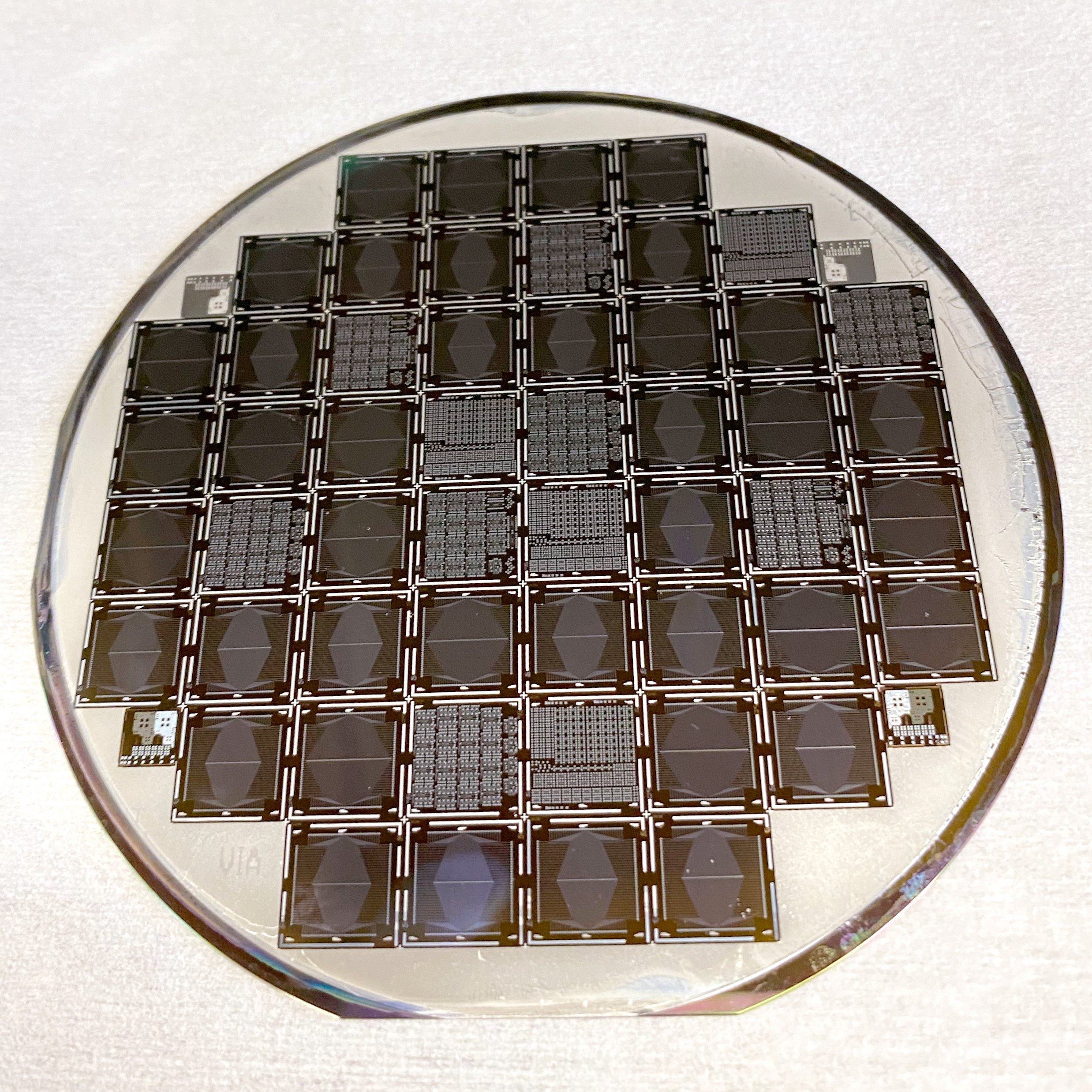
CoolCAD photodiode technology, which is made with the semiconducting material silicon carbide, is small, lightweight, robust in extreme conditions, and highly sensitive in part of the ultraviolet spectrum. Credit: CoolCAD Electronics Inc.
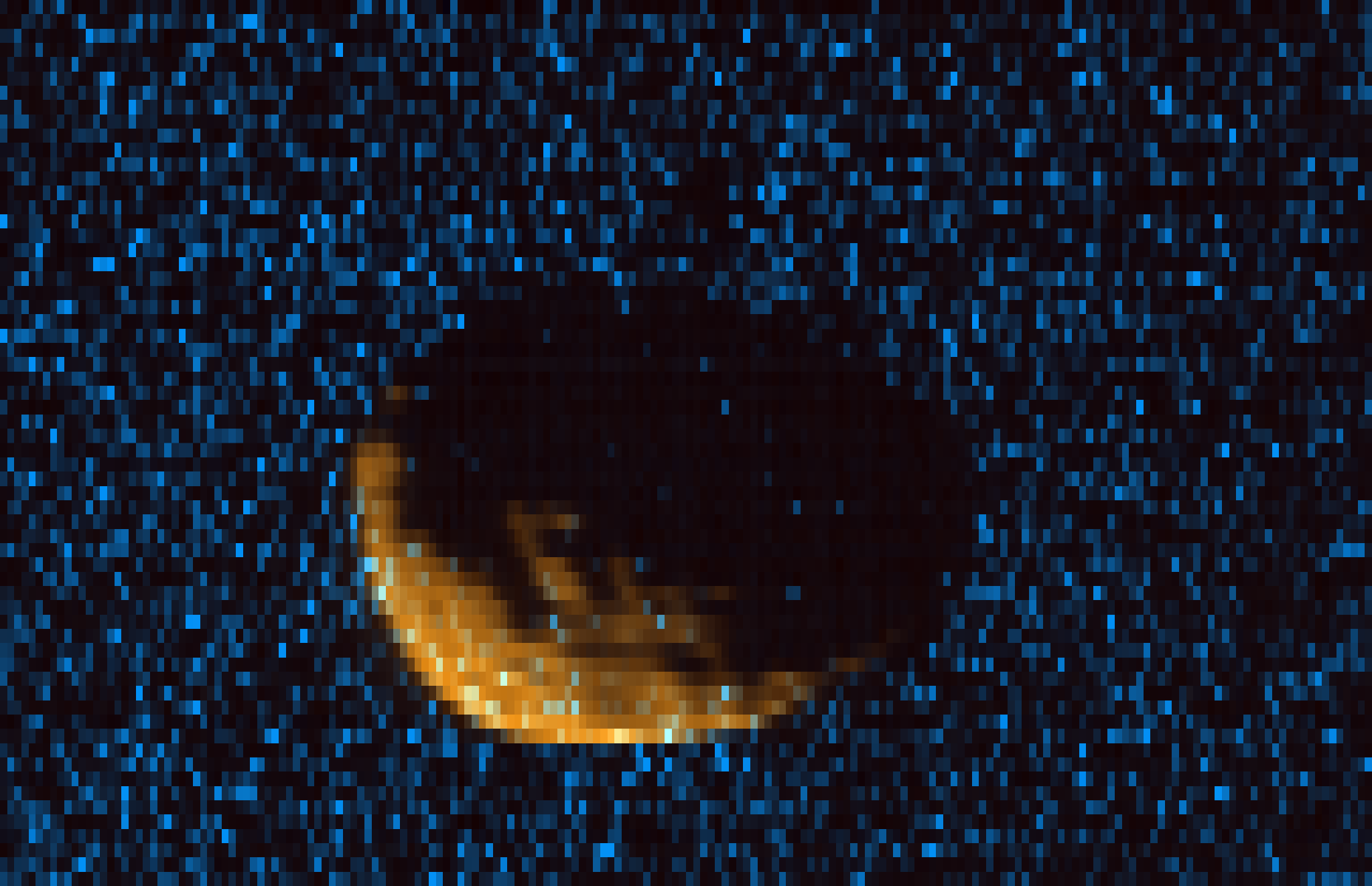
NASA uses ultraviolet spectrographs to investigate conditions on celestial bodies like the Martian moon Phobos, pictured here. In this image, orange shows mid-ultraviolet sunlight reflected from the surface, exposing the moon’s irregular shape and many craters. Credit: Colorado University and NASA