


Machines from Mars Make Beer Bubbly
Subheadline
Carbon-capture technology repurposed for breweries spreads and finds new applications
In 2021, Maine Beer Company’s carbon dioxide supplier ran short on carbon dioxide.
“There was potential for our beer to go stale in the tanks,” said Dave Love, the brewery’s sustainability manager. “We wouldn’t be able to use CO2 for any of our bottling, kegging, or centrifuge operations.”
The company managed to conserve enough of the gas to maintain operations even as CO2 deliveries became inconsistent, but the event was a wake-up call. Consumable carbon dioxide, often a by-product of oil drilling and refining, became scarce when automobile use and air travel plummeted during the pandemic, and periodic shortages have persisted. Maine Beer had previously looked into technology that would let the company capture CO2 from the fermenting process and use it for carbonation, Love said. They decided this was the time.
The solution the company settled on originated on Mars — or more specifically, in NASA’s plans for extracting resources from the elements available on the Red Planet’s surface. Now it’s saving money and reducing emissions for a surprising variety of small businesses, including wineries, distilleries, power companies, and helium producers.
Beginning in the late 1990s, the company Pioneer Astronautics won multiple Small Business Innovation Research (SBIR) contracts from Johnson Space Center in Houston to build systems that could generate resources on Mars. The company’s founder, Robert Zubrin, a longtime advocate for human travel to the Red Planet, had outlined these technologies in the Mars Direct plan he coauthored in 1990.
The technology his company built with SBIR funding from Johnson could capture carbon dioxide from the Martian atmosphere and combine it with hydrogen to produce water for life support and methane for rocket fuel. The water then could be broken down into oxygen for life support and hydrogen for further methane production. It was not known at the time that there is frozen water under the surface of Mars.
These capabilities weren’t entirely new, but the company built systems that were compact, efficient, and automated.
In 2008, Zubrin founded Pioneer Energy after realizing he could rearrange these subsystems to create technology for the oil and gas industry here on Earth (Spinoff 2015, 2020).
It didn’t take Zubrin and his staff long to realize that technology for capturing carbon dioxide from the Martian atmosphere and purifying, pressurizing, and liquefying it could do the same thing in a brewery. While most major brewers had carbon-capture technology, there was nothing available for the microbreweries that had been proliferating for over a decade. By late 2015, the Craft Brewery Recovery System was in production (Spinoff 2016). Automated and modular, it was aimed at breweries producing up to 60,000 barrels per year, but it could be stacked to accommodate higher outputs.
In the end, Pioneer Energy decided to keep its focus on the oil and gas industry, and the company made the system available for licensing.
Supply Security and Purer CO2
In 2016, Amy George founded Earthly Labs of Austin, Texas, to work on small-scale carbon capture, which was virtually nonexistent at the time. She hit on microbreweries as a target application, and when she came across the Craft Brewery Recovery System, she recognized a game changer. The company obtained an exclusive license from Pioneer Energy.
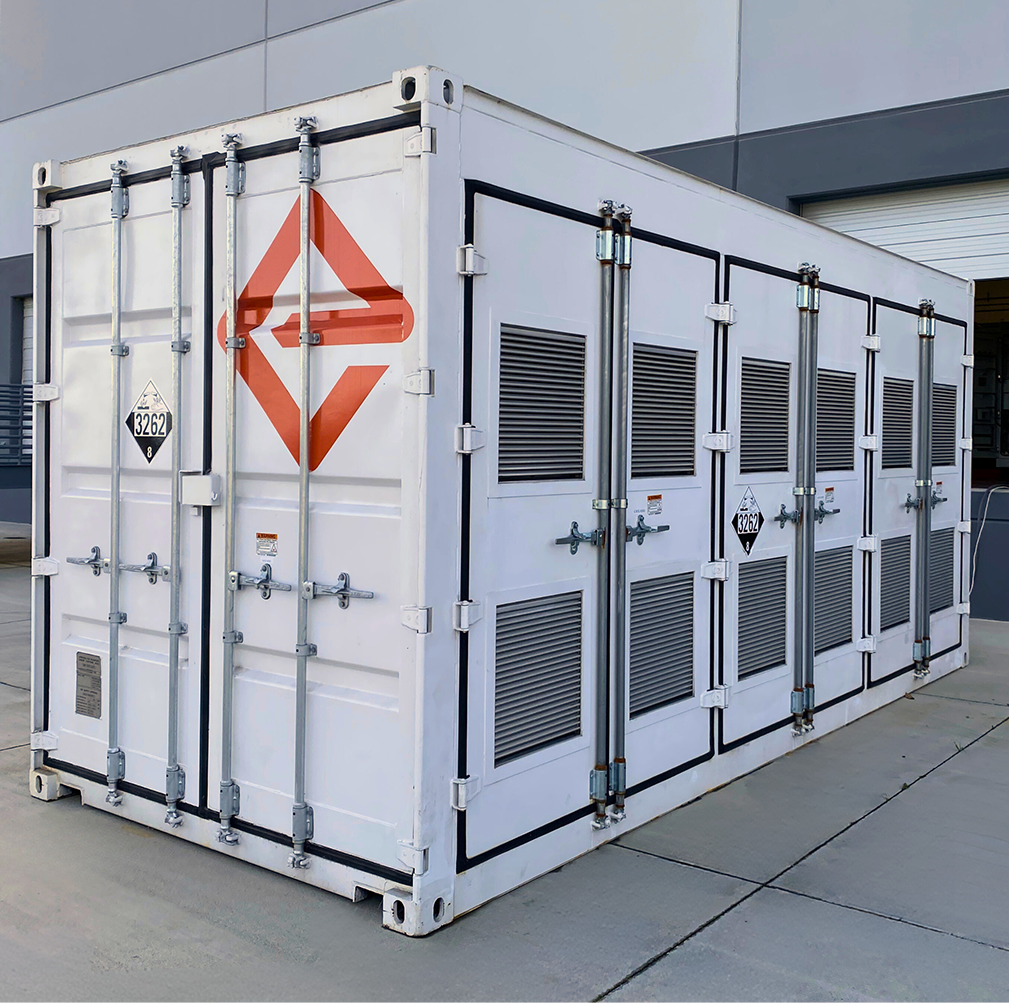
“Most of the effort and policy had been focused on the largest emitters, and this represented a way for others to participate,” George said. Branded CiCi, for “carbon capture,” the technology is now packaged into three different systems to accommodate different capacities.
At Maine Beer, Love said supply chain security was the most important selling point. The company gets less than half of its carbon dioxide from its Earthly Labs system, purchasing the rest, but it’s enough to get through a crisis. On two more occasions since the company acquired the system in 2022, its carbon dioxide supplier has run short, but the brewery never had to halt production.
“The second we’re not able to get CO2, it’s immediately paid for itself. Because the revenue lost by dumping one batch of beer is well over $100,000,” he said.
George said the shortages and price volatility that have marked the last five years have emerged as major drivers of interest, along with standards and incentives for reducing emissions.
Love noted that the carbon dioxide from the CiCi system is also purer than the industry norm. Beverage-grade CO2 is at least 99.5% pure, while carbon dioxide from Earthly Labs’ systems is closer to 100% pure.
But the technology isn’t just helping brewers. After expanding into wineries and distilleries, the company started discovering other markets. Energy companies often generate carbon dioxide as a by-product, and if they capture that carbon, they can sell it. Several are now customers.
Among them are power plants that generate energy from waste, a practice that’s gaining popularity as a “greener” option. Capturing carbon helps them boost that image, George said. They’re also often major customers requiring large systems. “A brewery application might produce around 150 pounds of CO2 per hour, and then a biogas plant might produce 3,000 pounds an hour or more,” she said. “So it’s just orders of magnitude larger.”
In 2021, Earthly Labs was acquired by Chart Industries Inc., though it kept its brand name. George said Chart, which specializes in cryogenic equipment engineering, helped scale up the technology for applications like power plants.
Tech Helps Helium Industry Get Off the Ground
Another application that has brought in several new customers is helium production, she said. Once under the purview of the United States government, this is a relatively new industry. In 2024, Pulsar Helium Inc. signed an agreement with Chart for Earthly Labs to conduct engineering studies for a possible helium purification plant in Minnesota.
“Earthly Labs is really at the forefront, the cutting edge with the engineering of this purification technology,” said Pulsar’s president and CEO, Thomas Abraham-James.
Helium, which is used to make microchips and fiber-optic cables, among other applications, is found in underground deposits, much like oil. But it is always mixed with other gases, such as methane and carbon dioxide. At 14.5% helium, the gas at the site Pulsar discovered in Minnesota has the highest helium concentration in North America. It’s also high in CO2, which Abraham-James had initially planned to rebury, until he learned of the ongoing carbon dioxide shortage.
If all goes well, he said, an Earthly Labs plant will separate and purify both helium and CO2 for the company to sell. In addition to carbonating beverages, carbon dioxide is used to preserve food, manage the acidity of drinking water, promote plant growth in greenhouses, make dry ice, and extract oil from wells, among other uses.
“Efficiency is the big thing they have, and then you get reduced operating costs,” Abraham- James said of Earthly Labs, adding that the acquisition by Chart Industries introduced the helium expertise he’ll also rely on. “I actually can’t think of another company that’s got that combined in-house ability.”
George said becoming part of Chart also helped Earthly Labs spread internationally. She estimated the technology has more than 100 customers around the world, including in Europe, Australia, the Middle East, and Brazil. At home, she estimated it supports about 60 jobs, though that number is growing quickly.
She credited CiCi’s success with the fact that it’s compact, modular, and easy to install and use. While most carbon-capture systems take months to install, this one takes about a week. “Most of the technology, before NASA’s innovation, came from the oil and gas industry, so they’re very large,” she said. “This helped open a whole new class of applications and was a catalyst for a new marketplace.”
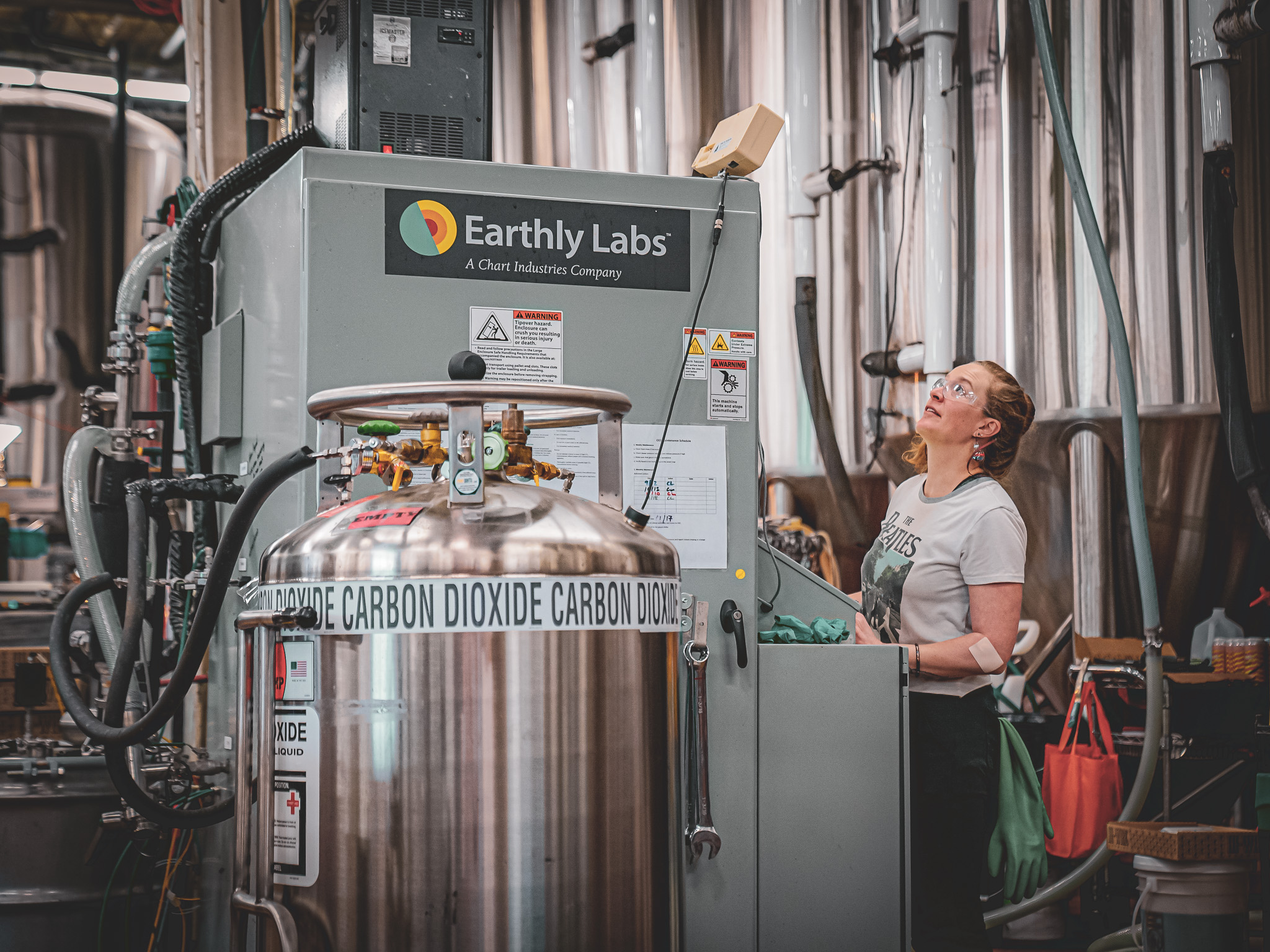
A brewer makes adjustments to the Earthly Labs carbon-capture unit, which purifies carbon dioxide from the beer brewing process for use in carbonation. Credit: Chart Industries Inc.
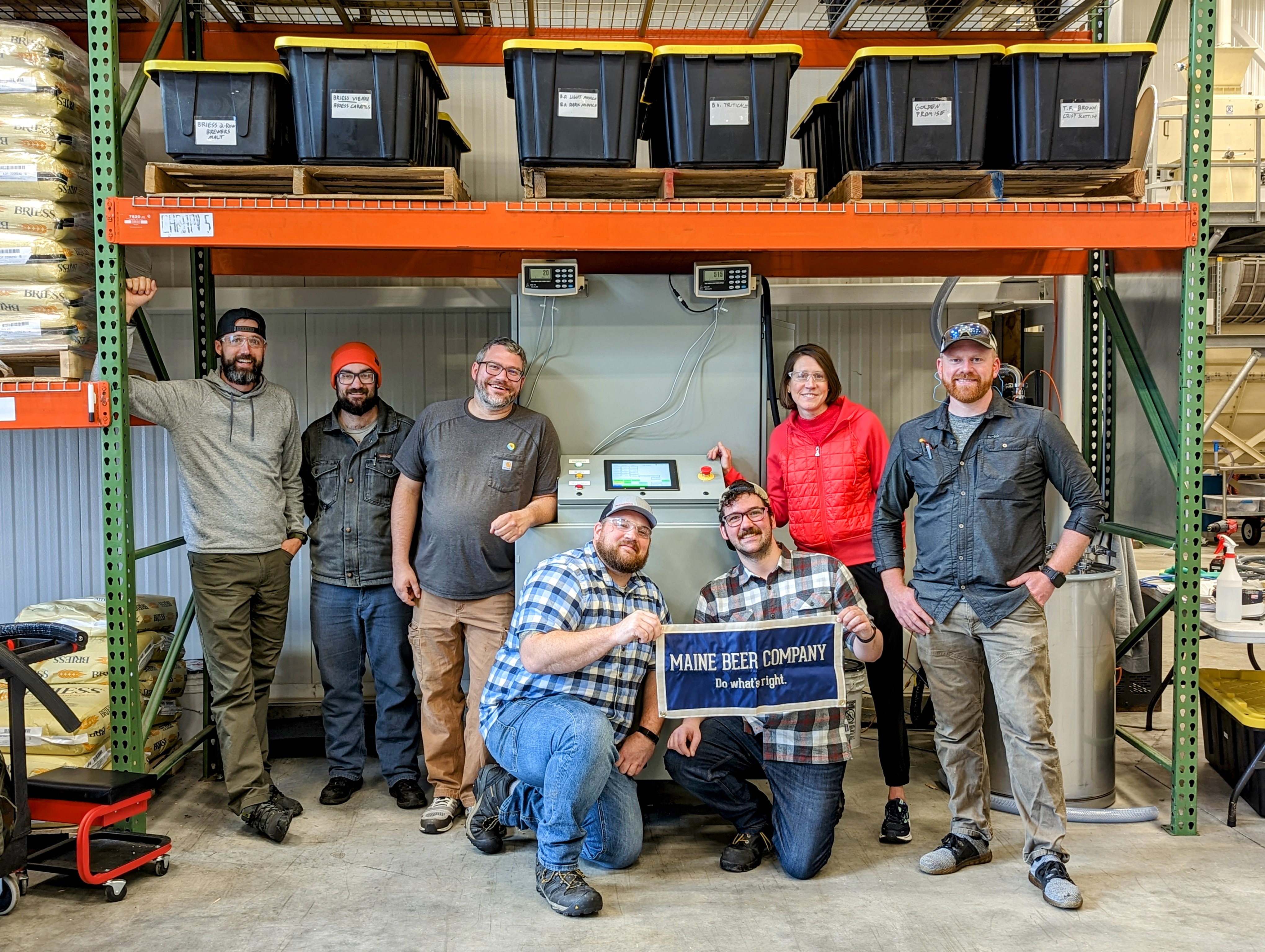
In 2022, under the guidance of sustainability manager Dave Love, far left, Maine Beer Company acquired one of Earthly Labs’ carboncapture units, primarily to address recurring shortages in the carbon dioxide necessary for carbonation. Credit: Chart Industries Inc.
Earthly Labs’ carbon-capture technology traces its roots back to NASA’s in situ resource utilization efforts. One technology would capture carbon dioxide from the Martian atmosphere, break it down into carbon and oxygen, and combine each with hydrogen to make methane and water, respectively. The idea is to use elements available on the planetary surface rather than carrying them from Earth. Credit: NASA