

Robots in the Operating Room
Subheadline
Small, minimally invasive, portable surgical robot developed with NASA support
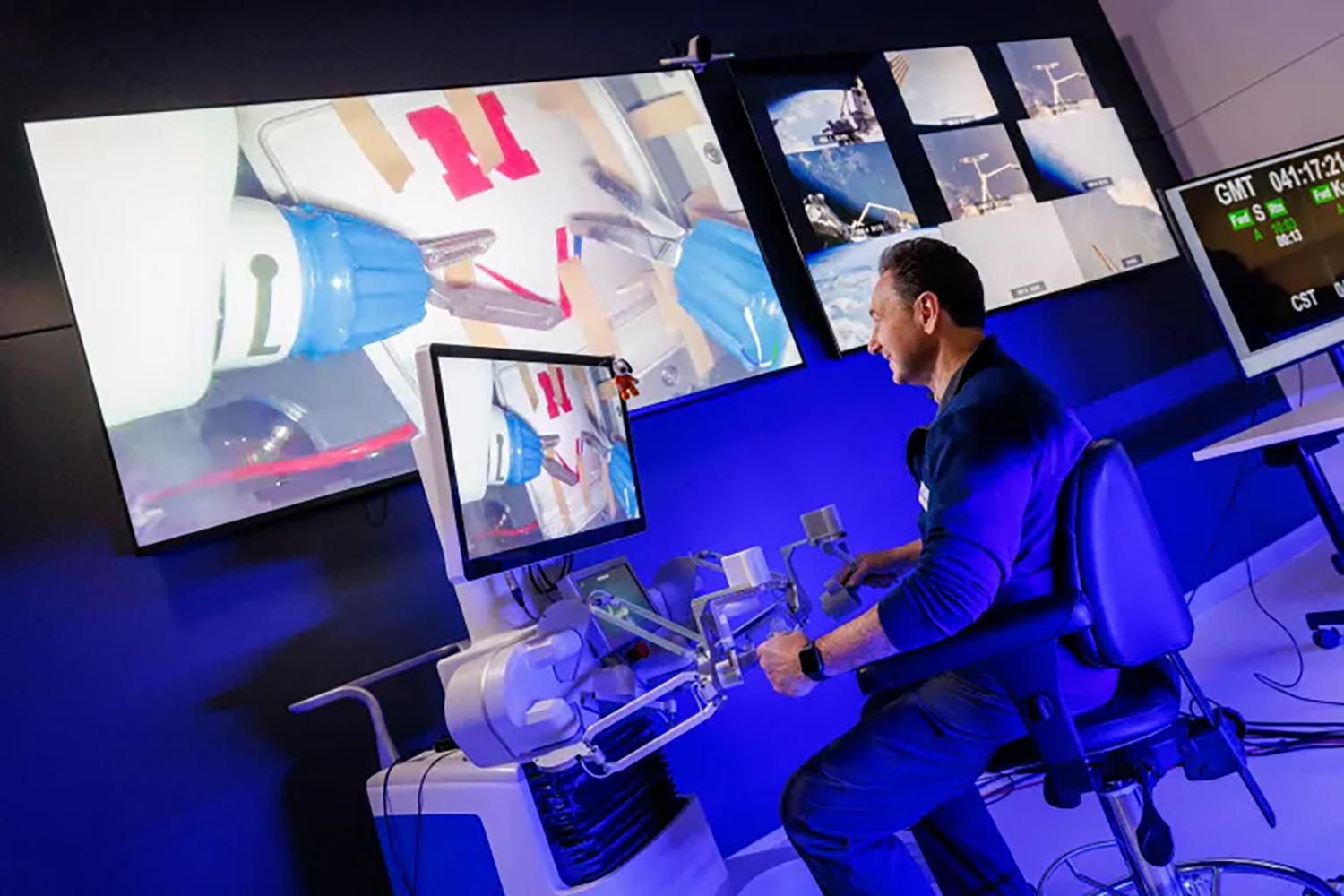
When surgeons on Earth remotely controlled a miniature robot in space to perform a series of snips, the surgical technology had come full circle.
Research that started decades ago with NASA funding led to an innovative set of devices for Earth-based surgeries, the MIRA Surgical System, before further customization made it ready for space. The U.S Army also helped fund the miniature system.
“Both NASA and the Army are interested in doing surgery in crazy places, and small lends itself to that,” said Shane Farritor, cofounder and chief technology officer of Lincoln, Nebraska-based Virtual Incision Corp., which makes both MIRA devices.
Less than two weeks after the spaceMIRA demonstration on the International Space Station, which was in February 2024, the Earth-based MIRA system received marketing authorization from the Food and Drug Administration for colectomies — operations to remove part or all of the colon.
The commercial MIRA system — which stands for Miniaturized In Vivo Robotic Assistant — enables minimally invasive surgeries and can easily be transferred between operating rooms in a hospital or other surgery site.
“What we’re pushing is simplicity,” Farritor said.
“Our device is a lot simpler than other surgical approaches in a lot of ways, including that it’s very small and transportable and easy to set up. It’s also sterilized as it is, so there’s no draping,” he said, referring to the process of placing sterile plastic cloth over a device during surgery to prevent contamination and infection.
At 24 inches, the MIRA surgical device weighs about 2 pounds. The company described it as “substantially smaller” than any other mainframe systems on the market and said it contains some of the smallest motion control electronics that have ever been put in a medical device. The industry standard for surgical robots weighs well over a thousand pounds.
The MIRA contracts for insertion and then expands as needed, with two small arms that hug into the centerline and an integrated camera. The system also includes a companion cart and a console.
Surgeons control the instrument arms and camera from the console, which is equipped with “joysticks” and a screen that is usually a few feet from the operation. In the future, it may be possible to perform the procedure remotely — miles away, a continent away, or from Earth to space.
Robot-assisted surgeries in general, compared to traditional procedures, reduce the number and size of insertions, which usually means less pain during recovery, a smaller chance of infection, and smaller scars, as well as potentially more precise movements.
In addition to the approved colectomy application, the MIRA device has been used in clinical tests for gynecological procedures, including hysterectomies. Virtual Incision is also looking to develop customized MIRA devices for other kinds of surgeries, such as gallbladder procedures, weight-loss surgery, and hernia repair, all of which could benefit from a smaller surgical system and smaller incisions.
“It is a drastically different form factor than other kinds of surgical robots,” said Baraquiel Reyna, who manages the Science Integration Office in NASA’s Human Research Program at Johnson Space Center in Houston and has worked with Farritor for decades.
NASA supported MIRA through grants, mostly to the University of Nebraska, where Farritor is a professor of engineering. Virtual Incision, which was founded in 2006, has maintained its close partnership with the university.
NASA also supported the further customizations for spaceMIRA, including through grants from the Established Program to Stimulate Competitive Research, which aims to boost research capacity in certain states and regions.
“As we go further from Earth, we are going to have reduced communication, reduced materials, and reduced everything,” NASA’s Reyna said. “Medical conditions that require surgery during a mission would be extremely rare, but they are still a possibility, so tools like this could be an asset. There may also be other space opportunities for this small, dexterous robot that is capable of very micro manipulations.”
Farritor said working toward NASA’s various constraints helped define the MIRA Surgical System. “Trying to minimize volume, mass, and power really led us to this concept,” he said. On Earth, keeping the device small allows hospitals to move it between operating rooms and could allow for surgeries in remote areas that don’t have a dedicated surgeon – rural areas, perhaps, or the sites of wars or disasters.
For any space-bound system, keeping volume and mass at a minimum is top of mind, and Reyna said it’s exciting to see those concepts translated into a completely different domain.
He noted that the Human Research Program’s purpose is to promote astronaut health. “If we can benefit Earth at the exact same time, that’s just kind of fantastic,” he said.
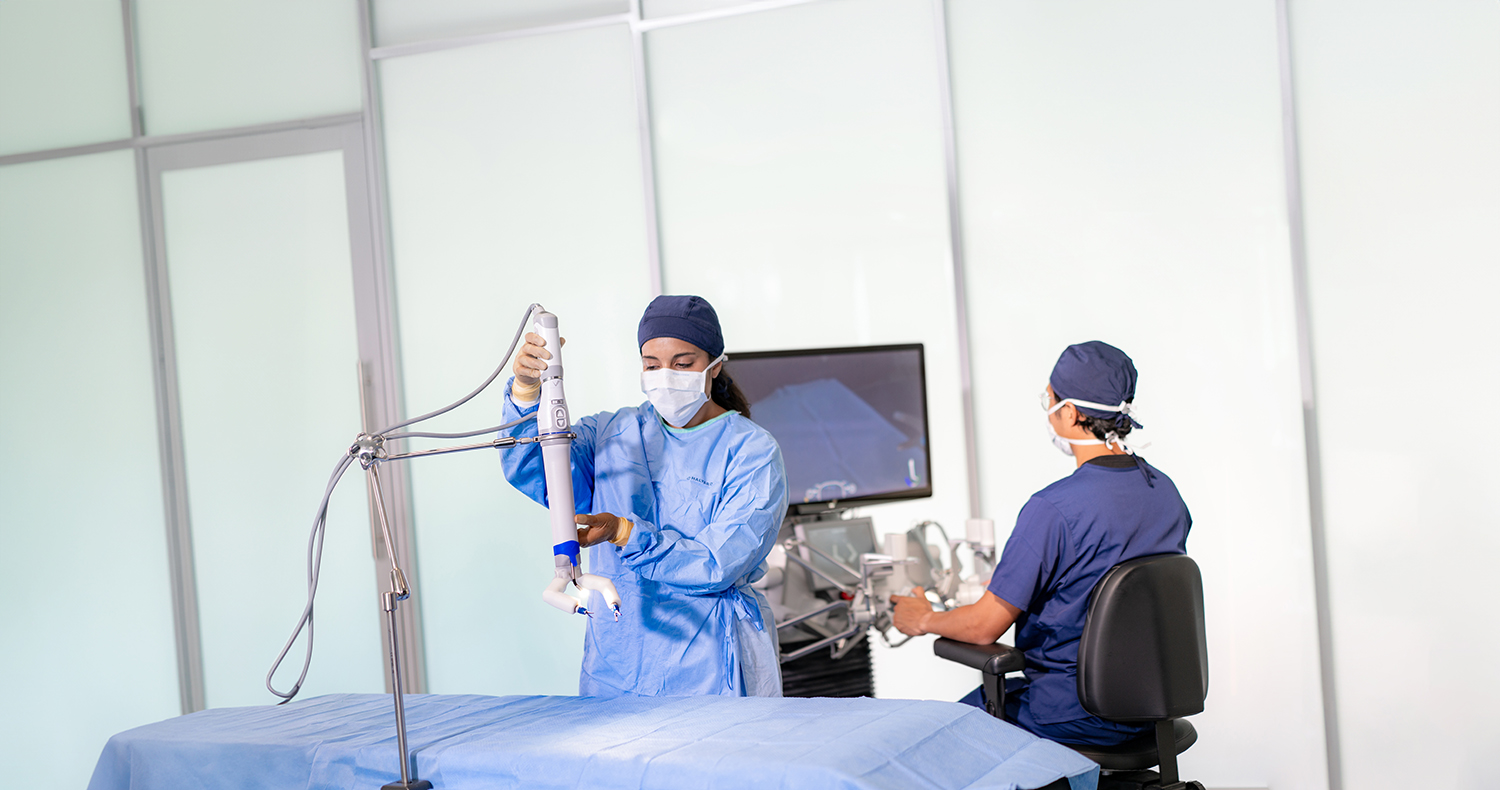
Virtual Incision’s MIRA Surgical System enables minimally invasive surgeries and can easily be transferred between operating rooms in a hospital or other surgery site. A surgeon controls the device from a console that’s a few feet away or, potentially, much farther. Credit: Virtual Incision Corp.
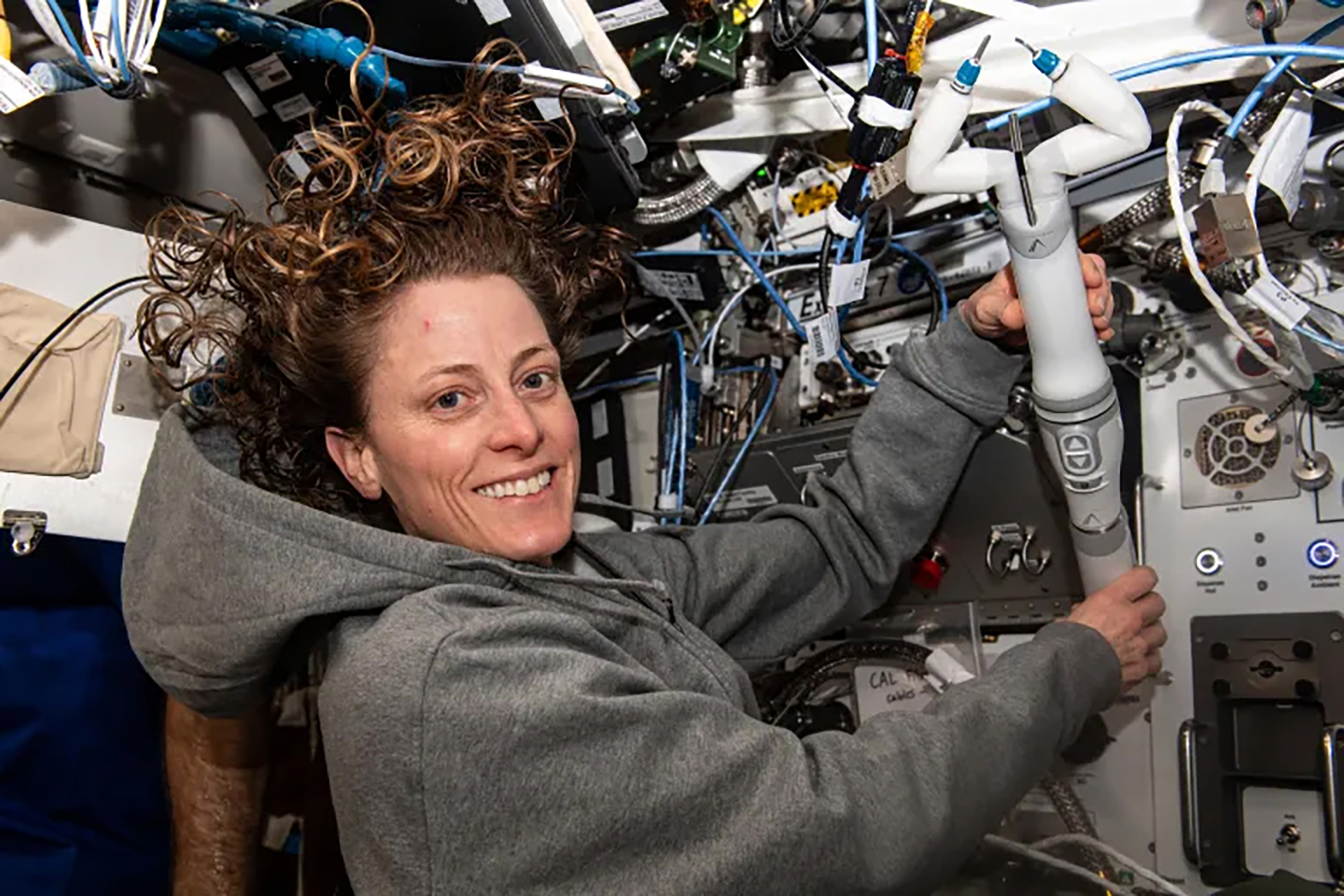
NASA astronaut Loral O’Hara displays spaceMIRA on the International Space Station. The device, a version of the terrestrial surgical system adapted for space, tested techniques for performing robotic surgery in microgravity in February 2024. Credit: NASA
Michael Jobst, a colorectal surgery specialist, makes the first surgical robotic cuts in space from Virtual Incision’s offices in Lincoln, Nebraska. For the demonstration on February 13, 2024, surgeons cut rubber bands to mimic surgery inside a payload box on the space station. Credit: Virtual Incision Corp.