

Old Software Enables New Missions
Subheadline
Trajectory software NASA commissioned decades ago has grown into a tool for all
Trajectory modeling software that has evolved from code NASA first commissioned in the late 1980s is now used commercially, internationally, and by NASA.
Called Astrogator, the capability is a component of the Systems Tool Kit, or STK, a mission-engineering package from Canonsburg, Pennsylvania-based Ansys Inc. The software was developed by Analytical Graphics Inc. (AGI), which has been an Ansys company since 2020.
Astrogator supports missions from preliminary design to higher-fidelity solutions, where the aim is to get as close as possible to a digital twin of the mission trajectory, said Cody Short, principal astrodynamicist at Ansys AGI.
“You can start with low-fidelity models and then bring pieces in and build up your solution as you go, adding constraints along the way,” Short said.
Cheryl Gramling, who now works in the Space Communications and Navigation program office at NASA Headquarters in Washington, was, back in the 1980s, working at the agency’s Goddard Space Flight Center in Greenbelt, Maryland, as flight dynamics lead for several missions. They employed lunar gravity assists, using the Moon’s gravity to alter spacecrafts’ flight paths or speeds.
“When designing trajectories in multi-body gravity regimes, I was hand-plotting different views of the trajectories,” she said. “This was arduous. New graphics processing workstations had reached the market, and it was an opportune time to apply that graphics technology to trajectory design.”
Gramling came up with the concept for a trajectory design and visualization software and arranged for NASA to develop what became known as SWINGBY through a contract with Computer Sciences Corporation (CSC).
In 1994, CSC began selling the code, rebranded as a software package called Navigator, in cooperation with AGI, according to John Carrico, who worked on the software at CSC and then AGI. Carrico, now CTO and owner of Space Exploration Engineering, still uses Astrogator as a customer.
In 1996, AGI bought Navigator from CSC and also secured the rights to incorporate the SWINGBY code into the company’s Satellite Took Kit, rebranding the capability STK/Astrogator and continuing to develop it, Carrico said. Now, as an Ansys offering, the STK stands for Systems Tool Kit, and Astrogator anchors the STK Premium (Space) product.
NASA has used the software for numerous missions, from satellite trajectories orbiting Earth to the deepest space probes. Among these are the James Webb Space Telescope, the most powerful telescope in space, and New Horizons, which launched in 2006 and is currently approaching the edge of our solar system, twice as far from Earth as the dwarf planet Pluto.
The software is used internationally, including by government space programs in Europe and Asia. Customers include the “big primes” — large aerospace companies that are often prime contractors on government projects — as well as startup satellite and smaller space companies. Astrogator has been used in several missions overseen by NASA’s Commercial Lunar Payload Services, an initiative to contract out lunar missions to private companies to achieve research goals and spur the commercial space industry at the same time.
“We’re continually developing Astrogator,” Ansys’ Short said.
In the 1990s, Carrico observed, trajectory design and mission and maneuver planning were only possible for the largest organizations, like NASA and companies that worked closely with the space agency. “Now there are hundreds and really thousands of people who can do what only the government used to be able to do.”
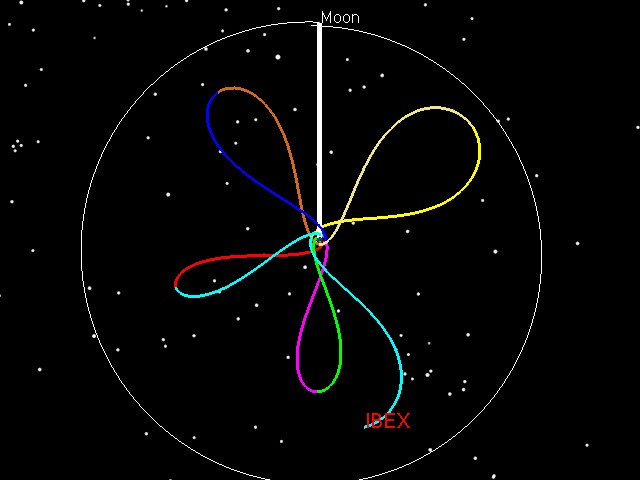
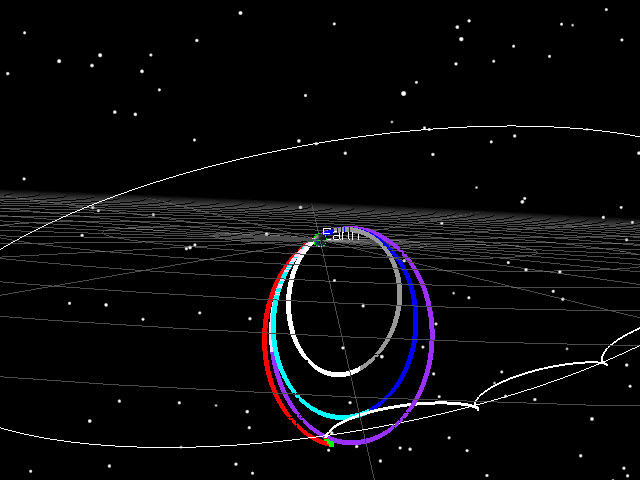
Ansys’ STK Astrogator is commercial software that supports trajectory design and visualization. It grew out of code NASA commissioned in the late 1980s. The images compiled here are actual trajectories from missions over the years. Credit: Space Exploration Engineering LLC
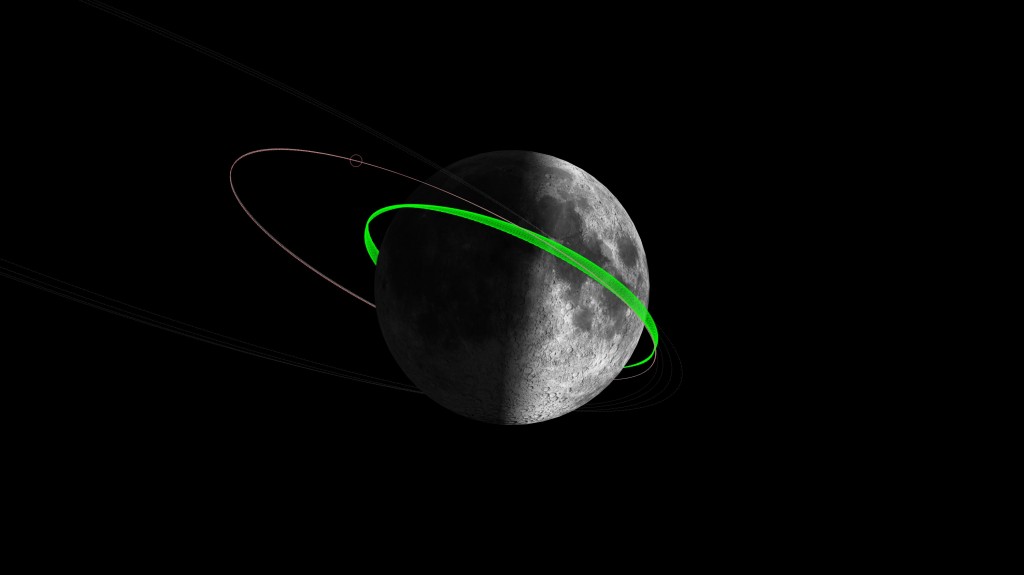
An Astrogator-enabled view from Earth of the trajectory of the Lunar Atmosphere and Dust Environment Explorer, a spacecraft that orbited — and, in 2014, deliberately impacted — the Moon to gather information about the lunar atmosphere, conditions near the surface, and the environmental influences on lunar dust. Credit: Space Exploration Engineering LLC